
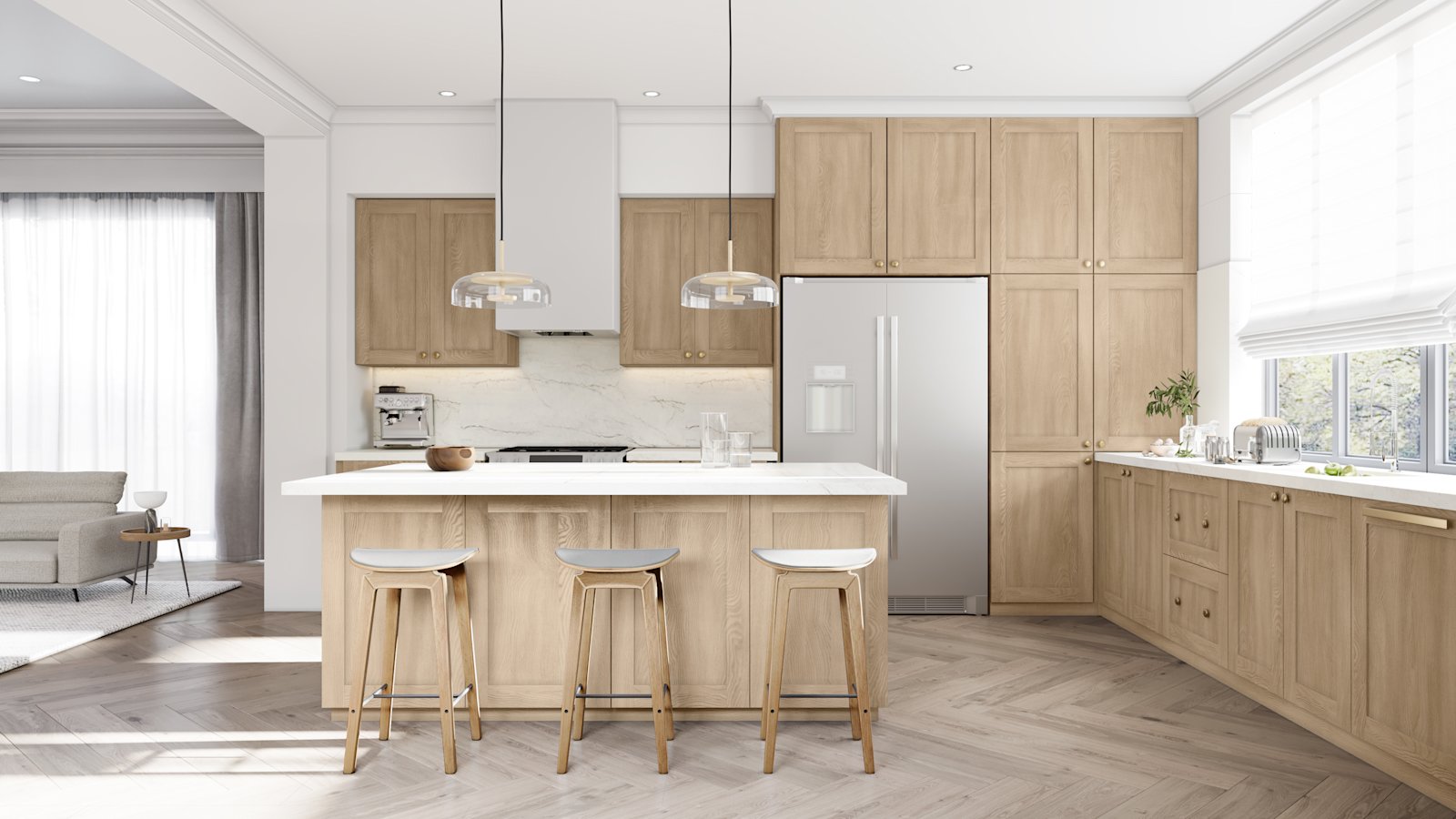
Wood look porcelain tile gives you the character of hardwood with far less maintenance and better water resistance, especially in kitchens and bathrooms. The tradeoff is that it feels and behaves differently than real wood, so it suits some New Jersey homes and lifestyles better than others.
Wood look porcelain tile is a ceramic tile made to resemble hardwood planks in both color and texture. Modern options are realistic enough that, installed well, most guests will not know they are not walking on wood.
Below is how I explain wood look tile to homeowners in our Green Brook showroom: what it does well, where it can frustrate you, and how to choose the right product so it works in your space long term.
1. Key advantages of wood look porcelain tile
 Como Ash 2 frameless wide shaker kitchen cabinets with a white perimeter and island below contrasting tall cabinetry, a marble backsplash and a wood floor. Fabuwood Tuscany.
Wood look porcelain tile is durable, water resistant and easy to live with, which makes it strong for high traffic kitchens, mudrooms and bathrooms. In many Central New Jersey homes with busy families, pets and active cooking, those strengths matter more than the romance of real wood.
Porcelain is denser and less porous than standard ceramic, so it handles spills and moisture very well. The Tile Council of North America notes that properly selected porcelain has very low water absorption, which is why it is used in wet areas and even outdoors (TCNA basics). In practical terms, that means wood look tile works around sinks, dishwashers and shower entries without swelling or staining.
Scratch resistance is another plus. Tile will still show damage from dropping something heavy, but it does not scratch from chair legs and pet claws the way softer wood species can. That is a common reason homeowners switch to tile in kitchens that connect directly to a garage or backyard.
Maintenance is simple. A neutral cleaner, a damp mop and a grout that is sealed or stain resistant are typically enough. You are not scheduling sanding, staining or refinishing every decade.
If you are updating floors as part of a larger project, we can coordinate wood look tile with your cabinetry and counters in a full kitchen design, whether you are doing a cabinets only package from $4,999 or a full kitchen package from $14,999, with final pricing depending on layout, materials and installation scope. Those starting prices do not include flooring, tile, demolition, electrical, plumbing or structural work.
2. Main drawbacks you should weigh first
 Mocha micro shaker kitchen cabinets with white marble counters and island, slim brass hardware and a light wood floor. Fabuwood Echo.
The main drawbacks of wood look porcelain tile are comfort, acoustics and the need for a flat, well prepared subfloor. If you expect it to feel exactly like real wood, you will be disappointed; if you accept it as a very convincing visual with a tile feel underfoot, you tend to be happy.
Porcelain is hard and less forgiving on joints than wood. In a kitchen where you cook for hours, you may want anti-fatigue mats in your working zones. It also feels cooler, which some people like in summer but notice in winter on a slab. Radiant heat under tile fixes that, but it adds cost and planning.
Tile can be louder, with more echo and a different sound when kids or pets run across it. Area rugs help, but it is a different acoustic than a traditional hardwood floor in an older New Jersey colonial.
Installation is more technical than floating vinyl or laminate. The floor has to be level, plank layout has to be planned carefully, and movement joints need to be respected. Poor installation is where most complaints come from: lippage between tiles, warping patterns that catch the light, or grout cracking. Using a contractor who understands large format plank tile and the guidelines from TCNA is important.
Cost is not automatically lower than wood. Material prices vary widely by brand and pattern, and you also have thinset, grout, underlayment and labor. If you are budgeting an entire kitchen remodel, it helps to look at flooring alongside your cabinet and countertop options, which we do in our kitchen remodeling consultations in Green Brook.
3. How wood look porcelain tile compares to real hardwood
 Timber micro shaker kitchen cabinets with white marble counters and island, slim brass hardware and a light wood floor. Fabuwood Echo.
Wood look porcelain tile competes with hardwood where moisture, pets or heavy traffic make real wood a risk. It wins on durability and water resistance, but hardwood still wins on warmth underfoot and the ability to refinish.
Here is a quick comparison you can refer to while planning.
| Feature | Wood Look Porcelain Tile | Real Hardwood |
|---|---|---|
| Water resistance | Excellent for kitchens and baths | Fair to poor in wet areas |
| Scratch & dent resistance | Very good, especially to surface wear | Variable, softer species dent easily |
| Comfort underfoot | Hard, cool, good with radiant heat | Warmer, slightly softer |
| Maintenance | Simple cleaning, no refinishing | Periodic refinishing, more sensitive to spills |
| Repair options | Individual tiles can be replaced but requires a pro | Sanding & refinishing can renew surface |
| Resale perception | Increasingly positive, especially in busy homes | Still seen as a classic, premium material |
Hardwood is still the right choice in many living rooms and bedrooms, especially in older New Jersey homes where you may already have original floors. Where I often recommend wood look tile is in kitchens, mudrooms, bathrooms and lower level spaces where water or wear are more likely.
If you are trying to match existing hardwood in nearby rooms, it is often better to coordinate rather than copy exactly. A slightly different shade or plank scale tells the eye these are intentional, separate surfaces.
4. How to choose the right style, color and plank size
 Timber slim shaker kitchen cabinets with white marble counters and island, a herringbone wood floor. Fabuwood Luna.
The right wood look porcelain tile balances realistic detail with what your room can actually handle in terms of size and pattern. Start with three decisions: overall style, color family and plank dimensions.
For style, you will see rustic, contemporary, and very clean “Scandinavian” type looks. Rustic options will have heavier knots and hand scraped textures, which can disguise dirt but feel busier. Simpler graining with fewer knots reads more modern and pairs well with flat panel or slim shaker cabinetry like the Luna or Luxe collections from Fabuwood’s Allure series.
Color is easier if you work from what you already have or plan to install. If you like white or light painted cabinets, a medium, warm oak look can keep things from feeling washed out. With dark cabinets, many homeowners in Central New Jersey prefer a mid tone wood look tile rather than going very light or very dark, which can show every crumb.
Plank size needs to fit the room and the flatness of your floor. Very long, narrow planks (8 x 48 and up) can look beautiful in larger, open kitchens, but they are less forgiving of a wavy subfloor. Shorter planks or wider tiles (like 8 x 36) can still give a plank feel without magnifying minor unevenness. In smaller galley kitchens or bathrooms, mid length planks can make the room feel wider if laid in the right direction.
Bring door style, cabinet samples or at least photos with you to the showroom. We routinely line up cabinet door samples from our kitchen display area with wood look tile choices so you can see how undertones play together under the same lighting.
5. Grout color, layout and installation details that matter
 Timber classic shaker kitchen cabinets with white marble counters and island, copper dome pendants and stainless appliances. Fabuwood Galaxy.
Grout color and layout make the difference between a floor that truly looks like wood and one that reads like tile with a wood print. If you want realism, grout lines should visually disappear as much as possible.
Choose a grout color that matches the dominant tone of the tile. If your tile has several browns and grays, match the mid tone. Contrasting grout highlights every joint, which is fine if you like a graphic pattern but less “wood like”. Many manufacturers show recommended grout colors; your installer or designer should have those charts.
Layout also matters. Most plank tiles are designed for a 1/3 offset rather than a classic 1/2 brick pattern to reduce the chance of lippage and highlight warpage in the tile itself. Following those guidelines is part of good practice. The TCNA handbook lays out these recommendations to control warpage stresses in plank tile.
Joint width should be as tight as the tile manufacturer allows, assuming the tile is rated as rectified and your installer is comfortable working with narrow joints. Narrow joints read more like wood seams. Wider joints can be useful on slightly uneven substrates but are more visually prominent.
Proper subfloor prep reduces cracking and hollow sounds. That may involve leveling compounds or underlayments over older New Jersey subfloors that have settled over time. This prep is not an area to cut corners if you want a long lasting installation.
If you are also changing cabinets at the same time, we typically decide whether the tile runs under the new cabinets or stops at the toe kick as part of the kitchen remodeling plan, to avoid awkward transitions or height issues with appliances.
6. Where wood look porcelain tile works best in a home
 Kona slim shaker kitchen cabinets with white marble counters and island, a herringbone wood floor. Fabuwood Luna.
Wood look porcelain tile works best in areas that see moisture, dirt and heavy traffic: kitchens, mudrooms, powder rooms, bathrooms and some basements. It is also strong in open concept spaces where you want one continuous, practical surface.
In a kitchen that opens onto a deck or backyard, tile holds up far better to wet shoes and pet traffic than site finished hardwood. In a bathroom, it lets you echo the look of wood without putting real wood into a space with frequent humidity and splashes. For these wet zones, the National Kitchen & Bath Association recommends choosing materials that handle water exposure well, which is one reason tile is a mainstay in professional bath design (NKBA design guidance).
In Central New Jersey, a lot of homes have concrete slab or partially below grade areas. Wood look porcelain tile can handle minor moisture concerns in those spaces better than traditional wood or laminate, provided you address any real water issues first.
Where I am more cautious is in bedrooms or formal living rooms where people expect the specific warmth and feel of wood. You can certainly use wood look tile there if you prefer, but it should be a conscious decision rather than trying to mimic hardwood perfectly.
If you are planning a bathroom renovation that includes new flooring, we can coordinate tile selection with your vanity and countertop choices as part of a full bath design, with bathroom packages starting at $4,999 for a vanity refresh and $12,999 for a full bathroom package. Final pricing will still depend on layout, materials and installation details, and those starting points exclude tile, flooring, demolition, plumbing rough-ins and structural changes.
7. Practical tips for choosing tile with your New Jersey home in mind
 Timber transitional shaker kitchen cabinets with white marble counters and island, a skylit room, open shelving and a concrete floor. Fabuwood Fusion.
The most practical way to choose wood look porcelain tile is to test samples in your actual space and think about how you live day to day. Lighting, existing woodwork and even local climate all affect how a tile feels in a room.
New Jersey humidity and seasonal changes mean you will appreciate porcelain’s stability, especially in kitchens and baths. Unlike real wood, porcelain will not gap in winter or swell in summer. On the other hand, our colder winters mean you should be honest about whether you want radiant heat under a large tiled area.
Bring home a few samples and live with them for a couple of days. Put them next to your cabinets, trim and existing flooring transitions. Look at them in morning and evening light. What reads warm and inviting under showroom lights can shift cooler in a north facing kitchen.
Also, think through transitions. If you have original oak floors in the adjacent dining room, you may not want a tile that almost matches but slightly misses. Sometimes a more distinct contrast, like a lighter or darker tone, looks more intentional.
Finally, partner with a contractor or installer who follows industry standards and is familiar with plank tile. You can check contractor licensing for New Jersey through the Division of Consumer Affairs to be sure you are working with a registered business (NJ Consumer Affairs). Our own installation work is handled by Savona’s in-house team rather than subcontracted crews, which keeps design and installation on the same page.
If you want to see options in person, our Green Brook Township showroom has both tile and cabinet displays so you can compare door styles, finishes and flooring together and request a free estimate.
Frequently asked questions
Is wood look porcelain tile more expensive than hardwood?
Sometimes wood look porcelain tile is similar in material price to hardwood, and sometimes it is higher or lower depending on the line. Labor for tile is often more intensive than installing a floating wood or laminate floor, especially if the subfloor needs leveling. The only accurate way to compare is to get itemized quotes for both materials, including prep and installation.
Does wood look porcelain tile feel cold?
Porcelain naturally feels cooler than wood, especially over concrete or in winter. In many New Jersey homes, that is noticeable in kitchens on slab foundations and in basements. Area rugs help, and radiant heat under tile creates a very comfortable floor if you are already opening the subfloor. It is worth discussing early, because adding heat later can be difficult.
Is wood look tile good for bathrooms?
Wood look porcelain tile is very good for bathrooms because it handles moisture without swelling or warping while still giving a warm, wood inspired look. As long as it is installed properly with the right underlayment, thinset and grout, it works on both floors and some walls. Slip resistance, grout choice and how it pairs with your vanity and shower finishes should be part of the design conversation.
Can you put wood look porcelain tile over existing tile?
You can sometimes install wood look porcelain tile over existing tile if the old tile is sound, well bonded and level enough. However, that adds height, which can affect thresholds, appliances and cabinet toe kicks. Many projects still remove the old tile to keep floor heights consistent. A site visit is usually needed to decide the best approach for your specific kitchen or bathroom.
How do you clean wood look porcelain tile?
Cleaning is straightforward. Vacuum or sweep to remove grit, then mop with a neutral pH cleaner recommended for tile and grout. Avoid harsh abrasives and oil based soaps that can leave residue on the surface. Sealing the grout or using a stain resistant grout helps keep joints from darkening. Most homeowners fold tile floor care into their normal weekly routine without special products.
Conclusion: Next steps if you are considering wood look porcelain tile
Wood look porcelain tile can be an excellent choice in a New Jersey home if you value durability, water resistance and low maintenance more than the specific feel of real wood. The key is pairing the right tile, layout and grout with a solid installation plan.
If you are planning a new kitchen or bathroom and want to see how wood look tile plays with cabinet door styles, countertops and fixtures, you are welcome to visit our Green Brook Township showroom or share your layout remotely. You can start a conversation and request a free estimate through our online form at Savona Kitchen & Bath, and we will walk you through realistic options for your Central New Jersey home.


