
Undermount vs drop in sink is really a question of how you want to clean, what countertop you have, and how much work you are ready to do for installation. In most New Jersey kitchens, undermount wins for daily usability and looks, while drop in (top mount) makes more sense for tight budgets, laminate counters or DIY projects.
A kitchen sink is a fixture that supports food prep, cleanup and dishwashing, and the way it mounts affects how you live with it every single day.
Below is how I talk homeowners through this choice at the Savona Kitchen & Bath showroom in Green Brook, using real layouts and real numbers instead of theory.
1. What is the difference between an undermount and a drop in sink?
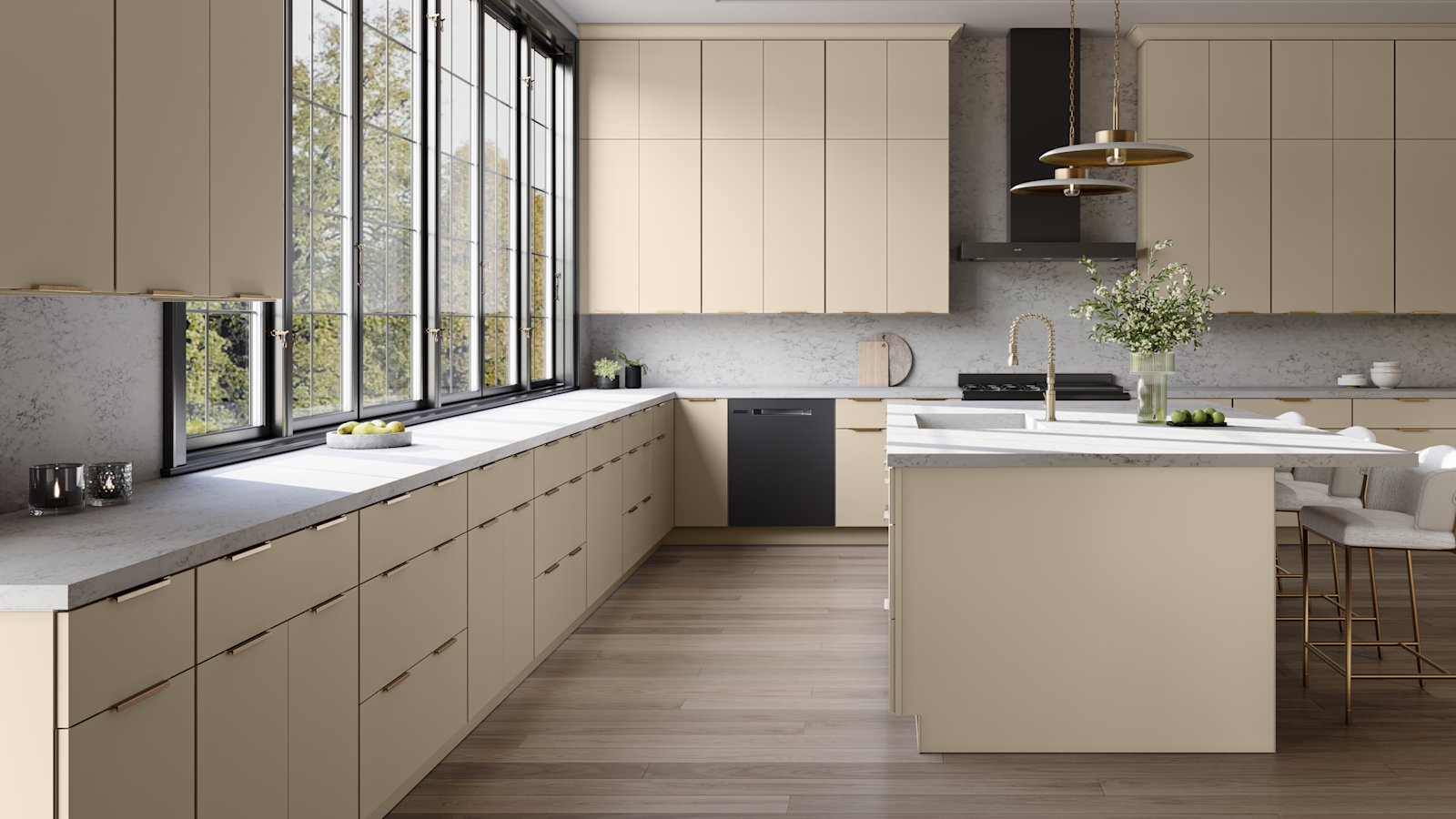
 Macadamia Beige flat panel slab kitchen cabinets with white marble counters and island, black framed windows and long brass bar pulls. Fabuwood Luxe.
The fundamental difference is that an undermount sink is attached underneath the countertop, while a drop in sink sits on top of the countertop with a visible rim.
With an undermount, the counter edge overhangs the sink opening and you see continuous countertop, then a clean cutout and the basin below. The sink is clamped and bonded to the underside of the counter, so all the weight is carried by the stone or solid surface.
A drop in (also called top mount or self rimming) sink is lowered into a cutout from above and rests on a lip. Silicone seals that lip to the countertop. The rim is visible, slightly raised, and takes some of the load.
From a designer’s view, undermount reads more tailored and integrated, while drop in reads more utilitarian and forgiving of imperfections.
2. Countertop compatibility: which sink works with which surface?
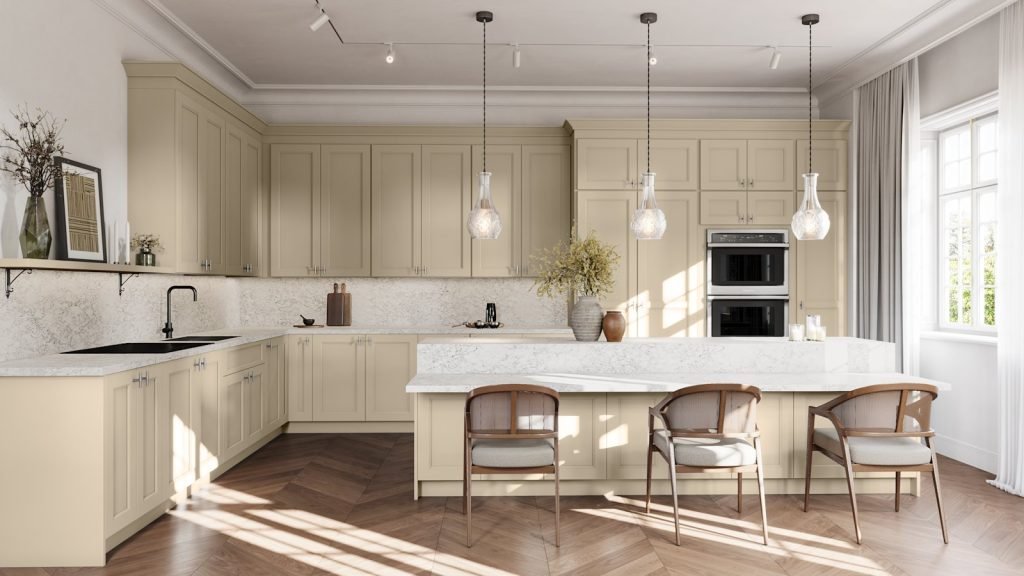 Macadamia Beige wide shaker kitchen cabinets with white marble counters and island, a matte black faucet and a herringbone floor. Fabuwood Nexus.
Undermount sinks work best with strong, water resistant materials like quartz, quartzite, granite and solid surface, while drop in sinks are safe for almost any countertop, including laminate and tile.
Here in Central New Jersey, the majority of new kitchen projects we design pair undermount sinks with quartz or quartzite, since those tops are structurally sound around the cutout. Natural stone suppliers and the Natural Stone Institute both stress the need for proper cutout reinforcement with heavy undermount sinks, especially at front rail and faucet areas.
Laminate, tile and some butcher block counters have seams and substrates that do not like constant moisture along a raw cut edge. An undermount exposes those edges to water and can speed swelling or delamination. In those cases, a drop in sink protects the vulnerable material by covering the cutout entirely.
Older New Jersey homes often have existing laminate or tile tops. When a homeowner wants a quick refresh without new countertops, we generally stay with a drop in replacement. When they upgrade to a stone or quartz top through our kitchen remodeling services, that is the right time to shift to an undermount.
Countertop & sink compatibility at a glance
| Countertop material | Undermount compatible? | Drop in compatible? | Notes |
|---|---|---|---|
| Quartz | Yes, ideal | Yes | Most common pairing with undermount in our projects |
| Quartzite | Yes, with proper support | Yes | Heavier; pay attention to cabinet and rail support |
| Granite | Yes, standard | Yes | Ensure good cutout polishing and sealing |
| Solid surface (e.g., Corian) | Yes | Yes | Integrated sinks also an option |
| Laminate | Not recommended | Yes, preferred | Drop in protects vulnerable substrate from water |
| Tile countertop | Risky, edge dependent | Yes, typical | Undermount requires excellent waterproofing |
| Wood / butcher block | Sometimes, with expert prep | Yes | Needs aggressive sealing and maintenance |
If you are planning new quartz or quartzite counters through Savona’s countertop program, undermount is almost always the better long term choice.
3. Cleaning and hygiene: which sink is easier to live with?
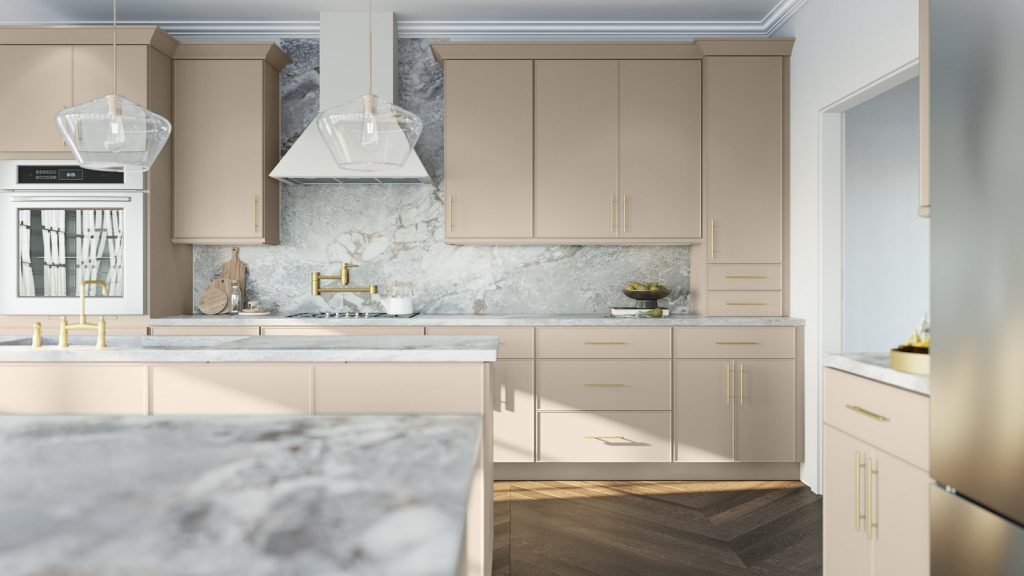 Oyster micro shaker kitchen cabinets with white marble counters and island, slim brass hardware and a light wood floor. Fabuwood Echo.
Undermount sinks are easier to clean on a daily basis because you can wipe crumbs and water straight into the bowl without hitting a lip, while drop in sinks have a rim that collects grime and needs more detailed cleaning.
With undermount, the counter runs right into the sink opening. On smooth materials like quartz, a quick swipe with a sponge clears everything into the basin. There is no raised edge for gunk to sit on. The main detail is the joint between the stone and the sink; a neat bead of silicone there is simple to keep clean if you stay on top of it.
Drop in sinks add a raised metal or composite rim. That ledge catches crumbs, soap scum and hard water deposits, especially in areas with mineral heavy water like much of Central New Jersey. You end up scrubbing around the lip and the silicone edge more often.
Either style can be hygienic if you are willing to maintain it. The EPA’s basic kitchen sanitation guidance emphasizes frequent wiping of damp areas and sealing gaps where water can sit, which applies directly to the sink rim or undermount joint.
If you are the person cleaning up at night and you want the least fussy routine, undermount has the clear advantage.
4. Installation: cost, complexity and what your cabinets must handle
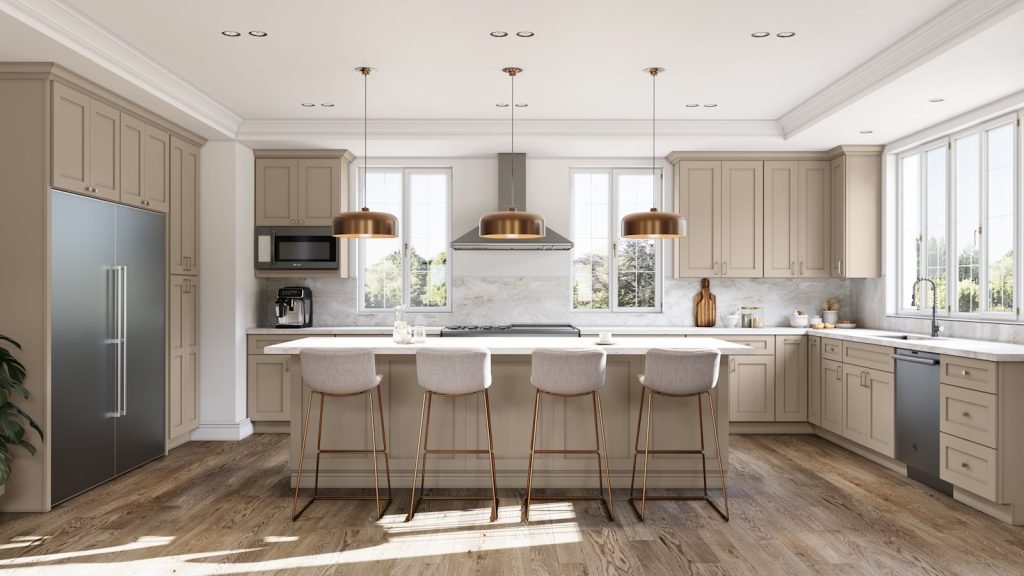 Oyster classic shaker kitchen cabinets with a dark backsplash, copper dome pendants and stainless appliances. Fabuwood Galaxy.
Undermount sinks require more precise fabrication and support, so they cost more to install and put stricter demands on your countertop and cabinets, while drop in sinks are simpler and cheaper to set.
An undermount install has several critical steps: the fabricator must cut the opening exactly, polish the inside edge, drill faucet and accessory holes, then fasten the sink to the underside with clips and adhesive. The sink is often filled with water during curing to prevent sag. Cabinet rails sometimes need reinforcement to support a heavy sink full of dishes and water.
Drop in sinks, by contrast, can be cut in the field with a template, set from above and sealed. If you are keeping existing laminate and doing a light DIY refresh, a drop in is more forgiving and usually suited to a homeowner install.
In our Gold and Custom kitchen packages, starting at $14,999 and $25,000 respectively, the sink and professional installation are part of a larger scope that includes semi custom cabinetry, countertops and labor. Final pricing depends on layout, cabinet line, countertop choice and installation scope, and starting prices exclude demolition, electrical work, plumbing rough ins, flooring, tile and structural modifications.
The National Kitchen & Bath Association (NKBA) guidelines also call out clearances, cabinet sizing and proper support around sink cutouts, which we follow in our designs whether the sink is undermount or drop in.
5. Durability, leaks and long term maintenance
 Oyster transitional shaker kitchen cabinets with a wood-topped island, a skylit room, open shelving and a concrete floor. Fabuwood Fusion.
Both undermount and drop in sinks can last for decades if they are installed correctly, but undermount sinks punish sloppy work more, while drop in sinks are more forgiving but need periodic resealing of the rim.
With undermount, the primary risk is the joint between sink and countertop. If the adhesive or silicone fails, the sink can sag slightly, creating a tiny ledge that holds water and food. Left alone, that can stain stone or even lead to mold at the joint. Proper clip spacing, good adhesive and occasional resealing prevent that.
Drop in sinks put the main water barrier at the top edge. Over time, the silicone can discolor or crack, especially where standing water sits behind the faucet. The fix is straightforward: cut out and replace the bead. The rim itself also protects the cut edge of vulnerable countertop materials.
In humid New Jersey summers, any sink style benefits from good ventilation and habits like not storing wet sponges or wooden cutting boards tight against the rim or joint. For our own installations handled by Savona’s in house team, we pay close attention to sink support, sealants and faucet positioning so you are not repainting swollen cabinet doors in a few years.
6. Design, resale and how each sink style looks in your kitchen
 Oyster slim shaker kitchen cabinets with a contrasting charcoal island, a herringbone wood floor. Fabuwood Luna.
Undermount sinks generally look more modern and visually clean, which pairs nicely with the Fabuwood shaker and slab door styles we specify most often, while drop in sinks can lean more traditional or budget conscious.
With undermount, your eye reads continuous countertop. The faucet and accessories sit directly on the counter, which suits contemporary slab doors like Fabuwood’s Luxe in the Allure series, or a slim shaker such as Luna. It also allows a slightly larger sink in the same cabinet width because there is no surface rim stealing space.
Drop in sinks introduce a horizontal band of stainless or cast iron on top of the counter. That can work nicely in a vintage inspired kitchen or where you want a specific apron front look without altering the base cabinet. It can also telegraph that the counters are laminate or older.
From a resale standpoint, buyers in Central New Jersey tend to expect an undermount stainless or composite sink with quartz or quartzite countertops in a full kitchen remodel. That expectation shows up clearly when we update 1990s kitchens with new cabinets, counters and sinks; undermount is often part of what makes the space feel truly renovated instead of just refreshed.
For coordinated design, we often start with door style and layout, using semi custom lines like Fabuwood Allure or Quest from our kitchen cabinets selection as the backbone, then choose counters and sink style to support that direction.
7. How to choose: a simple checklist for your own kitchen
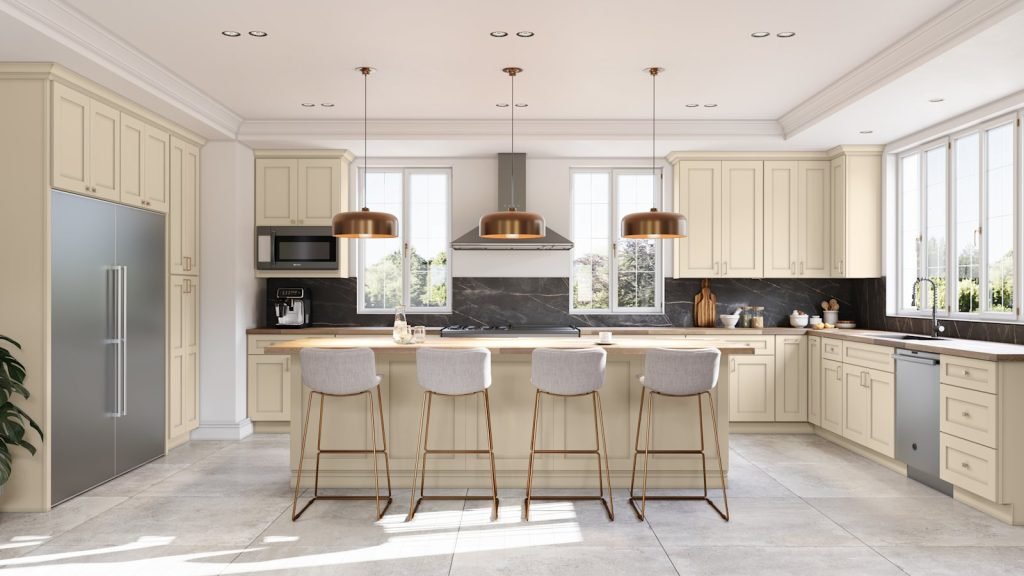 Macadamia Beige classic shaker kitchen cabinets with a dark backsplash, copper dome pendants and stainless appliances. Fabuwood Galaxy.
The right choice between undermount and drop in sink depends on your existing countertop, your budget, and whether you are doing a full remodel or a quick update.
Use this checklist the way we would in the showroom:
- Are you replacing the countertops with quartz or quartzite?
If yes, undermount is almost always the better choice for both function and look. - Keeping existing laminate or tile counters?
Stay with a drop in sink to protect the counter edges unless you are ready to change the tops. - Is this a full kitchen remodel or a light refresh?
In a full remodel, especially one using Savona’s Silver, Gold or Custom kitchen packages (starting at $9,999, $14,999 and $25,000), undermount fits the scope and expectations. For a quick DIY update, a drop in replacement is simpler. - Who is cleaning the kitchen every day?
If you want the easiest wipe down and the cleanest visual line, undermount wins. - Are you worried about long term leaks or movement?
Any style can fail if installed poorly. Use qualified installers and follow maintenance basics. Savona’s installation service uses our own in house team rather than subcontractors for this reason. - Do you have special needs like a very large single bowl or accessories?
Both mount types come in many configurations, but large, deep bowls hanging from stone need careful support planning that favors professional undermount installation.
If you bring a sketch of your kitchen, a few photos and a rough idea of budget to our Green Brook showroom, we can walk through these questions together and put numbers next to them rather than guessing.
Frequently asked questions
Is an undermount sink worth the extra cost?
If you are already investing in new quartz or quartzite countertops, an undermount sink is usually worth the additional fabrication and install cost. You get easier cleaning, a more updated look and slightly more usable counter space. If you are keeping laminate or doing a low budget refresh, the premium is harder to justify.
Can I put an undermount sink with laminate countertops?
Technically it is possible, but it is not recommended for most homeowners. The exposed laminate edge around the cutout is vulnerable to water, which can swell the substrate and cause failure. A properly sealed drop in sink is usually the safer and longer lasting choice on laminate.
Which sink style is better for resale value?
In a full kitchen remodel with stone or quartz counters, buyers in Central New Jersey tend to expect an undermount sink. It signals a more complete renovation. That said, resale value comes more from the overall cabinet, countertop and layout quality than from sink mount alone.
Do undermount sinks fall off over time?
A correctly installed undermount sink, with proper clips, adhesive and support, should not fall or sag. Problems typically trace back to poor prep, inadequate hardware or incompatible adhesives. Using a professional fabricator and installer greatly reduces that risk.
Can I change from a drop in sink to an undermount without replacing the countertop?
Usually no. The existing cutout in laminate or tile is rarely finished for undermount use, and the substrate may not be suitable. With stone, the fabricator would need to assess whether the existing opening can be reshaped and polished. In most cases, changing sink style happens when you replace the countertop.
Ready to see how each sink will look in your layout?
If you are planning a kitchen remodel in Middlesex, Somerset, Union or the surrounding Central New Jersey counties, the sink decision fits into a bigger picture of cabinets, counters, tile and appliances. Our Green Brook showroom lets you compare door styles, finishes and sink options against real quartz samples, and we can quote Bronze to Custom packages that match your space.
You can start by requesting a no pressure layout review and budget range through our free estimate form, or book a showroom time that works for you through our appointment scheduler. Bring a rough sketch and a few photos, and we will walk you through undermount vs drop in using your own kitchen as the example.


