
Hiring the right person starts with asking very specific questions to a kitchen contractor before you sign anything. The answers will tell you whether they are a fit for your home, your budget, and your tolerance for disruption.
Questions to ask a kitchen contractor are the tools you use to check experience, scope, communication, and accountability before anyone touches your cabinets or walls. A kitchen contractor is a licensed professional who coordinates trades, materials, and installation work for a kitchen remodel so you do not have to manage each piece yourself.
Below are the questions I wish every New Jersey homeowner would ask in my Green Brook showroom before choosing who will work in their home.
1. Are you licensed, insured, and who will actually be in my kitchen every day?
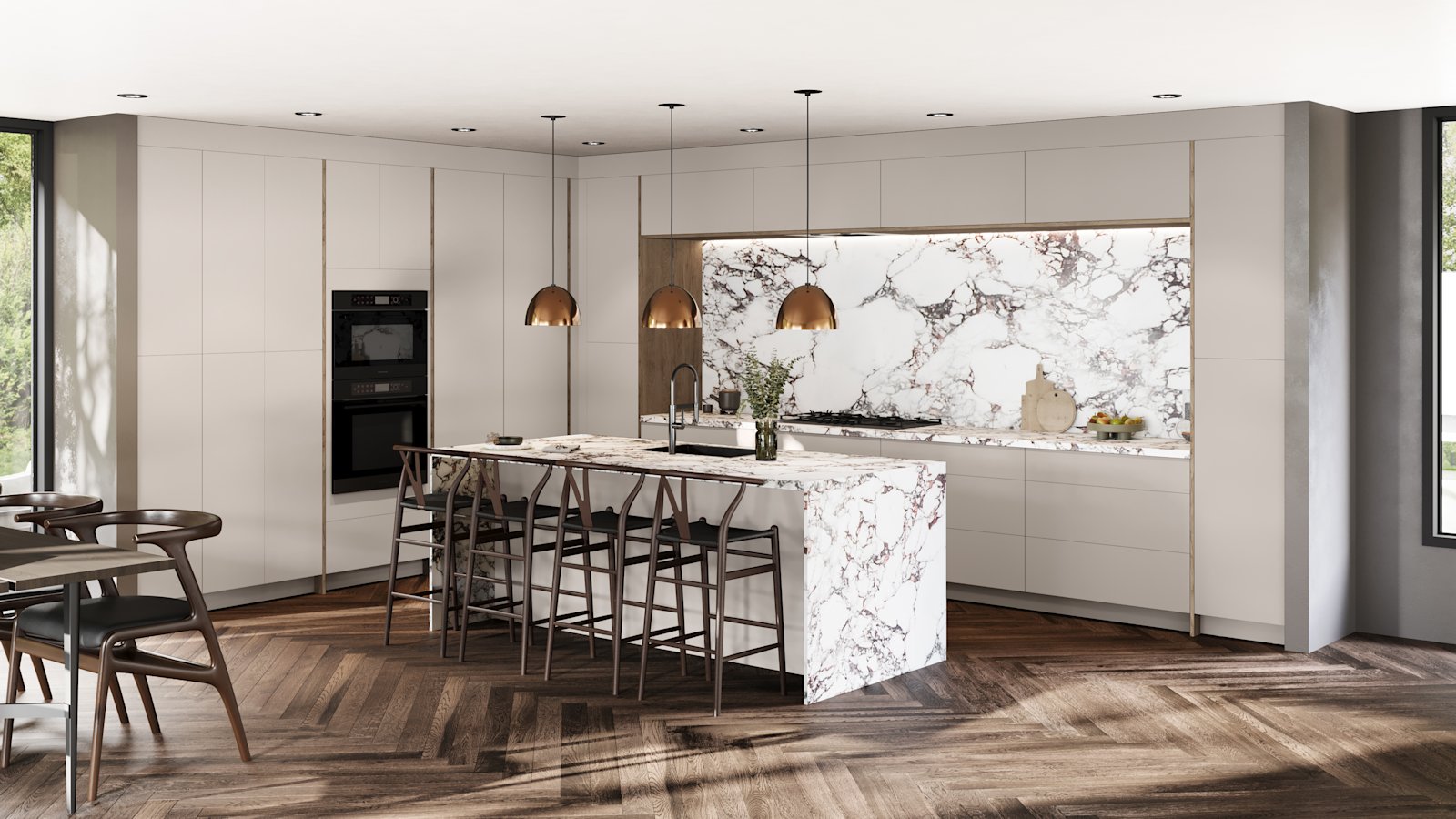
 Carbone Matte handleless flat slab kitchen cabinets with white marble counters and island, copper dome pendants and built-in black ovens. Fabuwood Catalina.
You want a contractor who is properly licensed and insured and who tells you clearly who is doing the work in your home. In New Jersey, a kitchen remodeler should have a valid Home Improvement Contractor registration and carry liability insurance and workers compensation for employees.
Ask to see proof of:
- New Jersey Home Improvement Contractor registration
- General liability insurance certificate
- Workers compensation, if they have employees
Then ask, “Who will I see in my home most days?” Some firms send a rotating cast of subcontractors you never meet in advance. At Savona, installation is carried out by our own in house team, so the people designing your kitchen in Green Brook are coordinating directly with the people installing in Middlesex, Somerset, or Monmouth County.
Follow up with:
- “Do you ever use subcontractors? For what trades?”
- “If subs are on the job, who supervises them and how often are they on site?”
The goal is not to avoid subcontractors at all costs. It is to know who is accountable if something goes wrong and who has the legal responsibility if someone is hurt on site.
For a good overview of hiring qualified remodeling professionals, the National Kitchen & Bath Association has homeowner guidance on NKBA.
2. What exactly is included in your quote and what is excluded?
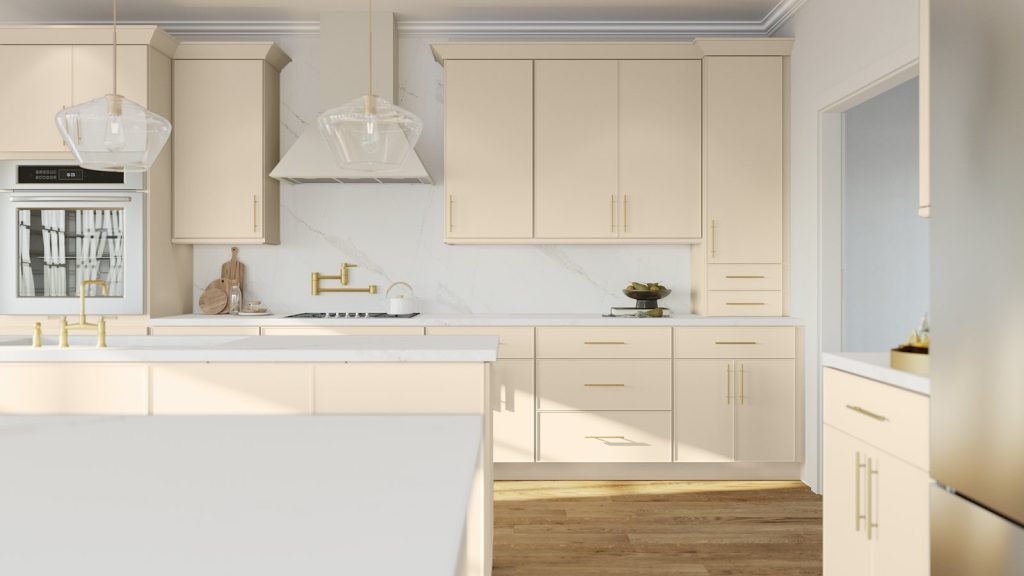 Macadamia Beige micro shaker kitchen cabinets with white marble counters and island, slim brass hardware and a light wood floor. Fabuwood Echo.
You should be able to read a quote and know exactly what you are paying for and what is still your responsibility. A vague, lump sum number with no breakdown is one of the fastest routes to cost overruns.
Ask your contractor to separate at least these items:
- Demolition
- Carpentry and framing
- Electrical
- Plumbing
- Cabinets
- Countertops
- Flooring
- Tile backsplash
- Painting and finishing
At Savona, every starting package is defined by what is included and what is not. For example, our Gold, Full Kitchen Package starts at $14,999, including design consultation, semi custom cabinetry, a countertop package, a kitchen sink, and professional installation by our in house team. Final pricing always depends on layout, cabinet line, countertop, and scope, and starting prices exclude demolition, electrical work, plumbing rough ins, flooring, tile, and any structural changes.
If you already have a contractor and only need cabinetry, our Bronze, Cabinets Only option starts at $4,999 for design consultation, a semi custom cabinet package, material coordination, and delivery, with installation handled by your own installer.
Make sure your potential contractor is just as clear. Ask directly:
- “Does this price include permits?”
- “Are appliances included or owner supplied?”
- “Is floor leveling or wall repair included or an allowance?”
You can see how we structure packages and scopes on our Kitchen Remodeling page and use that as a checklist when reviewing another contractor’s quote.
3. What cabinet lines and materials do you work with, and why?
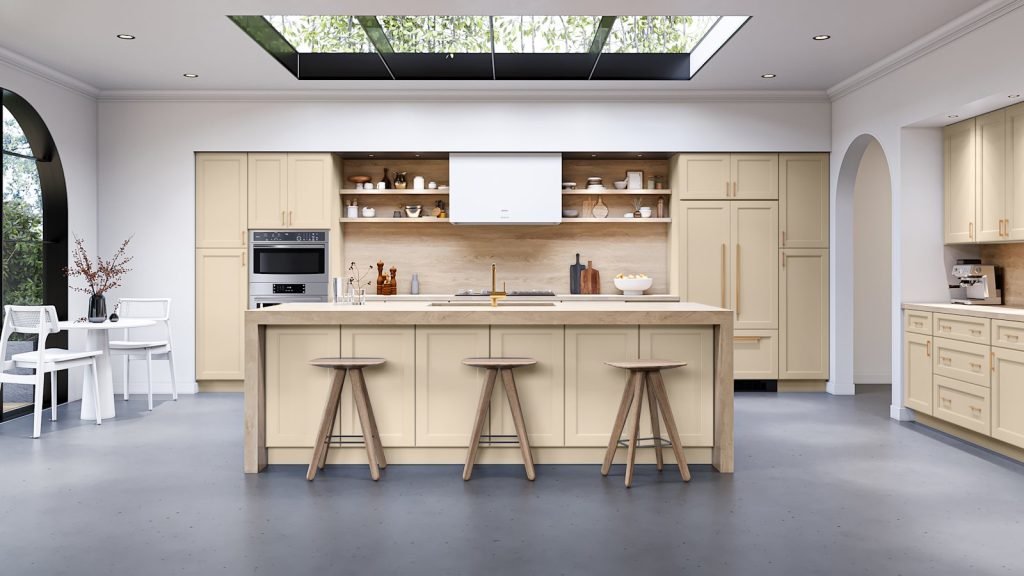 Macadamia Beige transitional shaker kitchen cabinets with a wood-topped island, a skylit room, open shelving and a concrete floor. Fabuwood Fusion.
An experienced kitchen contractor should be able to explain cabinet construction, not just show you colors. The materials they recommend affect durability, lead time, and cost.
Ask which brands and construction types they use regularly. At Savona, our Green Brook showroom works with a range of cabinet brands, including Fabuwood, Woodland Cabinetry, TM Italia, Prodigy Cabinetry, Tribeca Cabinetry and others. For many New Jersey homes, Fabuwood is a strong fit because it offers different series and price points with consistent quality.
Here are some Fabuwood cabinet options we often design with for Central Jersey kitchens:
| Fabuwood series | Construction type | Door style options | Notes |
|---|---|---|---|
| Allure | Framed with a plywood box and soft close hardware | Galaxy (classic shaker), Luna (slim shaker), Fusion (transitional shaker), Nexus (wide shaker), Luxe (flat slab), Echo (micro shaker) | Broad mix of paint and stain finishes for most layouts |
| Illume & Ovela | Frameless | Tuscany (wide shaker), Catalina (flat slab) | Matte, gloss, and textured finishes for a more modern look |
| Quest | Framed, partial overlay | Metro (traditional shaker), Discovery (classic shaker) | Paint and stain options at a more value focused level |
| Value Premium | Framed | Hallmark (raised panel shaker) | Painted finish for classic raised panel taste |
A contractor who works with proper cabinet lines should be able to walk you through door styles, finishes, and construction pros and cons. You can preview those discussions in our guide to Kitchen Cabinet Door Styles.
Good follow up questions:
- “What box construction do you recommend for my layout, and why?”
- “How do these finishes hold up to New Jersey humidity, especially in older homes with less ventilation?”
If they carry Fabuwood, you can also review product details directly on Fabuwood to make sure what they are telling you matches the manufacturer.
4. How will you protect my home and manage dust, noise, and daily access?
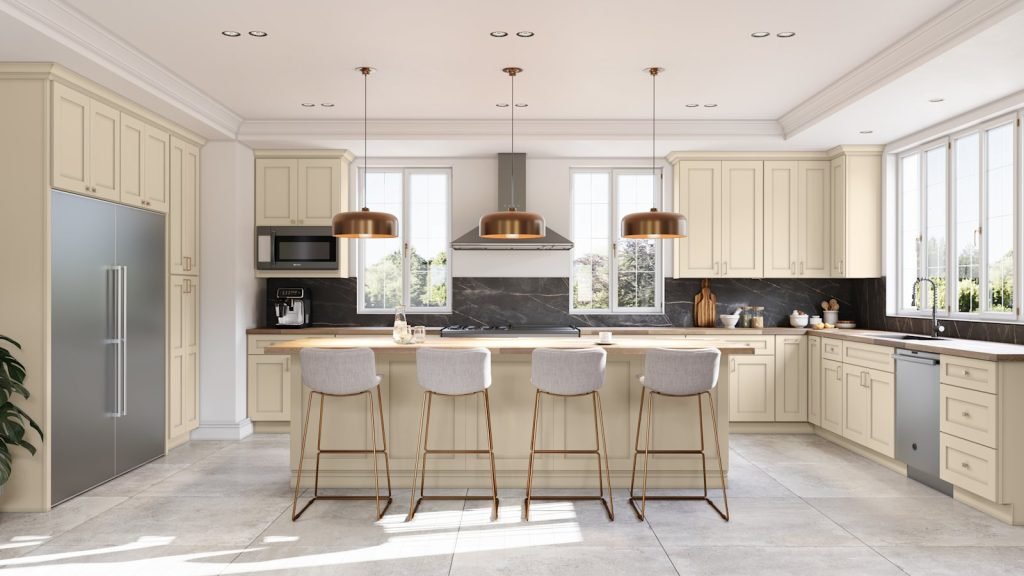 Macadamia Beige classic shaker kitchen cabinets with a dark backsplash, copper dome pendants and stainless appliances. Fabuwood Galaxy.
Life during construction is as important as the final photos. A good contractor has a clear plan for dust control, protection, and daily communication while your kitchen is out of service.
Ask about:
- Floor and stair protection from the front door to the kitchen
- Plastic barriers and zipper doors to isolate dust
- How they handle debris and dumpsters on tight Central New Jersey lots
- Typical working hours and any weekend work
- How you will access your fridge, microwave, or temporary sink
In older New Jersey housing stock, plaster walls, uneven floors, and existing tile can create extra dust and noise. The contractor should be honest about this and explain their containment strategy.
Ask directly:
- “Where will you cut tile or wood to keep dust down?”
- “How often will the job be cleaned up?”
- “Will someone walk me through the space at the end of each week?”
You can also ask to see photos of previous projects partway through, not just after completion. That shows how they actually maintain a jobsite in places like Bridgewater, Somerville, or Piscataway where basements and garages differ a lot.
5. What is your realistic schedule and how do you handle delays?
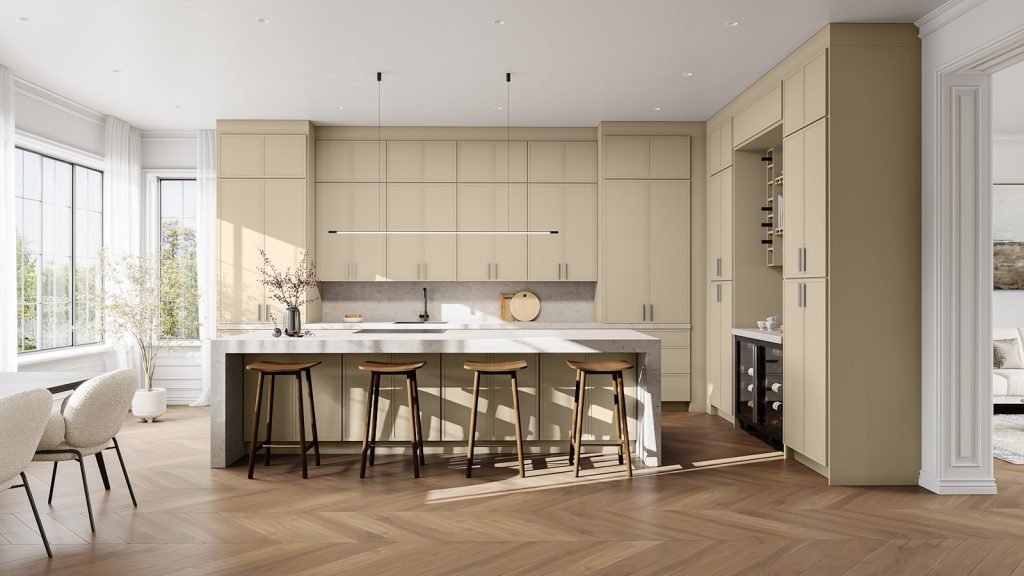 Macadamia Beige slim shaker kitchen cabinets with a contrasting charcoal island, a herringbone wood floor. Fabuwood Luna.
You should leave the meeting with a realistic sequence of work, not an exact completion date carved in stone. Full kitchen remodel timelines always depend on scope and are quoted per project, but any experienced contractor can tell you the order of operations and the long lead items.
Ask for:
- A written sequence: demo, rough plumbing and electric, inspections, flooring, cabinets, countertops, backsplash, trim, and punch list
- When cabinets must be ordered and how long delivery takes
- How long countertop templating and fabrication usually take
At Savona, we offer next day delivery cabinets, quick ship cabinets, and RTA cabinets for homeowners working under a deadline. For many homes, pairing quick ship cabinets with quartz countertops from brands like Cambria, LX Hausys or MSI Surfaces can keep the overall schedule more predictable.
Key follow up questions:
- “What could realistically delay my job?”
- “How will you communicate if an inspection or delivery pushes us back?”
- “Do you schedule multiple jobs at once, and how do you prevent my kitchen from sitting idle?”
A contractor who admits where things can slip and has a plan to respond is far safer than someone who promises a perfect calendar.
6. How do you structure payments, change orders, and allowances?
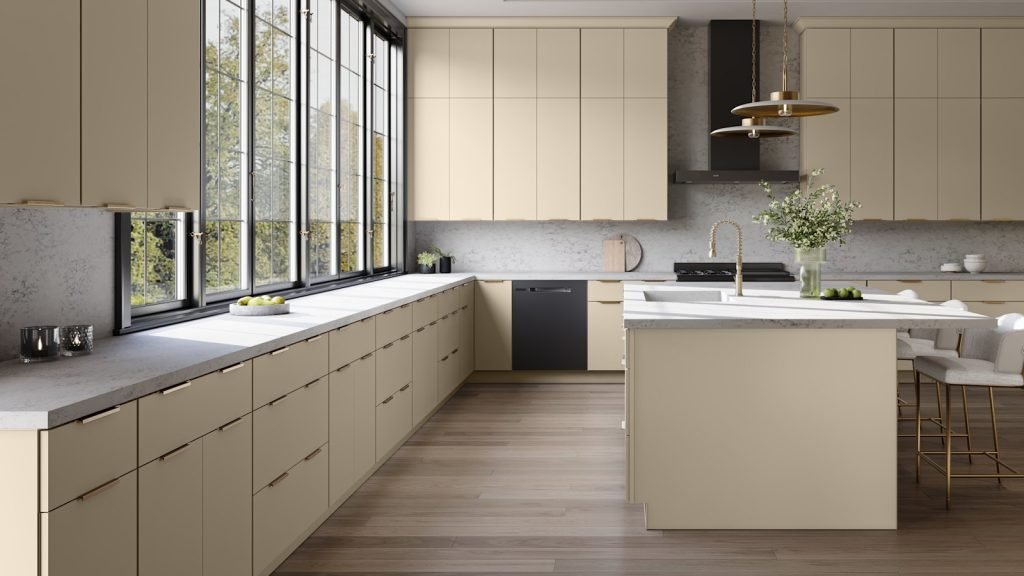 Macadamia Beige flat panel slab kitchen cabinets with white marble counters and island, black framed windows and long brass bar pulls. Fabuwood Luxe.
Payment and change order rules should be clear, written, and reasonable. This is where many good relationships sour if expectations are not set from the start.
Ask for a written payment schedule tied to milestones, such as:
- Deposit upon contract signing
- Payment at completion of rough work and inspections
- Payment after cabinet installation
- Final payment after punch list completion
Then dig into change orders and allowances:
- “If I decide to upgrade a cabinet line or change a layout, how is that priced and approved?”
- “What allowances are in the contract for items like lighting, hardware, or tile?”
At Savona, for example, we are transparent that starting prices for kitchen and bathroom packages exclude demolition, electrical work, plumbing rough ins, flooring, tile, and structural modifications. That keeps allowances cleaner because everyone understands from the beginning which items are covered in a package and which are separate.
You can cross check your contractor’s language with independent consumer advice on Consumer Reports, which often outlines fair payment and contract practices for home improvement.
7. Can I see recent projects and speak with local references?
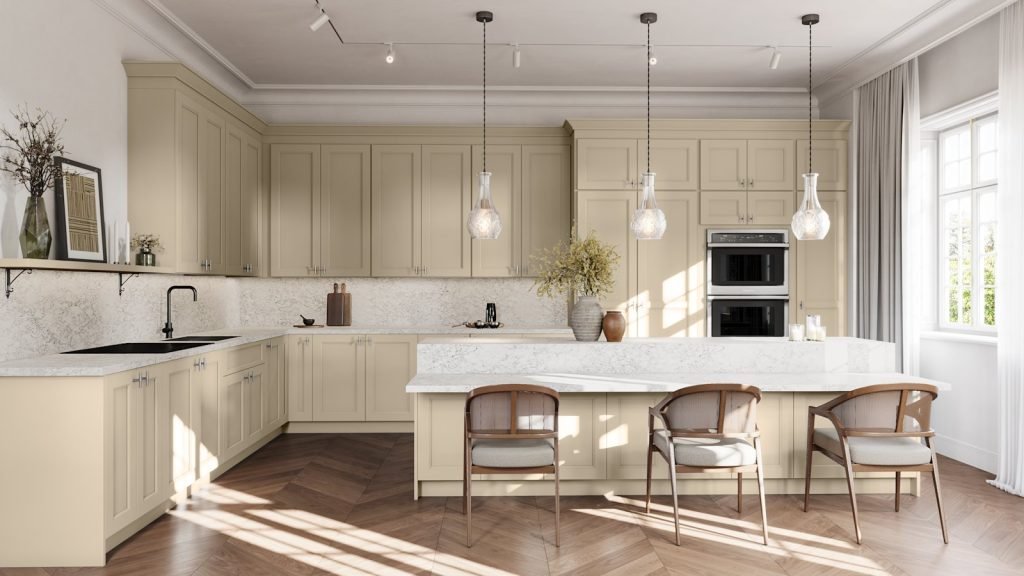 Macadamia Beige wide shaker kitchen cabinets with white marble counters and island, a matte black faucet and a herringbone floor. Fabuwood Nexus.
Real, recent work in homes like yours is one of the best predictors of how your own project will go. Photos alone are helpful, but a conversation with a past client is better.
Ask for:
- At least three references from the last 12 to 24 months
- A mix of project sizes, ideally including one similar to your kitchen
- Projects in or near your town, so you know they understand local inspectors and building quirks
At Savona, we can point to completed kitchens in towns such as Green Brook, Warren, Bridgewater, Hillsborough, Somerville, Belle Mead, and Basking Ridge. Local experience matters because older Central New Jersey homes often have settled floors, chimney chases in odd places, or non standard wall depths that affect cabinet layout.
When you speak with references, ask them:
- “Did the contractor stick reasonably close to the schedule?”
- “How did they handle surprises behind the walls?”
- “How clean was the jobsite and how well did they communicate?”
You can also check online ratings. Savona currently has a 4.8 Google rating and is verified as a Top Rated Service by Trustindex over the past 12 months. Use online feedback as one input, not the only one.
8. How will you help me with design, materials, and code compliance?
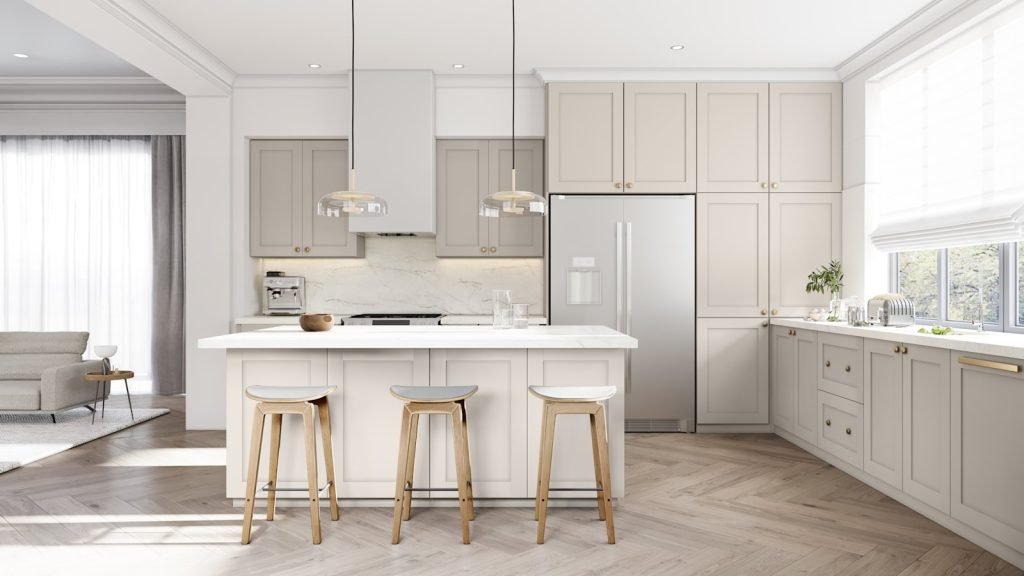 Cashmere frameless wide shaker kitchen cabinets with white marble counters and island, a marble backsplash and a wood floor. Fabuwood Tuscany.
A strong kitchen contractor is not just an order taker. They should guide you through layout, materials, and basic code requirements so your kitchen functions well and passes inspection.
Ask how design works in their process:
- “Do you provide design drawings or 3D renderings?”
- “Who measures and verifies the space?”
- “How many revisions are included before we order cabinets?”
At Savona, every kitchen package includes a design consultation. Our Custom, Designed Around You tier, starting at $25,000, adds 3D design rendering along with custom built cabinetry, premium countertops, fixtures, and finishing details, with final pricing driven by layout changes and selections.
On the technical side, ask:
- “How do you make sure clearances around the range, sink, and fridge meet code and feel comfortable?”
- “Who handles the permit drawings and meeting local inspectors?”
The National Kitchen & Bath Association publishes planning guidelines on NKBA that most professionals follow for things like walkway widths and landing spaces. Your contractor does not need to quote chapter and verse, but they should be familiar with standard clearances.
Material guidance also matters. For example, in many Central New Jersey homes we recommend quartz or quartzite for durability, and we work with brands such as Cambria, LX Hausys, and MSI Surfaces. You can learn more about surface options in our overview of Countertops, then ask your contractor to respond to your specific pros and cons.
9. What is your warranty and how do you handle service after completion?
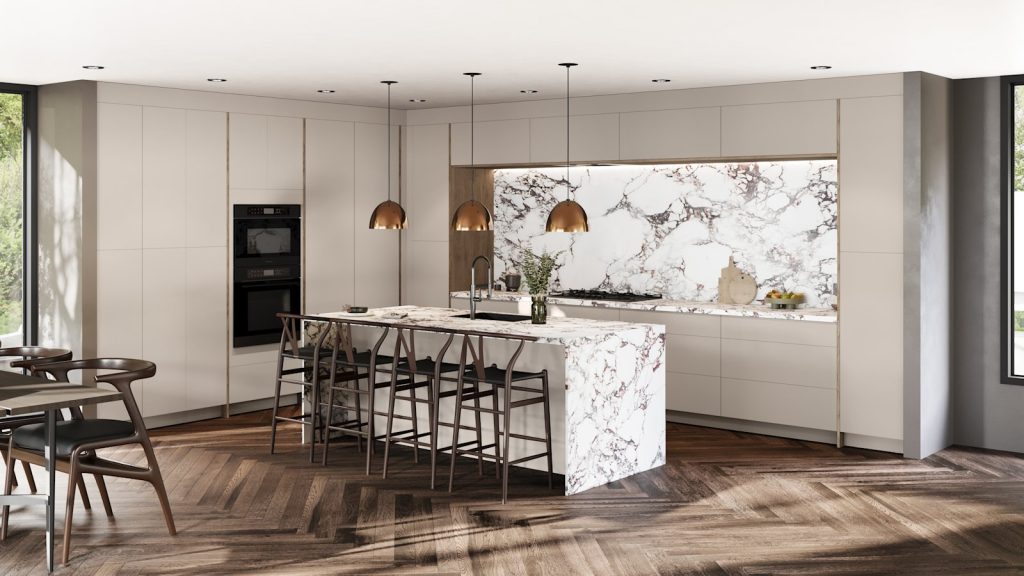 Cashmere handleless flat slab kitchen cabinets with copper dome pendants and built-in black ovens. Fabuwood Catalina.
Warranty support is where you find out if a contractor plans to be around after final payment. You want written warranty terms for both labor and materials and a clear process for service calls.
Ask:
- “What is your labor warranty period and what does it cover?”
- “How are manufacturer warranties handled if a cabinet or hinge fails?”
- “Who do I call for service and how quickly do you usually respond?”
If they sell cabinet lines like Fabuwood, have them explain how the manufacturer’s warranty works and what issues are covered. A contractor who deals regularly with reputable cabinet manufacturers should know how to submit claims and arrange replacements.
At Savona, because installation is done by our own in house team, you are not chasing multiple subcontractors if there is an adjustment needed on a door, drawer, or countertop seam. One point of contact is responsible for coordinating service across Green Brook, Piscataway, Somerville, Flemington, and the rest of our Central New Jersey service area.
Follow up with:
- “Can you give an example of a past warranty issue and how you resolved it?”
You are looking for evidence that they stay involved, communicate honestly, and do not disappear after the last check clears.
Frequently asked questions
What should I ask a kitchen contractor on the first visit?
Start with the basics: license and insurance, who will be in your home daily, what is included or excluded in their quote, and a rough schedule. Ask what cabinet lines they use and if they provide design help. That first conversation should give you a clear sense of their communication style and how they handle surprises in older New Jersey homes.
How many quotes should I get for a kitchen remodel?
Most homeowners do well with two or three detailed quotes. Any more and it becomes hard to compare. Make sure each quote specifies cabinets, countertops, labor, and what is excluded, like demolition and electrical work. Using structured packages, such as the ones on our Services page, can help you compare scopes accurately.
Should my kitchen contractor supply the cabinets?
It is usually easier if your contractor supplies and installs the cabinets, because one party is responsible for measurements, orders, and fitting. Some homeowners prefer to buy cabinets separately and hire a contractor just for labor. Savona supports both approaches with options from cabinets only up to full packages, depending on whether you already have a contractor.
How do I check if a kitchen contractor is legit in New Jersey?
Verify their New Jersey Home Improvement Contractor registration, ask for their insurance certificates, and confirm at least three recent local references. Visit a physical showroom if they have one and ask detailed questions about process and scope. You can also look at their Google reviews and project photos to see if they have experience in towns similar to yours.
What is a reasonable payment schedule for a kitchen remodel?
A fair schedule uses a modest deposit, then progress payments tied to clear milestones like rough work completion, cabinet installation, and final walkthrough. Avoid large upfront payments before any work begins. All payment terms should be written into your contract, along with how change orders and allowances are handled.
Conclusion: Bring these questions to your next kitchen conversation
Asking the right questions to a kitchen contractor gives you a clearer picture of who you are trusting with one of the most used rooms in your home. In Central New Jersey, where older layouts, local code requirements, and humidity all affect design decisions, those answers matter even more.
If you would like to walk through these questions with a working designer, visit our Green Brook Township showroom or schedule a Free Consultation. You can also reach out through our Contact page to share your layout and get a free estimate, whether you need cabinets only or a full, in house installation.


