
Quartz countertop thickness mainly affects strength, edge style, support needs and cost. The most common choices are 2 cm and 3 cm, and the right one for your kitchen depends on how you cook, your cabinet construction and the look you want.
Quartz countertop thickness is the measurement of how thick the engineered stone slab is, usually 2 centimeters or 3 centimeters. At Savona Kitchen & Bath in Green Brook, we walk New Jersey homeowners through this choice all the time, especially when we are pairing new quartz with semi custom cabinetry in a full kitchen remodel.
Below is how I would explain 2 cm vs 3 cm quartz to you at the showroom table, with real world pros and cons instead of buzzwords.
1. Basic differences between 2 cm and 3 cm quartz
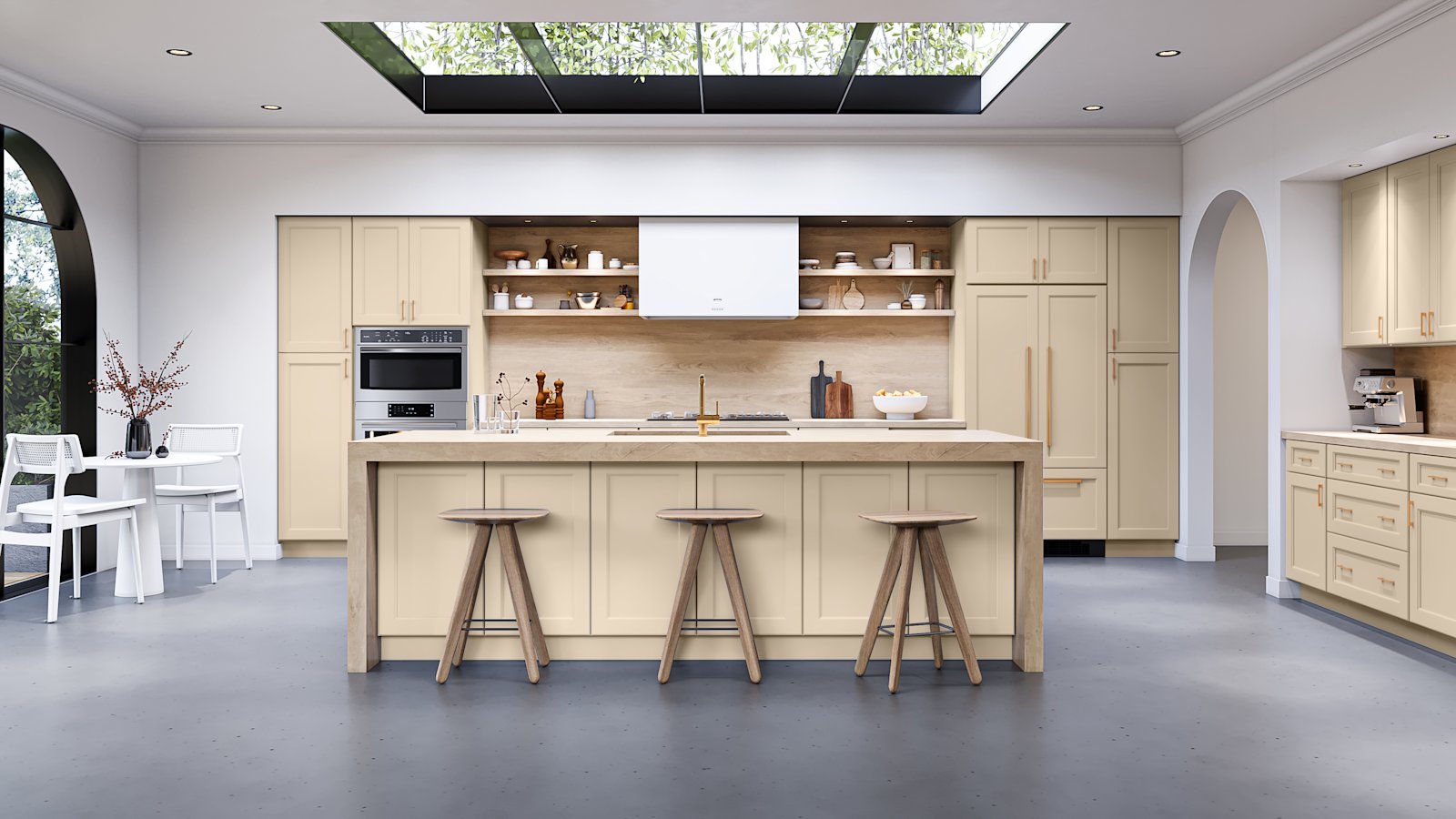
 Macadamia Beige transitional shaker kitchen cabinets with a wood-topped island, a skylit room, open shelving and a concrete floor. Fabuwood Fusion.
2 cm quartz is a thinner engineered stone slab that usually needs extra support, while 3 cm quartz is thicker, heavier and more self supporting. Both are made from the same quartz material; the thickness changes how the countertop behaves in your kitchen.
Most quartz brands we work with in Central New Jersey, like Cambria, LX Hausys, Vadara Quartz and MSI Surfaces, offer both thicknesses in many colors. The raw material is a mix of natural quartz and resins, following industry practices similar to those described by the Kitchen Cabinet Manufacturers Association for durable kitchen materials.
Here is a quick side by side you can refer to.
| Feature | 2 cm quartz | 3 cm quartz |
|---|---|---|
| Typical thickness | About 3/4 inch | About 1 1/4 inch |
| Weight per square foot | Lighter | Heavier |
| Need for plywood or extra deck | Often yes, especially over cabinets | Usually no on standard cabinet runs |
| Common edge look | Thinner, can be built up to look 3 cm | Naturally thick edge |
| Typical use | Bathrooms, modern kitchens, verticals | Most New Jersey kitchens, islands |
| Cost trend | Material can be lower, labor can add | Higher material, simpler installation |
| Crack resistance on long spans | More sensitive without support | More forgiving over dishwasher / openings |
Once you know these basics, the choice becomes about structure, style and budget, not just a number on a spec sheet.
2. Strength, durability and how you actually use the kitchen
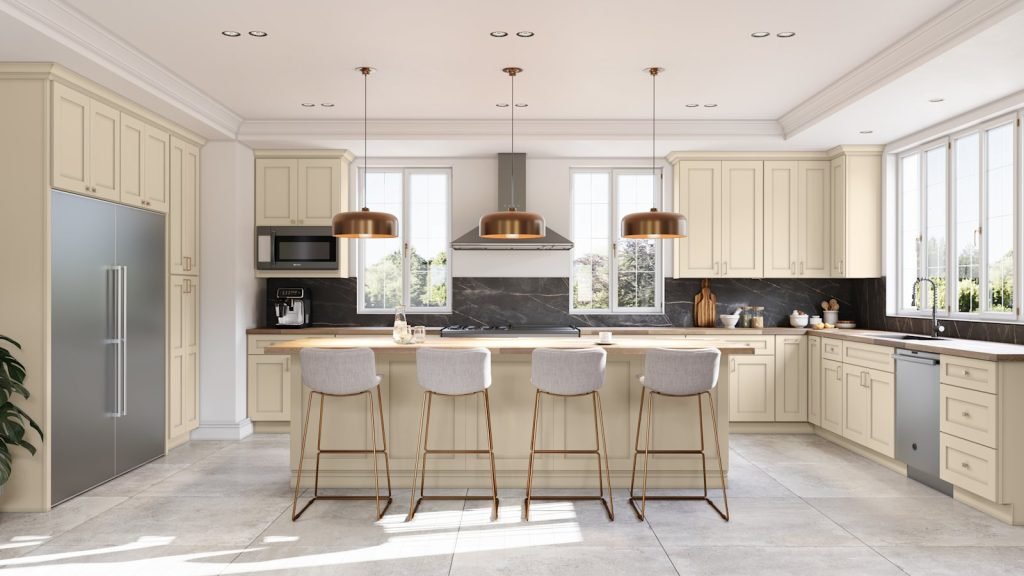 Macadamia Beige classic shaker kitchen cabinets with a dark backsplash, copper dome pendants and stainless appliances. Fabuwood Galaxy.
3 cm quartz is more forgiving for busy kitchens, heavy cooking and long unsupported spans, while 2 cm can perform well if it is properly supported. The thickness gives you a larger cross section of material to resist flexing.
In older New Jersey homes with slightly out of level floors, cabinets sometimes twist a bit over time. A 3 cm top helps bridge minor irregularities better than a thinner slab. That matters over appliances like dishwashers, where there is no cabinet wall under the stone. Industry guidance from the Natural Stone Institute notes that stone strength is closely tied to thickness and support; quartz behaves the same way in practice.
If you have a large island where kids will lean, do homework or you might occasionally stand on a stool to reach a pendant, I usually steer people to 3 cm. For a smaller galley kitchen where spans are short and cabinets are solid, 2 cm with the right subtop can still be a reliable option.
3. Support, plywood and what your cabinets can handle
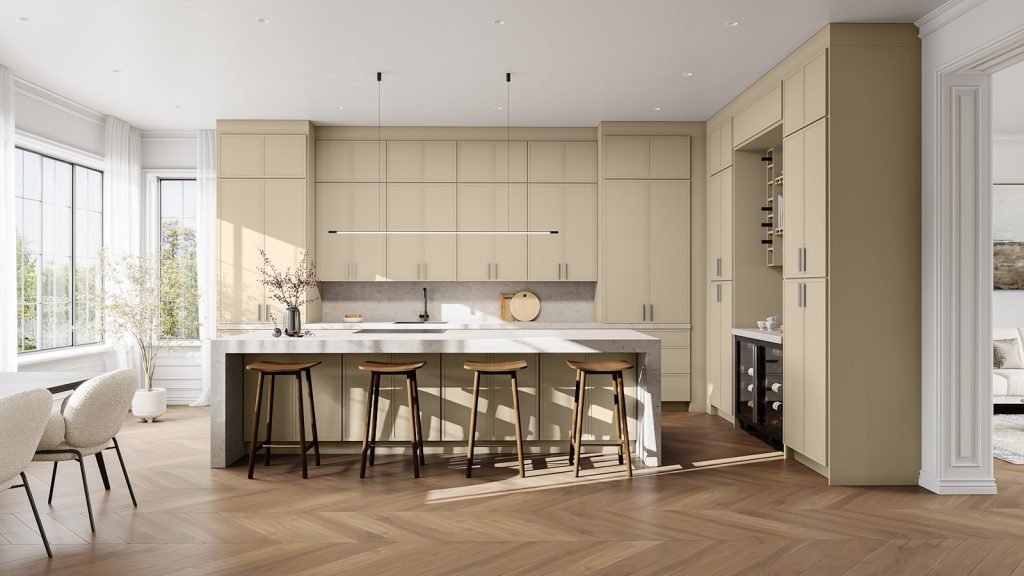 Macadamia Beige slim shaker kitchen cabinets with a contrasting charcoal island, a herringbone wood floor. Fabuwood Luna.
2 cm quartz almost always needs extra support, while 3 cm often can sit directly on well built cabinets. This is where your cabinet line and installation plan matter more than the marketing sheet.
With 2 cm, fabricators typically install a plywood or furniture board deck over the cabinets so the quartz cannot flex between cabinet walls. That adds material and labor, and it slightly raises the finished height. On framed cabinets, including many semi custom lines we use in our kitchen remodeling projects, this deck has to be carefully notched around rails and braces.
On 3 cm, most straight cabinet runs in the kitchen can support the top without plywood as long as the boxes are level and properly fastened. Areas like overhangs, breakfast bars and brackets still need engineering, but your main runs are simpler. The National Kitchen & Bath Association stresses in its guidelines that support at cabinet corners and across appliance openings is critical regardless of thickness.
If you are planning new cabinets along with your quartz, it is worth talking through cabinet construction and countertop thickness together in one design meeting. Our team often coordinates cabinet layout, countertop choice and installation scope as a single package so there are no surprises in the field.
4. Edge profiles and the look of the finished countertop
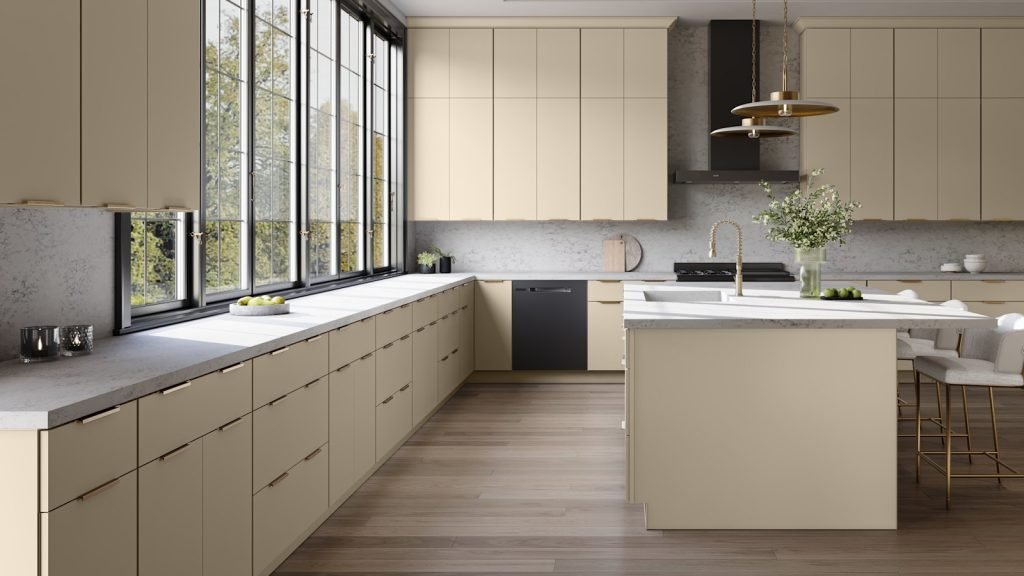 Macadamia Beige flat panel slab kitchen cabinets with white marble counters and island, black framed windows and long brass bar pulls. Fabuwood Luxe.
3 cm quartz gives you more edge profile options and a naturally substantial look, while 2 cm leans more minimalist unless you build up the edge. The thickness you pick will be visible every time you use your kitchen.
Many homeowners in Central New Jersey like a simple eased or small radius edge on 3 cm quartz. It looks clean but still has weight, and it pairs well with popular shaker styles. More decorative edges, like ogee or half bullnose, also read better on a thicker slab because there is more material to shape.
On 2 cm quartz, an unbuilt edge reads very slim, almost like a European cabinet showroom. That can be great for a very modern slab front kitchen. To get the visual heft of 3 cm, fabricators can laminate two layers at the edge, but that takes more fabrication time and careful seam work.
If you already know you want a particular profile, such as a thicker mitered edge on an island waterfall, let your designer know early. It might tip the balance between 2 cm and 3 cm once we see your layout and cabinet selections.
5. Cost differences between 2 cm and 3 cm quartz in real projects
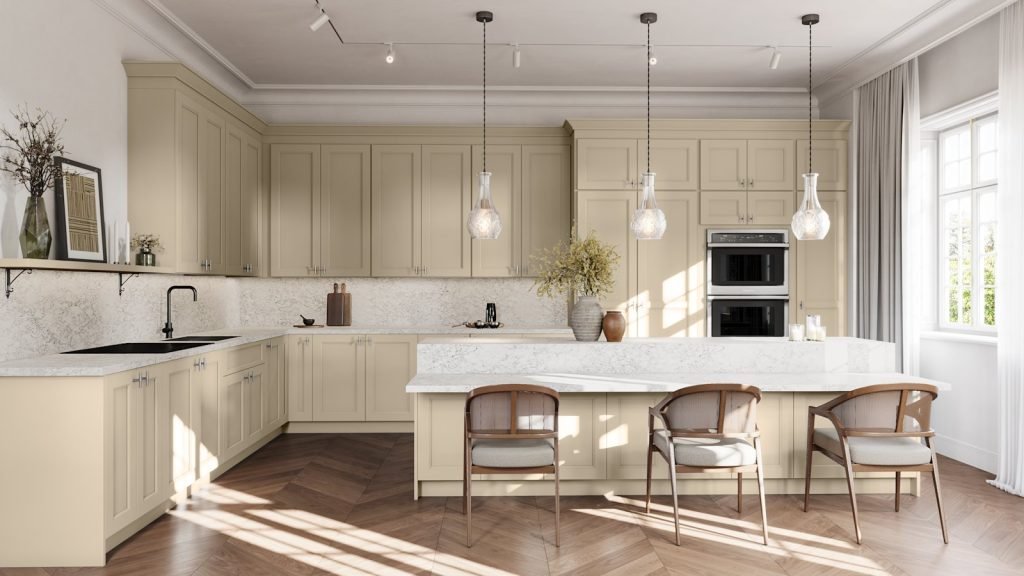 Macadamia Beige wide shaker kitchen cabinets with white marble counters and island, a matte black faucet and a herringbone floor. Fabuwood Nexus.
3 cm quartz typically costs more in raw material, while 2 cm can end up similar in total cost once you add extra support and fabrication. The exact difference depends on your layout, color group and how much build up is needed.
At Savona Kitchen & Bath, we usually discuss quartz thickness while we are pricing a full kitchen, not as a separate decision. Our Silver kitchen package with cabinets plus countertops starts from $9,999, and our Gold full kitchen package with cabinetry, countertop, sink and in house installation starts from $14,999. Final pricing always depends on your layout, cabinet line, quartz selection and installation scope, and these starting points exclude demolition, electrical, plumbing rough ins, flooring, tile and structural work.
In some small kitchens or bathrooms, 2 cm can be a smart value choice because the spans are short and there are fewer edges. In larger kitchens with long islands and multiple openings, the labor to shore up 2 cm and laminate edges can narrow or erase the savings compared to a straightforward 3 cm install.
If you want to see how thickness affects your own space, you can review current kitchen remodeling pricing for New Jersey projects and then have us fit your quartz decision into the bigger budget picture.
6. Design style, cabinet lines and where each thickness makes sense
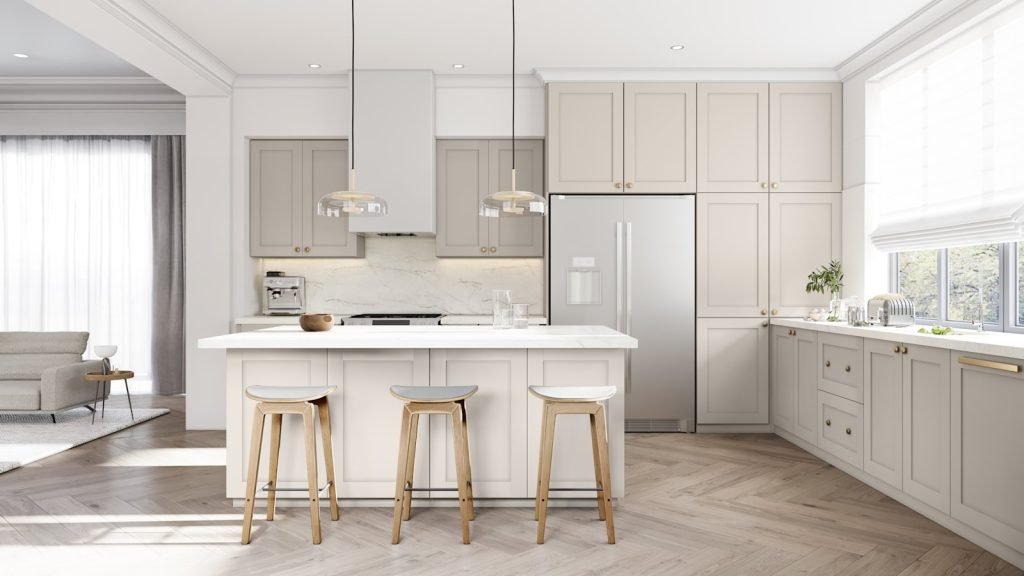 Cashmere frameless wide shaker kitchen cabinets with white marble counters and island, a marble backsplash and a wood floor. Fabuwood Tuscany.
3 cm quartz pairs naturally with most New Jersey kitchen styles, while 2 cm is best when you are after either a very modern, light look or working within tight height limits. The thickness should feel intentional, not like a compromise.
In many of the Central New Jersey homes we remodel, clients choose shaker or transitional doors with a 3 cm top because it balances traditional trim, taller backsplashes and standard height stools. It looks right at home in Warren colonials, Bridgewater splits and similar layouts.
For more contemporary frameless cabinets and sleek slab fronts, a 2 cm top can emphasize long horizontal lines. It also comes up in spaces where you are trying to keep a counter lower, for example under an existing window or where you want a thinner vanity top in a small bathroom.
Whatever direction you lean, it helps to handle actual door samples and quartz thicknesses together. At our Green Brook Township showroom you can compare door styles and finishes in person, then layer in quartz colors and thickness so every decision supports the overall look.
7. Practical tips for choosing quartz countertop thickness in New Jersey homes
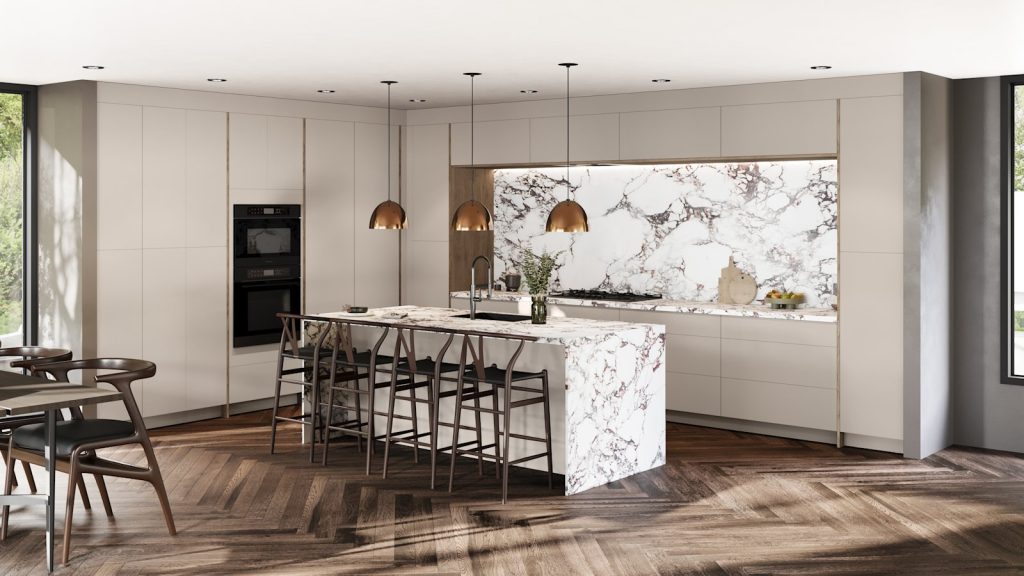 Cashmere handleless flat slab kitchen cabinets with copper dome pendants and built-in black ovens. Fabuwood Catalina.
The best way to choose quartz countertop thickness in a New Jersey kitchen is to weigh support, overhangs, cabinet quality, design goals and budget together, not in isolation. A few practical guidelines can simplify the decision.
If you have long spans, a big island, older framing or multiple appliances breaking up runs, 3 cm usually makes daily life easier with fewer support tricks. For small, compact layouts with short spans, 2 cm can be completely appropriate if your installer adds a proper subtop.
Think about height too. Bar seating, window sills, appliance trims and backsplashes all intersect with the top. A heavier 3 cm edge may align better with tile and outlet heights in many Central New Jersey homes, especially where we are leaving existing tile floors in place.
Most importantly, make the thickness decision together with an experienced designer and installer. Our in house installation team is used to working with quartz and quartzite every day, so we see where theory meets the realities of your specific cabinets and walls.
If you are starting to plan a kitchen remodel, you can review different kitchen cabinet options for New Jersey and then schedule a visit so we can look at thickness, color and edge profiles on your actual layout.
Frequently asked questions
Is 2 cm quartz too thin for a kitchen countertop?
2 cm quartz is not automatically too thin for a kitchen, but it does require proper support. With a continuous plywood deck and careful planning at appliances and overhangs, it can hold up well in smaller kitchens. For large spans, heavy use or older, slightly uneven cabinets, most homeowners are safer choosing 3 cm.
Is 3 cm quartz more expensive than 2 cm?
3 cm quartz typically has a higher material cost than 2 cm, but the total installed price can be closer than people expect. Thinner tops often need plywood sub tops and more fabrication time for built up edges. That added labor reduces the gap, especially in larger kitchens with long runs and islands.
Which is better for an island, 2 cm or 3 cm quartz?
For most kitchen islands, 3 cm quartz is the better choice. The extra thickness handles seating overhangs and wide spans more easily and gives the island a substantial, furniture like feel. If you want a very thin, modern island look with 2 cm, plan on more steel or wood support underneath.
Does quartz countertop thickness affect cabinet height?
Yes, quartz thickness adds directly to countertop height. A 3 cm top is roughly half an inch thicker than 2 cm, which can matter under low windows, tall backsplash outlets or at bar seating. In most kitchens, that small difference is not an issue, but it is worth checking tight spots in your layout.
Is 2 cm or 3 cm quartz better for bathrooms?
In bathrooms, 2 cm quartz often works very well because vanity spans are short and loads are lighter. It also keeps the countertop from looking bulky in small rooms. For a large primary bath with a long double vanity or a furniture style piece, 3 cm can provide a more solid, high end presence.
Planning your quartz countertops with a New Jersey kitchen designer
Choosing between 2 cm and 3 cm quartz is easier once you look at it on your actual floor plan with cabinet lines, appliances and seating. At Savona Kitchen & Bath in Green Brook, our design team works on kitchens across Central New Jersey, including towns like Bridgewater, Hillsborough and Basking Ridge, and we are used to the quirks of local homes.
If you would like a straightforward, line by line estimate that includes quartz thickness, cabinet options and installation scope, you can request a free estimate and then visit our showroom or share your layout remotely.


