
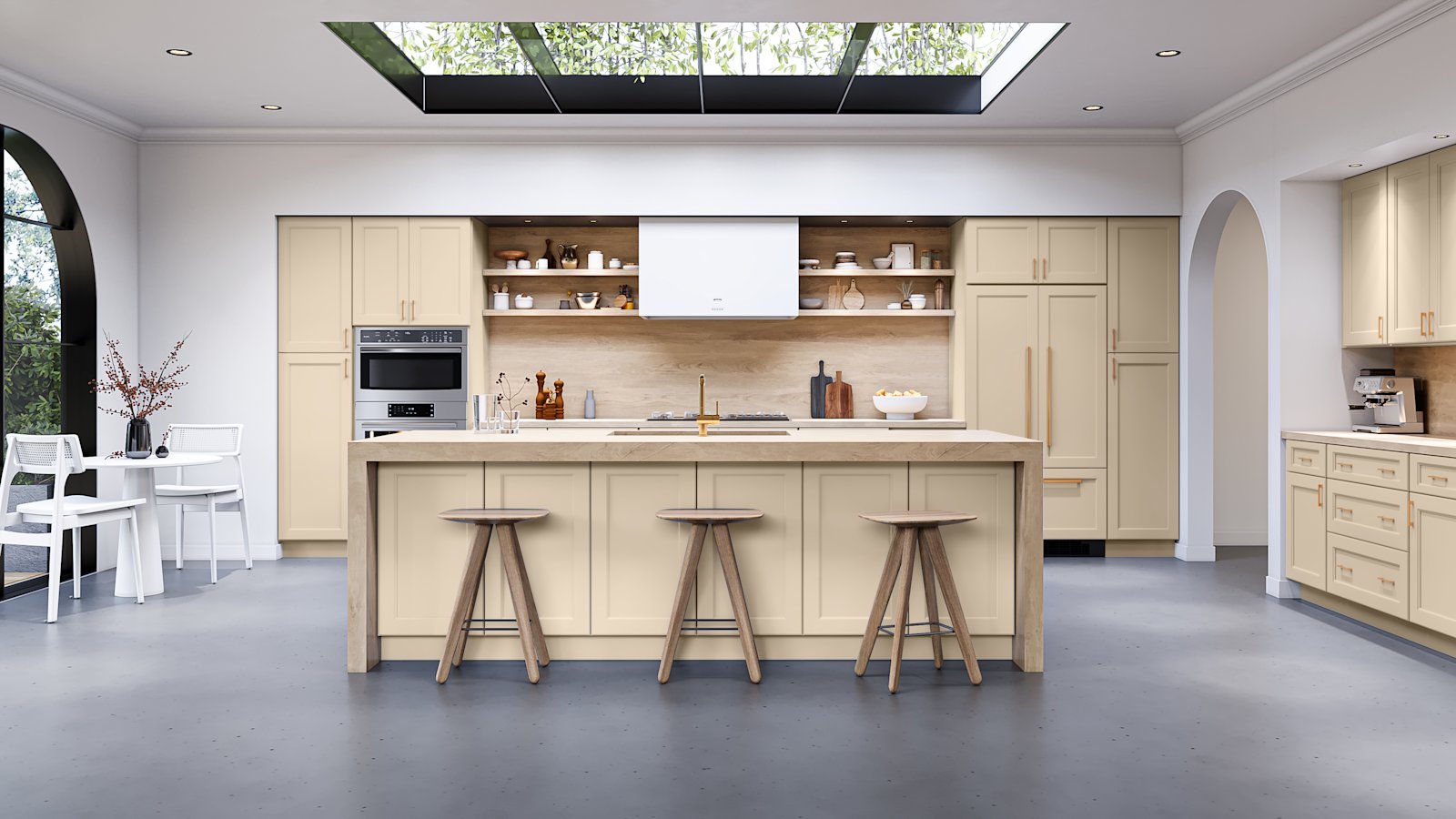
Porcelain countertops are durable, light, and highly resistant to stains and heat, but they can be brittle at the edges and tricky to fabricate. In a Central New Jersey kitchen, they are a strong option if you like a modern, thin-slab look and want very low maintenance with careful installation.
Porcelain countertops are a manufactured surface made from refined clay and minerals that are fired at very high temperatures to create a dense, nonporous slab for kitchens and bathrooms.
As a designer working in a Green Brook showroom every day, I see porcelain come up most often when homeowners are comparing it with quartz, quartzite, and sometimes ultra-compact products. Below is how I explain the tradeoffs at the design table, including realistic pros, cons, cost expectations, and what it takes to keep porcelain looking good over time.
Porcelain countertop pros homeowners actually notice
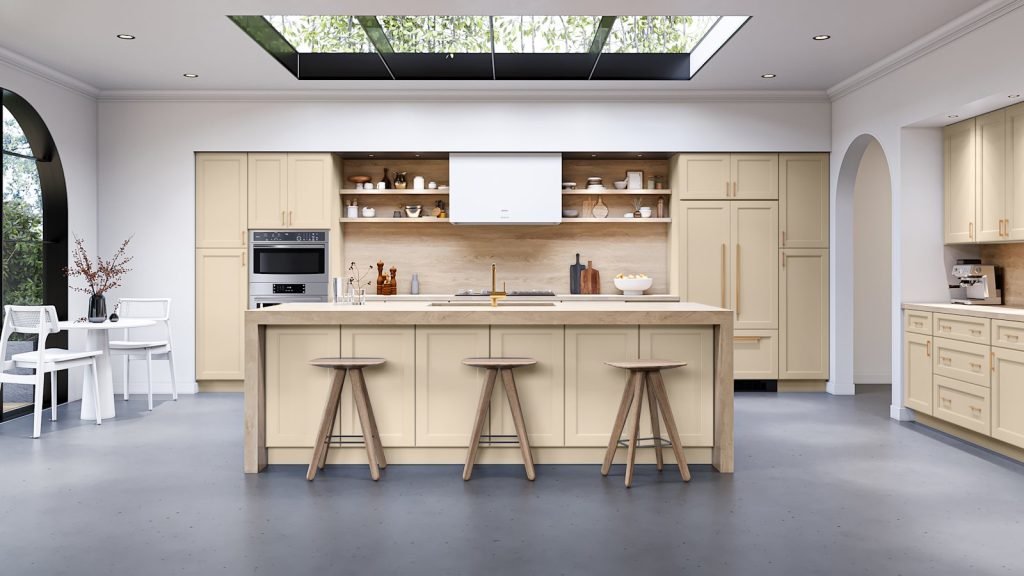 Macadamia Beige transitional shaker kitchen cabinets with a wood-topped island, a skylit room, open shelving and a concrete floor. Fabuwood Fusion.
The main practical advantages of porcelain countertops are stain resistance, heat resistance, thin and light construction, and a wide range of printed looks, including marble and concrete effects.
Porcelain is fired at temperatures high enough that the surface becomes extremely dense and nonporous. That means food oils, wine, coffee, and everyday spills wipe off easily before they have a chance to soak in. The Tile Council of North America notes that porcelain tile has very low water absorption, and the same principle applies to full-size countertop slabs made from similar body materials.
Heat performance is another strong point. You still want to use trivets for red-hot cast iron or long, high-heat cooking sessions, but porcelain is far more tolerant of occasional hot pots than many resin-based products. In a busy New Jersey family kitchen, that gives you a bit more margin for error.
Because porcelain slabs can be manufactured quite thin, they are lighter than most natural stones. That can make certain installations, like full-height backsplash cladding or large wall panels, easier for an experienced crew.
Visually, most homeowners like porcelain because it can mimic marble veining, concrete, or metal surfaces without the maintenance headaches of those materials. Digital printing technology allows patterns to run across a slab so that your island or wall panels have continuous movement.
Real disadvantages of porcelain countertops
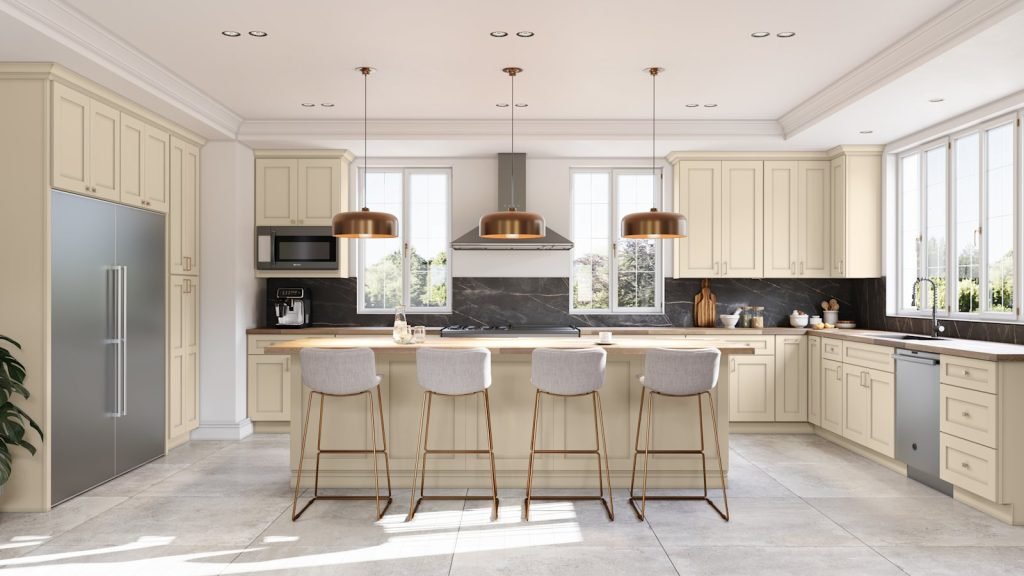 Macadamia Beige classic shaker kitchen cabinets with a dark backsplash, copper dome pendants and stainless appliances. Fabuwood Galaxy.
The main downsides of porcelain countertops are edge chipping, fabrication difficulty, visible underside and patterning issues, and limited edge profiles.
Even though porcelain is very hard on the surface, the material structure can be brittle at the edges. A sharp impact from a heavy pan on a thin overhang or corner can chip it. Those chips are often repairable, but they are not as forgiving as many solid quartz edges.
Fabrication and installation require a shop experienced with porcelain slabs. Cutting, polishing, and handling thin material is different from working with granite or quartz. If the wrong blades or techniques are used, you can see micro-chipping along cuts or weakness at cutouts. This is why choosing a fabricator used to porcelain is more important here than with many other materials.
Many porcelain slabs are printed on the top surface only. The body of the slab can be a different color, which may show at certain edges if they are not carefully mitered or finished. Homeowners who want a thick edge look often end up with a mitered build-up to hide the core, which adds fabrication complexity.
Edge options are more limited compared with granite or quartz. Simple profiles such as square, eased, or very subtle bevels tend to work best. If you love ornate edge details, porcelain is usually not the right material.
Porcelain vs quartz and natural stone
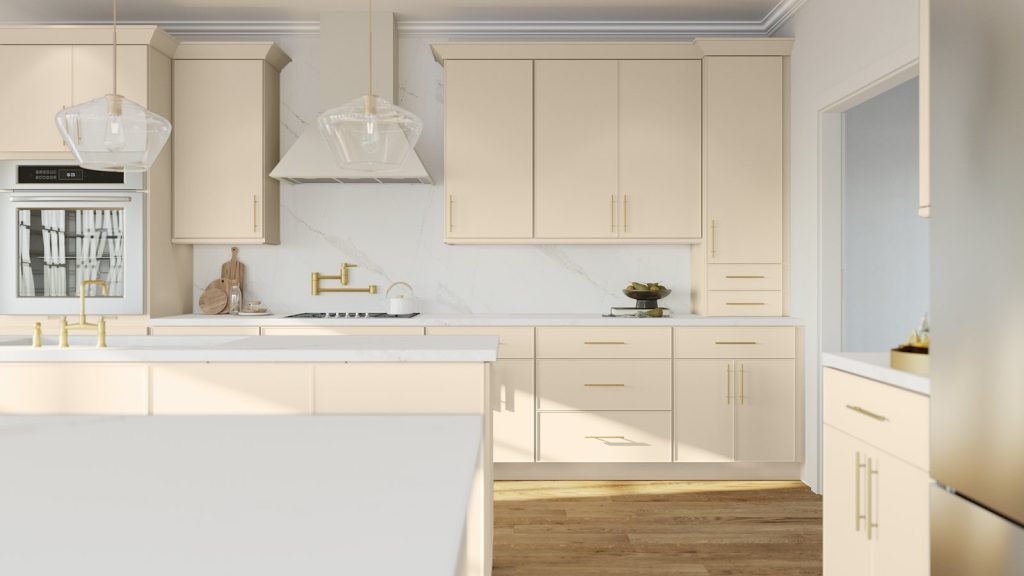 Macadamia Beige micro shaker kitchen cabinets with white marble counters and island, slim brass hardware and a light wood floor. Fabuwood Echo.
Porcelain countertops compare well with quartz and natural stone on stain and heat resistance, but they lag in edge durability and depth of pattern, while often winning on weight and certain modern looks.
Here is a simple side-by-side view to frame the choice.
| Feature | Porcelain Countertops | Quartz Countertops | Natural Stone (Granite / Quartzite) |
|---|---|---|---|
| Stain resistance | Excellent, very low absorption | Excellent for most products | Good to excellent, depends on stone and sealing |
| Heat resistance | Very good, can tolerate more heat than quartz | Moderate, resins can be damaged by high heat | Good, but shock and prolonged heat can still cause issues |
| Scratch resistance | Very hard surface, but brittle at edges | Good for everyday use | Very good, especially on harder stones |
| Edge durability | More prone to chipping if hit hard | Generally more forgiving | Generally strong, but varies by stone |
| Pattern / appearance | Printed designs, can look like marble or concrete | Consistent patterns, many colors | Natural variation and depth, every slab unique |
| Thickness / weight | Often thin and lighter | Standard thickness, heavier | Heaviest of the three |
| UV stability | Typically very good outdoors (check product specs) | Some products can fade in strong UV | Generally stable, color change is minimal |
| Required sealing | Usually no sealing | No sealing | Sealing recommended for most stones |
| Edge style options | Best with simple profiles | Many profiles available | Many profiles available |
Organizations such as the National Kitchen & Bath Association recommend looking beyond appearance when choosing surfaces, and instead matching material performance to how you actually cook and clean. If your household is hard on edges or you have young kids climbing around an island, quartz or a tougher natural stone might make more sense. If you like a sleeker, minimal profile and want something you barely have to think about day to day, porcelain stays in the running.
If you are comparing surface types for a full renovation, it can help to step back and look at the whole project. Our Central New Jersey clients often start with layout changes and cabinet choices through our kitchen remodeling services, then narrow down surfaces like porcelain, quartz, or quartzite once the working zone is defined.
Cost expectations for porcelain countertops in New Jersey
 Oyster transitional shaker kitchen cabinets with a wood-topped island, a skylit room, open shelving and a concrete floor. Fabuwood Fusion.
Porcelain countertop pricing in Central New Jersey typically sits in the same general band as higher midrange quartz and some quartzites, with cost driven by slab brand, pattern, thickness, fabrication complexity, and installation details.
You will see a wide range in the market, which is why an in-person or plan-based quote is essential. Slabs with more complex printed veining or from premium lines will cost more than simple, solid looks. Large islands, mitered waterfall ends, integrated drainboards, or full-height backsplash slabs add fabrication and handling time.
At Savona Kitchen & Bath, porcelain is usually part of a broader package rather than a standalone purchase. For example, our kitchen remodel offerings start with a “Silver, Cabinets plus Countertops” package from $9,999 and a “Gold, Full Kitchen Package” from $14,999. These starting points include design consultation, a semi-custom cabinetry package, and a countertop package, with final pricing depending on your layout, cabinet line, material choice, and installation scope. Demolition, electrical, plumbing rough-ins, flooring, tile, and structural changes are additional.
If you are at the rough-planning stage, our published kitchen remodeling pricing page describes these tiers and what is included. From there we can layer in specific surface options like porcelain, quartz, and quartzite as we refine your design.
Design options and styles with porcelain countertops
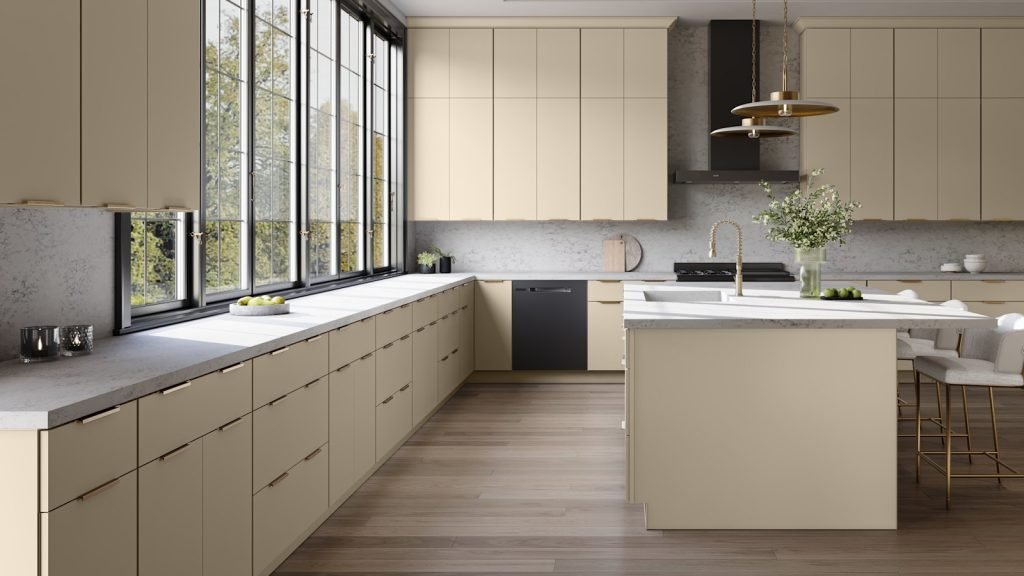 Macadamia Beige flat panel slab kitchen cabinets with white marble counters and island, black framed windows and long brass bar pulls. Fabuwood Luxe.
Porcelain countertops work especially well in contemporary and transitional kitchens that favor cleaner lines, thin profiles, and integrated wall cladding.
The printing and finishing technology used for porcelain slabs makes certain looks easier to achieve than with natural materials. These are some of the most common style directions homeowners bring into the showroom.
Marble-look porcelain
Marble-look porcelain is popular when you want a light, veined countertop without worrying about etching or high maintenance. You can achieve Calacatta- or Carrara-inspired visuals, often with large, bold veining that carries across the slab.
Because porcelain is nonporous and generally does not need sealing, you avoid the regular resealing that softer stones need. For New Jersey homeowners who love to cook with acidic ingredients, that is a tangible benefit.
Concrete and industrial looks
For more urban or industrial kitchens, concrete-look porcelain delivers the visual texture of concrete without its weight, porosity, or hairline cracking risk. Slightly mottled surfaces soften fingerprints and daily crumbs, which can be helpful in busy households.
Paired with flat slab cabinets or slimmer shaker doors from semi-custom lines, this style can create a very clean working kitchen that still feels approachable. If you are exploring cabinet door profiles and colors at the same time, a visit to our Green Brook Township showroom lets you see how these countertop looks play against different cabinet samples.
Wood, metal, and specialty finishes
Some porcelain collections offer wood grain, metal, or oxidized finishes. These are more specialized looks but can be striking in the right setting. A wood-look porcelain island with a stone-look perimeter, for example, gives contrast without introducing a real wood counter that needs more care.
These specialty finishes benefit from seeing large samples or actual installed projects, since small swatches do not always express how patterning repeats across a full run.
Installation details that matter with porcelain
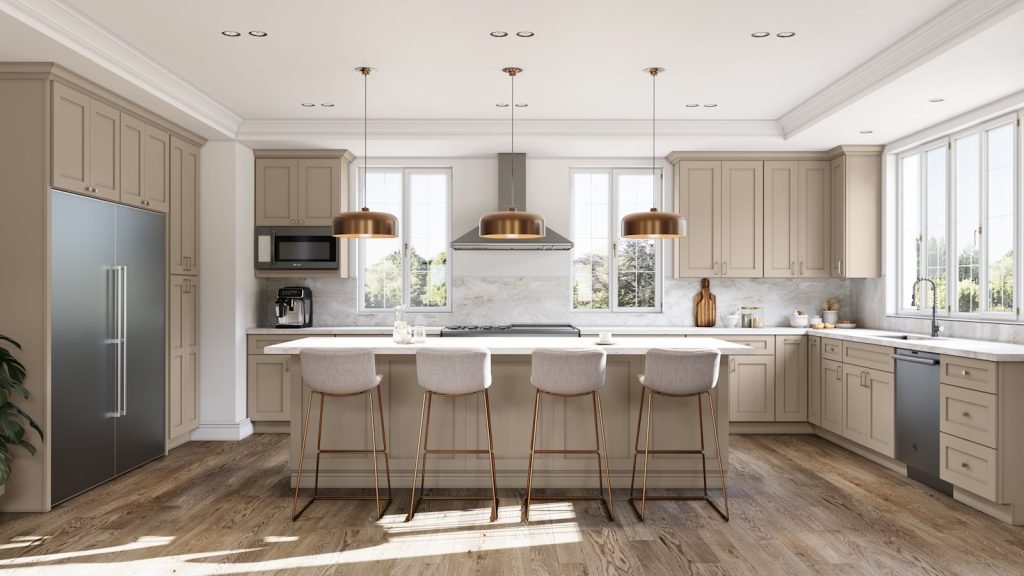 Oyster classic shaker kitchen cabinets with a dark backsplash, copper dome pendants and stainless appliances. Fabuwood Galaxy.
Porcelain countertop installations succeed when the fabricator understands the material, handles it carefully, and plans details like support and seams thoughtfully.
Substrate support is key. Even though many porcelain slabs are thin and strong, they still need a properly prepared cabinet base with minimal deflection. In older New Jersey homes where floors may have some bow or slope, your installer may recommend additional shimming or sub-top support to keep the counters aligned and reduce stress at seams.
Seam placement should account for the printed pattern. Because many looks depend on continuous veining, your fabricator needs to map how the design flows across seams and corners. Skilled shops can book match or continue veining from a perimeter run onto a waterfall side, but it takes planning and sometimes additional slab material.
Cutouts for sinks and cooktops need careful reinforcement and clean cutting techniques. The concentration of stress around these openings is higher with thin materials, which is why experience with porcelain is so important. At Savona, countertop installations are handled by our own in-house team, rather than subcontracted, so communication between design and installation stays tight from measure to final placement.
If you are pairing new surfaces with existing cabinets, expect your designer to look closely at cabinet construction and level before confirming a porcelain selection. In some cases, cabinet replacement as part of a full kitchen cabinets package is the more reliable foundation for higher-end countertops over the long term.
Everyday care and cleaning for porcelain countertops
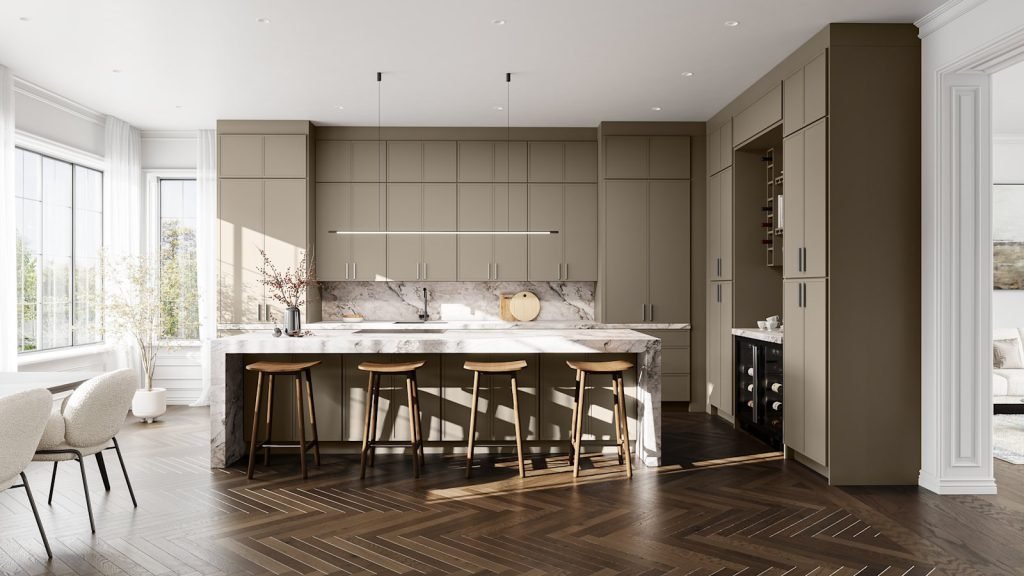 Oyster slim shaker kitchen cabinets with a contrasting charcoal island, a herringbone wood floor. Fabuwood Luna.
Caring for porcelain countertops is straightforward: use mild cleaners, avoid harsh abrasives, and protect edges from strong impacts.
For routine cleanup, a soft cloth or sponge with warm water and a gentle dish soap is usually enough. Nonabrasive, pH-neutral cleaners are also fine. Because porcelain is nonporous, you are not trying to pull stains out of the material; you are mostly removing residue from the surface.
Avoid harsh scouring pads or powders that could dull certain finishes. Many manufacturers provide specific care guidelines, and consumer resources such as Consumer Reports periodically test and compare the stain and scratch resistance of different countertop materials, which can give you additional confidence about real-world performance.
Trivets and cutting boards are still good habits. They protect both your counter and your cookware, and they reduce the risk of edge or corner impact from heavy items. Wiping up strong dyes like beet juice or food coloring sooner rather than later is a simple way to avoid any potential surface discoloration.
Unlike natural stone, porcelain generally does not need sealing, so there is no recurring product schedule to work into your home maintenance routine.
How porcelain countertops work with cabinets and layout
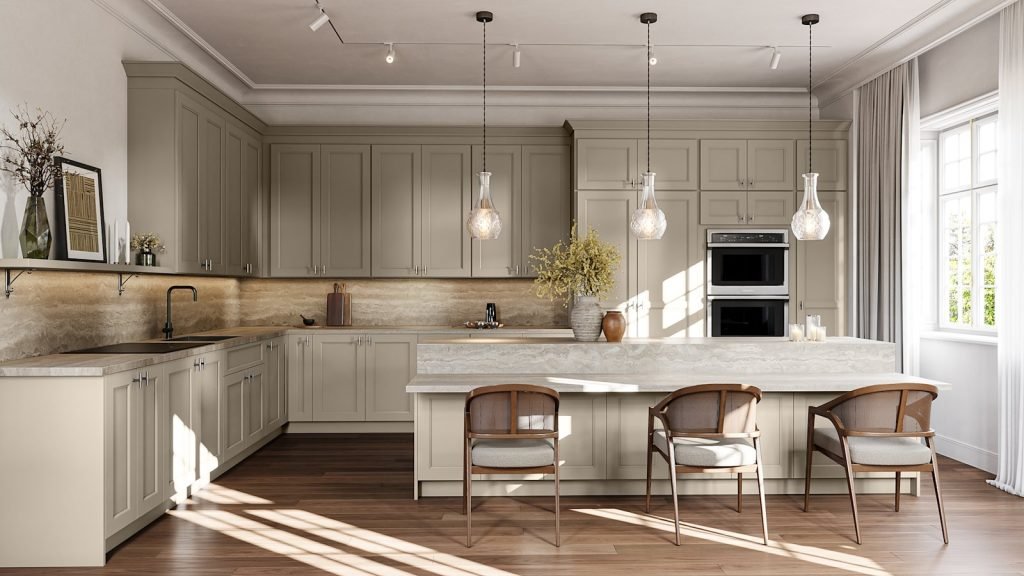 Oyster wide shaker kitchen cabinets with a matte black faucet and a herringbone floor. Fabuwood Nexus.
Porcelain countertops pair best with cabinets and layouts that support their thin profiles and emphasize function where you actually work.
In many Central New Jersey kitchens, space is at a premium and traffic paths are tight. A thin porcelain top with a subtle overhang can visually lighten the room, which helps in narrower galley kitchens and modest L-shaped layouts common in older homes. On the other hand, if you want a chunky, furniture-style island edge, porcelain may require a built-up mitered edge to achieve that look.
A careful designer will look at cabinet construction, corner treatments, and appliance placement before recommending porcelain. For example, an overhanging door by a busy fridge can be a common bump zone for countertop corners. In that case, easing or slightly rounding a corner can reduce the risk of future chips.
If you are starting from scratch on a full remodel, porcelain is one of several surface options we integrate early in the design process alongside cabinets, tile, and flooring. Our countertop selection support is typically part of a larger design package, so you can see how slab choices work with your backsplash, floor, and cabinet colors instead of treating them as isolated decisions.
When porcelain countertops are the right choice
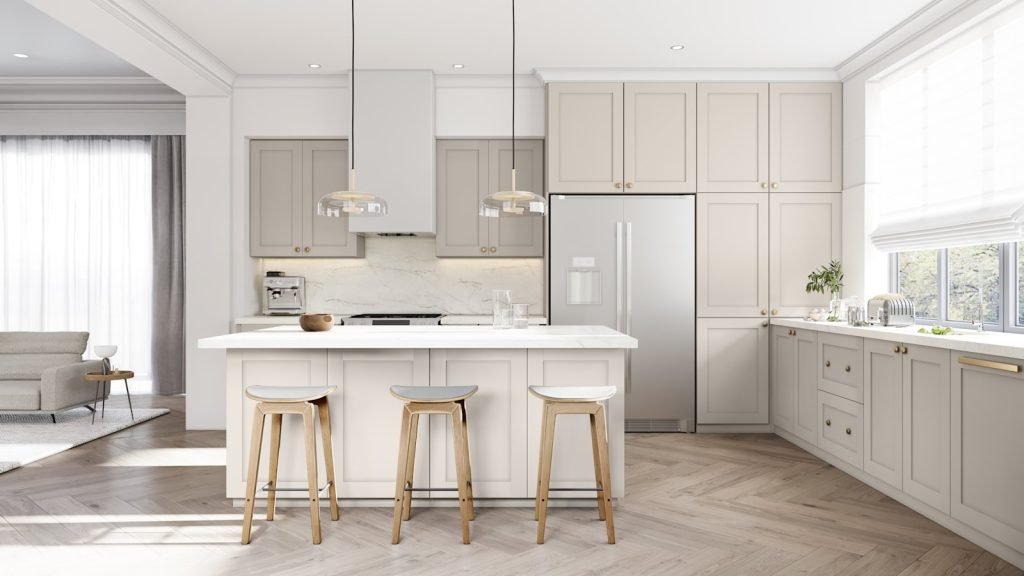 Cashmere frameless wide shaker kitchen cabinets with white marble counters and island, a marble backsplash and a wood floor. Fabuwood Tuscany.
Porcelain countertops are the right choice for homeowners who value low maintenance, a contemporary or marble-look aesthetic, and are comfortable investing in careful fabrication and installation.
If you cook often, entertain, and want a surface that handles spills without fuss, porcelain fits well. It also suits clients who like the idea of running one material across counters, full-height backsplashes, and even accent walls, since coordination is easier with manufactured slabs.
On the other hand, if you prefer more traditional edge details, want a strongly three-dimensional natural pattern, or know your household is rough on corners and overhangs, you may lean toward quartz or natural stone instead.
Porcelain is one of several solid options. The best choice is the one that fits your layout, your cooking habits, and the way you actually live in your kitchen, not just what looks good in a single photo.
Frequently asked questions
Are porcelain countertops more expensive than quartz?
Porcelain countertop pricing often overlaps with higher midrange quartz and some quartzites. Certain branded porcelain slabs and complex installations can be more expensive than basic quartz, while simpler porcelain looks may be similar. Final cost depends on the specific product line, slab size, edge details, and how involved the fabrication is for your layout.
Do porcelain countertops chip easily?
The flat surface of porcelain is very hard and stands up well to everyday use, but edges and corners can chip if struck sharply by a heavy object. Choosing simple edge profiles, slightly easing corners, and using care when moving heavy cookware help minimize risk. If a chip does occur, a skilled fabricator or repair specialist can often make it much less noticeable.
Can porcelain countertops be repaired if they crack?
Small chips and surface blemishes are often repairable, especially at edges. Full cracks through the slab are more difficult and may require section replacement depending on location and severity. The goal is to prevent cracks through proper support, smart seam placement, and careful handling during installation, particularly around sinks and cooktops.
Do porcelain countertops need to be sealed?
Most porcelain countertops do not require sealing because the material is fired to be dense and nonporous. That means liquids stay on the surface instead of sinking in, which simplifies maintenance. Always confirm care instructions with your specific product, but in practice, sealing is rarely part of the routine for porcelain surfaces.
Are porcelain countertops good for outdoor kitchens?
Many porcelain products perform well outdoors thanks to their resistance to UV light and temperature changes, but it depends on the specific line. Some are rated for exterior use, while others are intended for interiors only. For an outdoor kitchen in New Jersey, you will want to confirm the product’s exterior rating and plan installation details carefully to handle freeze-thaw cycles.
Conclusion: deciding if porcelain fits your New Jersey kitchen
Porcelain countertops offer a compelling mix of durability, low maintenance, and modern aesthetics, especially in Central New Jersey homes where space and layout can be challenging and daily cooking is the norm. The tradeoffs around edge durability and fabrication complexity are real, but manageable with the right team.
If you want to see porcelain side by side with quartz and natural stone, you can visit Savona Kitchen & Bath’s Green Brook Township showroom or share your layout remotely to compare options. To talk through which countertop material fits your project and budget, you can start with a quick free estimate request and we will walk you through your choices step by step.


