
MDF vs plywood cabinets comes down to how you balance cost, durability and finish quality between the cabinet doors and the cabinet boxes. In most Central New Jersey kitchens, plywood is the better choice for the box, while MDF can be the right call for certain painted doors and panels.
MDF is a manufactured wood product that uses wood fibers and resins pressed into dense, smooth sheets. Plywood is a layered sheet material made from thin veneers of wood glued with alternating grain directions for strength. Both can be excellent in a kitchen if they are used in the right place and detailed correctly.
As a working designer in Savona Kitchen & Bath’s Green Brook showroom, I see this decision come up in almost every design meeting. Below I will walk through where MDF makes sense, where plywood earns its keep, and how cabinet lines like Fabuwood actually combine materials in the real world.
1. Overall: when MDF vs plywood cabinets make the most sense
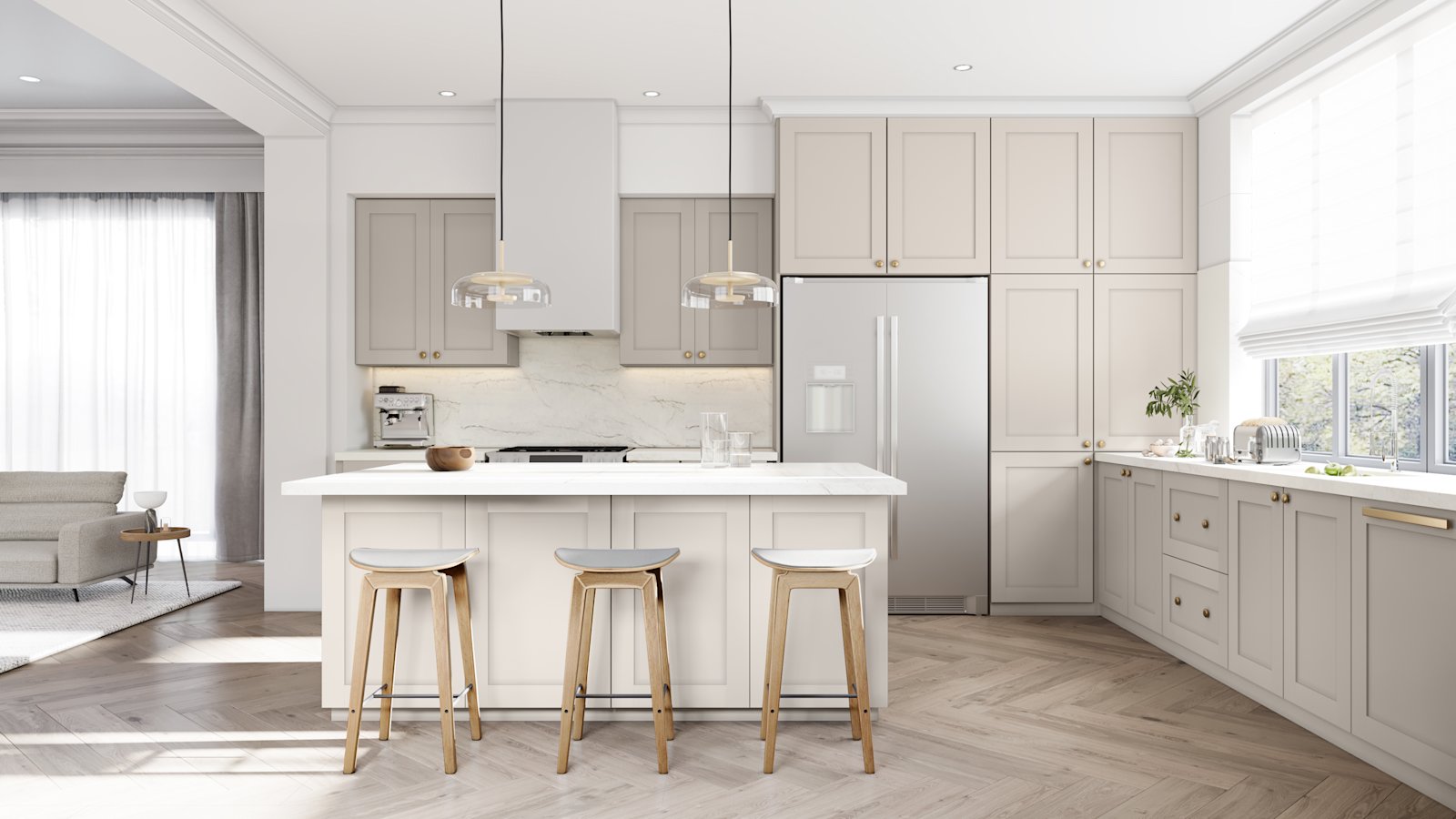
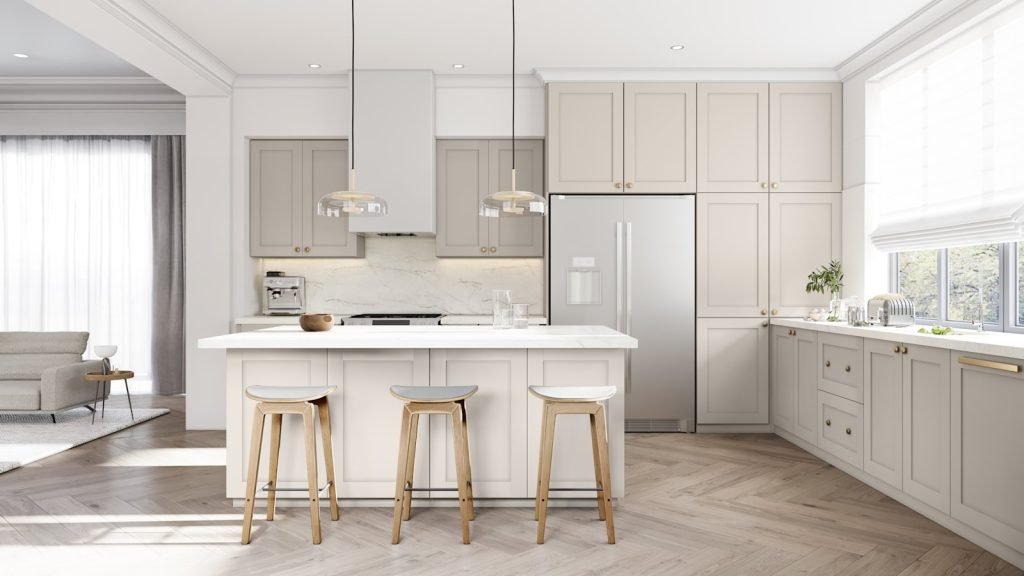 Cashmere frameless wide shaker kitchen cabinets with white marble counters and island, a marble backsplash and a wood floor. Fabuwood Tuscany.
Plywood cabinets make the most sense for the structural box, especially in a New Jersey kitchen that needs to carry heavy stone tops and hold up in our humid summers. MDF makes the most sense for painted door and drawer fronts, end panels and decorative pieces where a smooth, crack resistant finish is the priority.
Most semi custom cabinet lines, including Fabuwood, do not build full kitchen boxes out of MDF. Instead, you typically see a plywood or furniture board box, then a mix of solid wood and MDF in the doors and trim. Plywood’s cross laminated construction handles weight and fasteners very well, according to the Kitchen Cabinet Manufacturers Association guidelines on structural performance.
MDF can be the smarter material for painted Shaker or slab doors because it does not have wood grain or knots telegraphing through the finish. Used correctly, that can mean a smoother, more uniform paint surface over time.
2. Material basics: how MDF and plywood are made
 Carbone Matte handleless flat slab kitchen cabinets with white marble counters and island, copper dome pendants and built-in black ovens. Fabuwood Catalina.
MDF is an engineered wood product that is very dense, smooth and consistent from sheet to sheet. It is made from fine wood fibers mixed with resin and pressed under high pressure. That consistency is why MDF machines cleanly and takes a painted finish so evenly.
Plywood is built from layers of thin wood veneers glued with alternating grain directions. This alternating pattern is what gives plywood its strength in multiple directions. Higher quality cabinet plywood is typically rated for interior use and can be finished clear or painted.
From a designer’s perspective, MDF behaves more like a very heavy, smooth board, while plywood behaves more like traditional lumber with visible grain. The National Kitchen & Bath Association notes that both fall under the broader category of engineered wood products, each with its own best use case in cabinetry.
3. Doors: MDF vs plywood for cabinet door construction
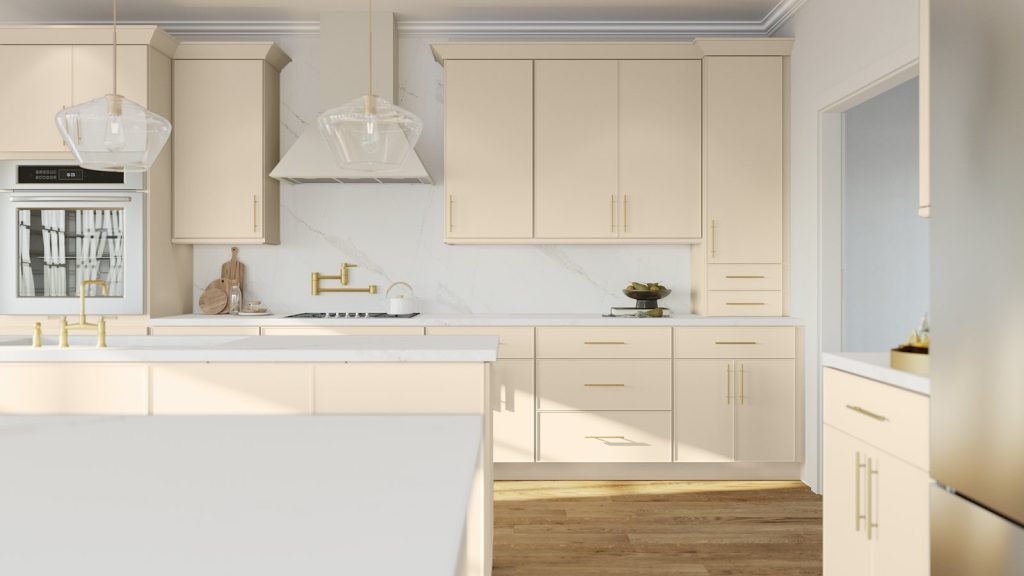 Macadamia Beige micro shaker kitchen cabinets with white marble counters and island, slim brass hardware and a light wood floor. Fabuwood Echo.
For cabinet doors, MDF shines for painted styles, while plywood or solid wood is preferable for stained finishes. In practice, many painted doors use a combination, such as MDF center panels with wood frames, to balance stability and crisp detail.
MDF door panels stay very flat and resist the minor seasonal expansion and contraction that can make hairline paint cracks appear at the joints of all wood doors. That is why so many homeowners who want a smooth white Shaker look end up in an MDF based painted door construction.
Plywood doors are lighter than solid MDF slabs and can be a good choice for more contemporary slab styles that will be stained rather than painted. However, plywood edges need to be banded and the grain is visible, so for most classic New Jersey kitchens that want a painted shaker profile, MDF based options are more common.
Fabuwood, as an example, offers a range of painted door styles in their Allure series, like Galaxy and Fusion, and in their Quest and Value Premium framed lines. While the exact door core construction is proprietary to Fabuwood, the smooth painted finishes you see on their display doors in our Green Brook Township showroom are typical of high quality MDF or engineered wood based paint systems.
4. Cabinet boxes: MDF vs plywood for strength and longevity
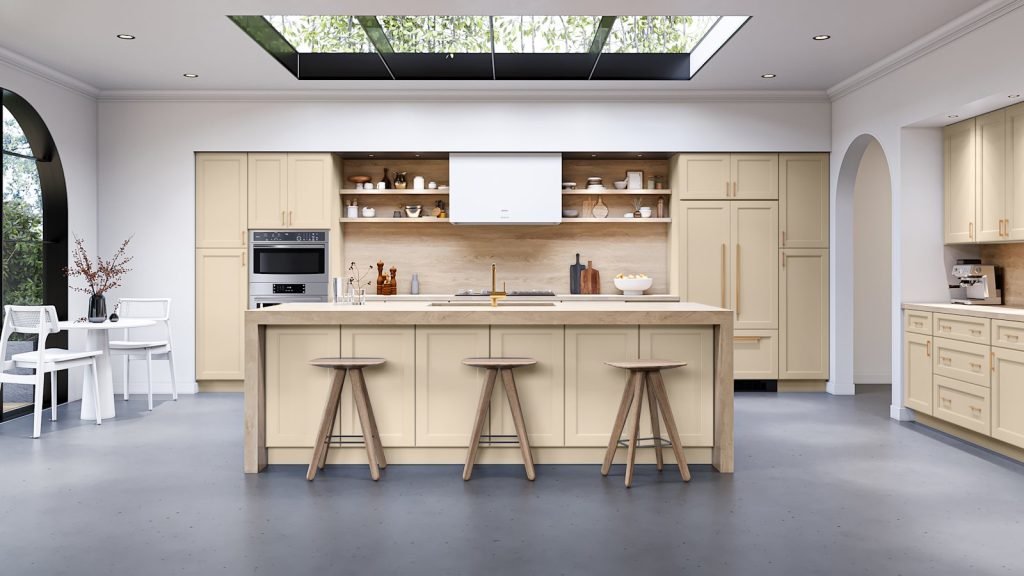 Macadamia Beige transitional shaker kitchen cabinets with a wood-topped island, a skylit room, open shelving and a concrete floor. Fabuwood Fusion.
For cabinet boxes, plywood is generally stronger, better with fasteners and more forgiving of minor water exposure than MDF. That is why plywood boxes are a feature many homeowners ask for when we review cabinet lines and pricing tiers.
Plywood side panels hold screws very well, which matters for door hinges, drawer slides and the anchors that secure cabinets to the wall. The KCMA performance standards for cabinets emphasize these load and impact tests, and plywood box construction helps manufacturers meet or exceed them.
MDF box construction is heavier and more prone to fastener tear out if overloaded or not properly supported. It also tends to swell more if it takes on water. In a Central Jersey kitchen with stone countertops and large drawers for pots, pans and pantry items, plywood is the safer call for long term durability.
Within the Fabuwood lineup, the Allure series offers a framed cabinet with a plywood box and soft close hardware, which is a strong value profile for many full kitchen remodels. The frameless Illume and Ovela lines, along with the Quest and Value Premium series, each have their own construction details and finishes, giving us options across budgets and styles while still respecting box strength.
5. Durability: moisture, movement and everyday wear
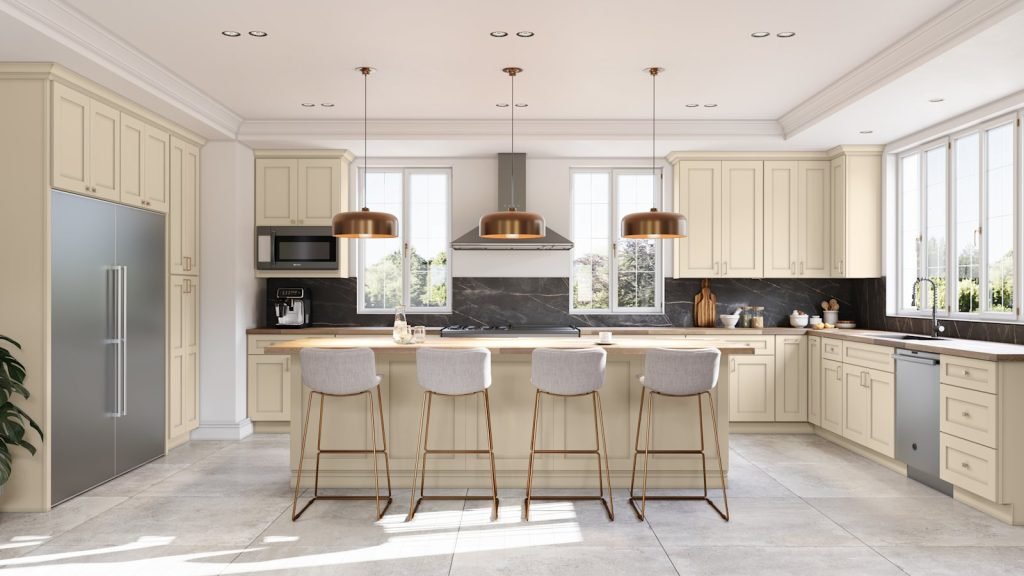 Macadamia Beige classic shaker kitchen cabinets with a dark backsplash, copper dome pendants and stainless appliances. Fabuwood Galaxy.
Plywood performs better than MDF in areas that see moisture swings, heavy loads and frequent door or drawer use. MDF performs better in terms of resisting small cosmetic issues on painted surfaces, such as hairline cracks or grain telegraphing.
In New Jersey’s humid summers, plywood’s cross laminated structure is more tolerant of modest moisture changes inside walls and behind cabinets. MDF, especially at edges and unfinished surfaces, is more vulnerable to swelling if water reaches it, such as from a leak under the sink that goes unnoticed.
On the other hand, MDF’s lack of grain makes it dimensionally more consistent as a flat panel. That means center panels in doors are less likely to shrink or expand enough to stress the paint film. Many homeowners who are sensitive to small paint lines around door panels appreciate that stability on light colors.
Everyday dings and bumps are fairly similar between the two. Both materials are protected by the cabinet’s finish system, which is why choosing a reputable manufacturer and installer matters as much as the core material. Savona’s in house installation team is trained to support cabinets correctly and seal vulnerable cut edges as needed around sinks and appliances.
6. Finish quality: painted vs stained looks on MDF and plywood
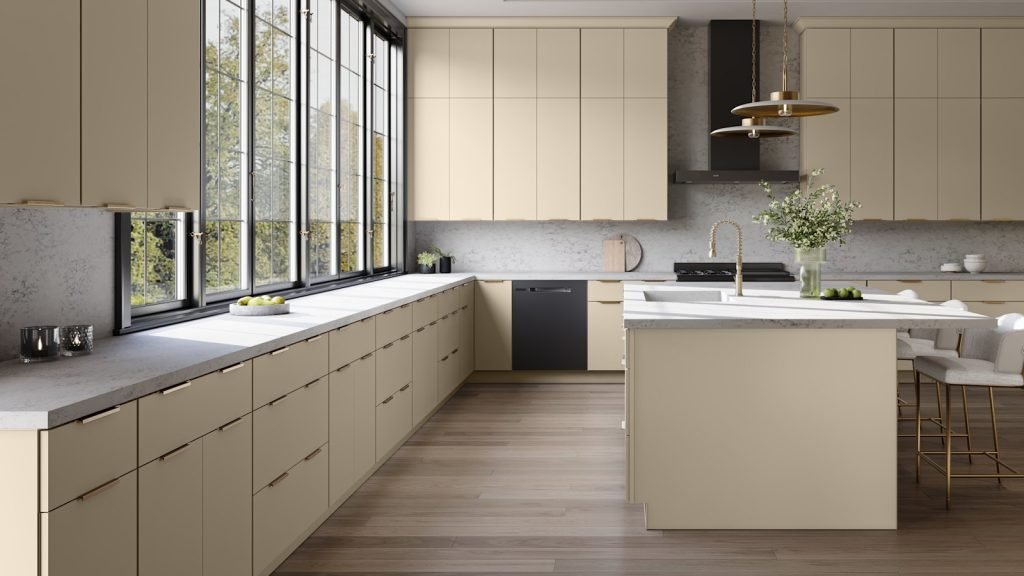 Macadamia Beige flat panel slab kitchen cabinets with white marble counters and island, black framed windows and long brass bar pulls. Fabuwood Luxe.
For painted cabinets, MDF usually yields the smoothest, most consistent finish, while plywood and solid wood are preferred if you want to see grain and use stain. The choice is more about the look you want than a simple “better or worse.”
Painted MDF doors and panels do not show wood grain texture through the finish. That is ideal for the clean, matte or satin painted kitchen styles many Central New Jersey homeowners ask for, from classic white Shaker to softer grays and blues. Lines like Fabuwood Allure and Quest have multiple painted options that work well in these kitchens.
If you prefer a stained finish that highlights natural wood character, then plywood with a wood veneer or solid wood frames and panels are the correct path. MDF does not absorb stain attractively, so it is almost always used under paint. For clients choosing quartz or quartzite countertops with warmer veining, we often pair those tops with stained collections in Fabuwood or other semi custom lines that show off the wood grain.
Third party testing from sources such as Consumer Reports consistently notes that high quality cabinet finishes are critical to resisting stains, moisture and abrasion. Material choice is part of the story, but the factory finish system and proper installation are equally important to how your kitchen ages.
7. Cost, cabinet lines and how we design MDF vs plywood together
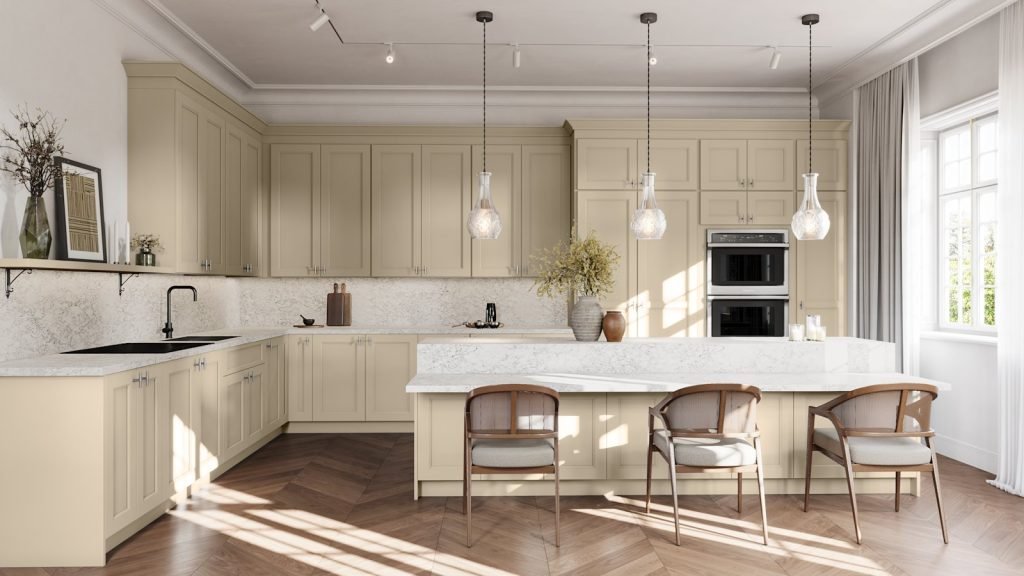 Macadamia Beige wide shaker kitchen cabinets with white marble counters and island, a matte black faucet and a herringbone floor. Fabuwood Nexus.
MDF generally costs less than furniture grade plywood per square foot, especially in thicker sections. In a real kitchen project, though, what you pay is driven more by the cabinet line, door style, finish and hardware package than by whether a single panel is MDF or plywood.
At Savona Kitchen & Bath, most full kitchen projects use a plywood box line paired with painted or stained doors. For example, a Fabuwood Allure kitchen with a plywood box and soft close hardware is a common backbone for our Bronze and Silver level kitchen cabinet packages, with different countertop and installation options layered on top.
Our Bronze “cabinets only” kitchen package starts from $4,999 and includes design consultation, a semi custom cabinetry package, material coordination and delivery. Installation is not included in that tier, which works well for homeowners who already have a trusted contractor. Pricing always depends on your layout, cabinet line, door style, finish choice and installation scope, and these starting figures exclude demolition, electrical, plumbing rough ins, flooring, tile and structural work.
If you prefer to have us handle more of the process, our full kitchen remodeling options start with a Silver level that combines cabinets and countertops, and extend up through Gold and fully custom packages. You can review typical kitchen remodeling pricing for New Jersey homes on our website before we even meet.
When I design a kitchen, I rarely specify “all MDF” or “all plywood.” Instead I decide which collection and construction level fits your budget and durability needs, then we talk through where MDF panels may be used for finish quality and where plywood is giving you the box strength you want.
How MDF vs plywood plays out with countertops, flooring and layout
Choosing MDF vs plywood also interacts with other pieces of your project. Heavy quartz and quartzite countertops, which are the surfaces we work with most, add significant weight to base cabinets. In older Central Jersey homes with uneven floors, a plywood box and proper shimming by an experienced installer matter that much more to keep your tops stable.
Flooring upgrades also affect cabinet exposure to moisture. If we are coordinating new tile or luxury vinyl plank, we will look closely at dishwasher and sink locations and at how vulnerable toe kick areas are to spills. You can see cabinet, countertop and tile samples together in our Green Brook showroom to understand how all of these materials work as a system.
For smaller galley kitchens in towns like Somerville or Middlesex, frameless cabinet lines such as Fabuwood Illume and Ovela can reclaim a bit of interior space while maintaining a strong box structure. In more traditional colonial layouts across Bridgewater, Basking Ridge or Hillsborough, framed plywood box lines with Shaker doors remain the most popular pairing with light colored quartz.
Frequently asked questions
Is MDF or plywood better for kitchen cabinet doors?
For painted doors, MDF or MDF center panels are usually better because they give a smoother, more crack resistant finish. For stained doors that show grain, plywood with wood veneer or solid wood is better. In practice, many quality cabinet lines combine wood frames with MDF panels to balance stability and appearance.
Are MDF cabinets okay in a humid kitchen?
MDF is fine in a humid kitchen if it is used in the right places and properly finished and sealed. Door and drawer fronts, decorative panels and moldings hold up well under a good factory paint system. For the cabinet box, especially near sinks and dishwashers, plywood is usually safer in New Jersey’s humidity and in older homes where minor leaks are more likely.
Do plywood cabinet boxes really last longer than MDF?
Plywood cabinet boxes typically last longer because they handle weight, screws and minor moisture better than MDF. The cross laminated layers resist sagging and fastener pullout under heavy loads, like stone countertops and deep drawers. Longevity still depends on installation quality and general care, but plywood starts with an advantage for structure.
Are MDF cabinets cheaper than plywood cabinets?
MDF panels are usually cheaper than comparable plywood, but total cabinet cost is driven more by the cabinet line, finish, hardware and design than by any one material. A well built plywood box line with some MDF door components can cost less than a premium painted line from another brand. At Savona we walk you through the cabinet series and pricing tiers so you can see where your money is going.
Can I mix MDF doors with plywood boxes in the same kitchen?
Yes, mixing MDF doors with plywood boxes is common and often ideal. Plywood carries the structural load and fasteners, while MDF doors give you a smooth painted finish. Many semi custom lines are engineered exactly this way, so you get the best traits of both materials without having to custom engineer anything yourself.
Moving forward with your cabinet choices in Central New Jersey
Choosing between MDF vs plywood cabinets is really about deciding where each material belongs in your specific kitchen, given your budget, layout and finish preferences. The right answer for a Bridgewater colonial with a large island may be different from a Belmar condo galley or a Basking Ridge new build.
The simplest next step is to share your layout and let a designer walk you through cabinet lines, construction levels and pricing. You can visit our Green Brook Township showroom to compare door styles and finishes in person, or start the process online and request a free estimate for your kitchen project.


