
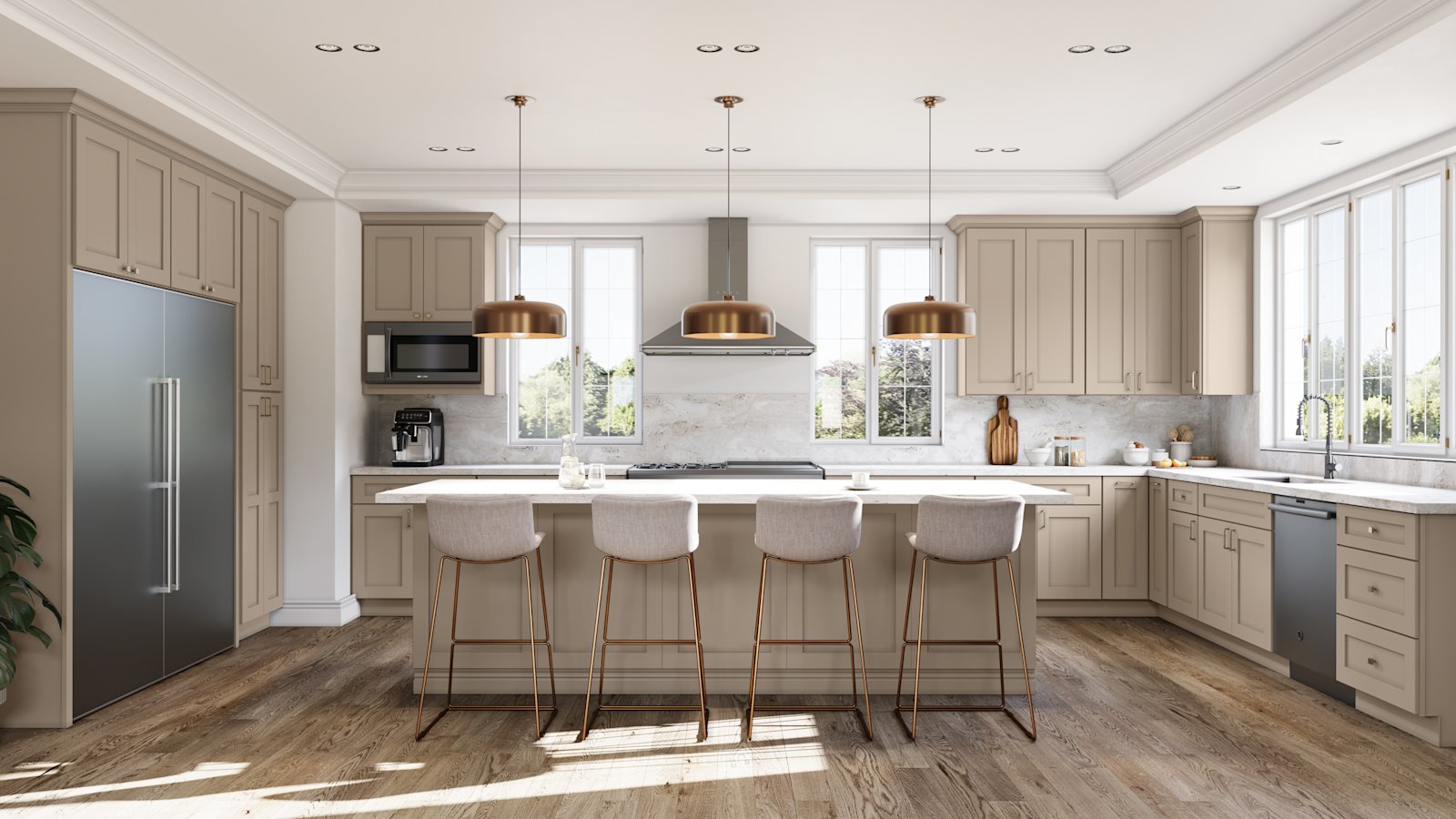
Most homeowners in New Jersey who say “I want a kitchen stone counter” are actually choosing between granite, quartz, quartzite and marble. The right answer depends on how you cook, clean, and how much maintenance you are willing to live with.
Kitchen stone countertops are durable work surfaces made from natural or engineered stone that provide a hard, heat resistant and visually striking area for cooking and prep. In the Green Brook showroom I usually walk people through how each stone behaves in a real kitchen, then match it to their habits, not just the photos they liked on Instagram.
Below is how I explain kitchen stone counters at the design table, including the tradeoffs, cost drivers and what works best in older Central New Jersey homes.
1. Granite kitchen countertops: classic natural stone with pattern and movement
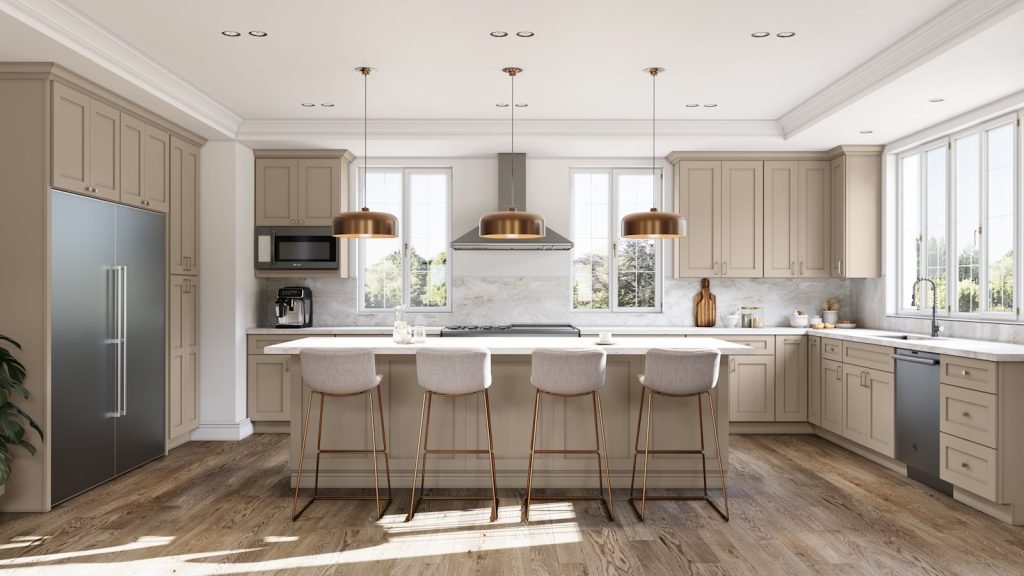 Oyster classic shaker kitchen cabinets with a dark backsplash, copper dome pendants and stainless appliances. Fabuwood Galaxy.
Granite is a natural stone countertop material that offers distinctive pattern, high heat resistance and a wide range of color variation from slab to slab. Homeowners who like visible movement and a “real stone” feel usually start here.
Granite is strong and handles hot pans better than most synthetic surfaces, but it still needs care. Many granites benefit from periodic sealing to resist staining from oil, wine and tomato sauce. The Natural Stone Institute explains how sealers help reduce absorption but do not make stone bulletproof.
For New Jersey kitchens with lots of natural light, granite’s varied pattern can help disguise crumbs and minor wear on busy islands. It also works well in split-level and Cape-style homes where we are tying into existing hardwood or tile. Just know that each slab is unique, so what you saw online will not match your actual piece exactly.
Pros of granite countertops
Granite’s biggest strengths are durability and heat tolerance. A well chosen slab will handle decades of daily cooking without looking tired.
- Very good resistance to scratches from everyday use
- With proper sealing, good resistance to many common stains
- Handles moderate heat from pots better than many man-made materials
- Huge variety of patterns and movement, from quiet to bold
- Often a good visual bridge between white cabinets and darker floors
Cons of granite countertops
The same things people love about granite can create challenges in design and maintenance.
- Requires periodic sealing to help protect from stains
- Some granites have more pits and fissures that collect residue
- Strong pattern can clash with very busy backsplashes
- Color and veining vary, so slab selection in person is important
- Repairs to chips on edges can be visible depending on the stone
For homeowners comparing full kitchen packages, granite is often a fit in Savona’s Silver or Gold kitchen options, depending on the exact slab and layout. Those packages start at set price points, but the final number always depends on the stone you choose and the amount of square footage.
2. Quartz kitchen countertops: consistent, low maintenance and design flexible
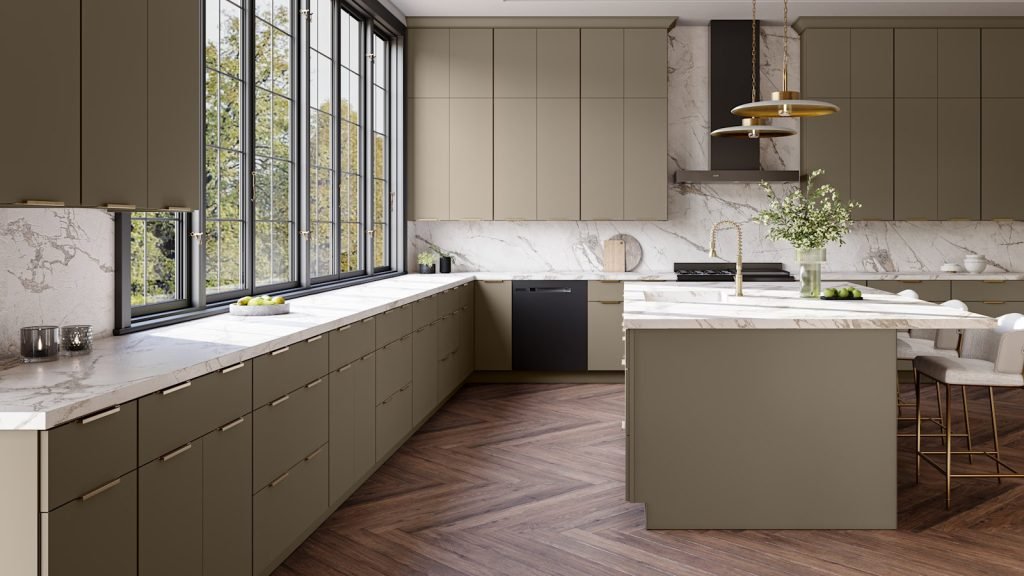 Oyster flat panel slab kitchen cabinets with black framed windows and long brass bar pulls. Fabuwood Luxe.
Quartz is an engineered stone countertop made from ground natural quartz, resins and pigments that create a very consistent, low maintenance surface. It is one of the most popular choices I see in Central New Jersey kitchens right now.
Engineered quartz offers controlled patterning, from pure solid whites to subtle marbles and bold veining. Brands we work with, such as Cambria, LX Hausys, Vadara Quartz and MSI Surfaces, all focus on quartz because it performs reliably and gives designers a wide palette to coordinate with cabinet lines like Fabuwood’s Allure or frameless Ovela series.
Unlike most natural stones, quartz never needs sealing. It resists many stains from coffee, wine and oil, which is a relief for busy households or anyone who admits they are “not the best” at wiping spills immediately.
Pros of quartz countertops
Homeowners who want a clean, current look and simple care routine usually land on quartz.
- No sealing required and relatively low everyday maintenance
- Very consistent color and pattern from slab to slab
- Excellent resistance to many stains and household chemicals
- Many convincing marble-look and concrete-look designs
- Works well with both framed and frameless cabinet construction styles
Cons of quartz countertops
Quartz is not perfect, and there are a few tradeoffs to know before you commit.
- Not as heat tolerant as granite or quartzite; hot pans can damage the surface
- Prolonged UV exposure can affect some colors, so full-sunroom installations need discussion
- Edges can chip if heavily impacted, especially at dishwashers or sinks
- The most realistic marble-look designs can carry higher material costs
For most remodels we do in Middlesex, Somerset and Union counties, quartz has become the default recommendation unless you have a specific reason to go fully natural. It also integrates easily with Savona’s Silver and Gold kitchen packages, where the countertop selection is a big part of the final price.
3. Quartzite kitchen countertops: natural stone with quartz-like performance
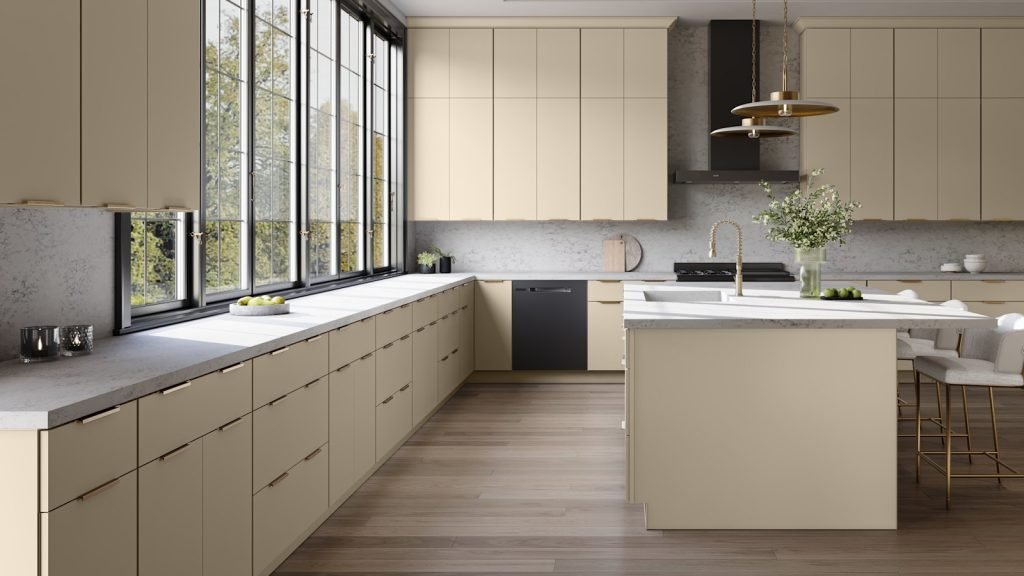 Macadamia Beige flat panel slab kitchen cabinets with white marble counters and island, black framed windows and long brass bar pulls. Fabuwood Luxe.
Quartzite is a natural stone countertop material that starts as sandstone and transforms under heat and pressure into a dense, hard surface containing a high percentage of quartz. It combines the “real stone” appeal of granite with some of the hardness people associate with engineered quartz.
Most quartzite slabs have subtle, marble-like veining in whites, grays and beiges, which suits a lot of the updated colonial and split-level homes around Green Brook and Bridgewater. It is usually harder and less porous than marble, but like any natural stone, it still needs to be evaluated slab by slab.
The Natural Stone Institute notes that true quartzite is highly scratch resistant, but some stones sold as quartzite can behave more like marble. That is why we pay close attention to supplier data and suggest realistic care routines to homeowners.
Pros of quartzite countertops
For cooks who want durability with a calmer, more organic look, quartzite can be an excellent fit.
- Very hard surface, generally more scratch resistant than many granites
- Natural movement and veining that echo marble without identical softness
- Handles everyday heat better than many engineered products
- Usually lighter and more subtle in pattern than typical granite
Cons of quartzite countertops
Quartzite requires some homework and realistic expectations.
- Still natural stone, so most slabs require periodic sealing
- Some “soft quartzites” etch or stain more easily than others
- Limited color range compared with granite or quartz
- Material and fabrication costs are often at the higher end
In a Savona design meeting, I typically position quartzite for homeowners investing in a Gold or Custom kitchen package who want natural stone but cook often and cannot baby a true marble. We review specific slabs and talk frankly about care and budget before final decisions.
4. Marble kitchen countertops: beautiful but high maintenance
 Cashmere Gloss handleless flat slab kitchen cabinets with copper dome pendants and built-in black ovens. Fabuwood Catalina.
Marble is a natural stone countertop material that offers classic veining and a softer, more luxurious appearance, but it is also one of the most high maintenance options you can install in an active kitchen.
In the Green Brook showroom, I rarely recommend marble as the primary work surface for a busy family that cooks in New Jersey humidity all summer. It is more common in baking stations, islands used for serving rather than hardcore cooking, or in smaller areas where patina is acceptable.
Marble can etch from acids like lemon juice, vinegar and tomato sauce. It can also stain more readily than granite or quartz if not sealed frequently and wiped quickly.
Pros of marble countertops
Marble is chosen with eyes wide open because of its unmistakable look.
- Classic veining that many homeowners still prefer over imitations
- Stays naturally cool, which some bakers appreciate for pastry work
- Adds strong visual character in more traditional or European-style kitchens
Cons of marble countertops
The maintenance reality of marble is where many homeowners change direction.
- Prone to etching from acid and some cleaners
- Higher risk of staining from oil, wine and deeply colored foods
- Needs more frequent sealing and care than granite or quartzite
- Scratches and surface wear are more visible in darker marbles
If you love the look but worry about upkeep, we usually compare marble slabs to marble-look quartz from brands such as Vadara or Cambria. That conversation often happens alongside a broader kitchen remodeling review so that counters, cabinets and tile all support the same level of maintenance you are comfortable with.
5. Other kitchen stone options: soapstone, porcelain and sintered stone
 Oyster transitional shaker kitchen cabinets with a wood-topped island, a skylit room, open shelving and a concrete floor. Fabuwood Fusion.
Beyond the big four, there are other stone or stone-like materials that sometimes make sense in a New Jersey kitchen. They each have a narrower use case, but knowing they exist can help you ask better questions.
Soapstone is a soft, natural stone with a smooth, almost silky feel. It is chemically inert, darkens over time and is often oiled to even out color. It resists heat and acids well but can scratch more easily than granite, which is part of its “lived in” character.
Porcelain and other sintered stone products are manufactured from clays and minerals pressed and fired at high temperatures. They can be made very thin with strong surface durability and printed patterns. Large-format porcelain slabs are becoming more common in modern kitchens, especially when a homeowner wants bookmatched veining up the backsplash.
Pros of less common stone options
These materials appeal to homeowners with specific design or performance goals.
- Soapstone offers a unique, matte finish and strong heat and chemical resistance
- Porcelain and sintered surfaces can deliver dramatic large-scale veining
- Some products provide excellent UV resistance for sun-rich spaces
Cons of less common stone options
The drawbacks relate mainly to cost, availability and expectations.
- Soapstone can scratch and chip more easily, and patina is not for everyone
- Porcelain slab fabrication requires specialized tooling and experienced installers
- Color and edge profiles may be more limited than quartz or granite
In our Central New Jersey market, these materials are more often part of Custom kitchen projects where a homeowner has a clear design direction and is comfortable discussing installation details and budget ranges in depth.
6. How to choose the right kitchen stone countertop for your home
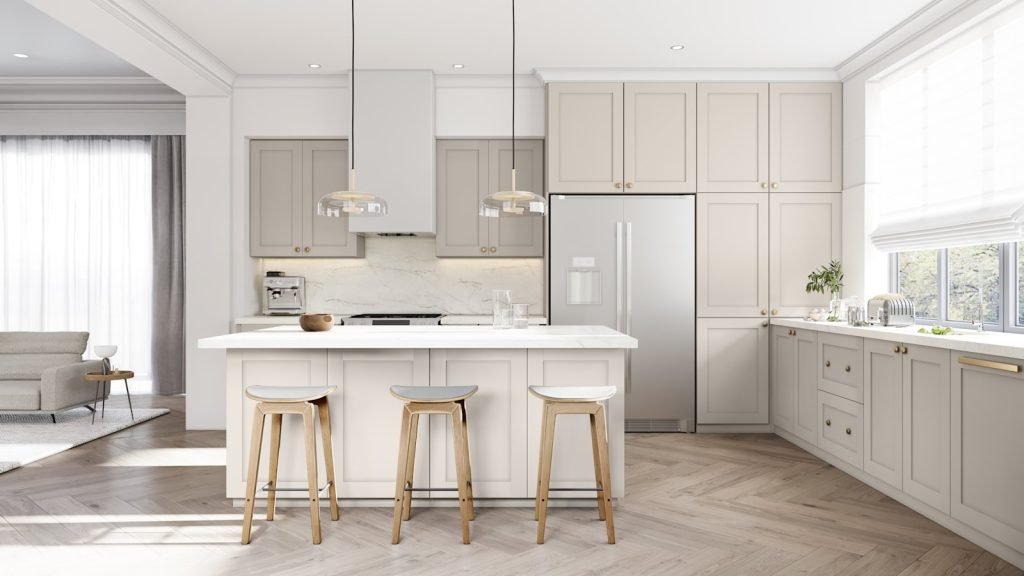 Cashmere frameless wide shaker kitchen cabinets with white marble counters and island, a marble backsplash and a wood floor. Fabuwood Tuscany.
The best kitchen stone countertop is the one that matches how you live, not just the photos you like. In design meetings I start with lifestyle questions first, then narrow materials from there.
Ask yourself how often you cook, whether you habitually use trivets, how quickly you wipe spills, and whether you accept patina or prefer surfaces to stay as close to new as possible. Those answers usually sort homeowners into quartz, granite, quartzite or a specific natural stone.
Matching stone types to cooking habits
Different kitchen habits naturally align with particular counter choices.
- Heavy daily cooking, kids, frequent entertaining: Quartz or some granites
- Serious home cooking, some maintenance tolerance, want natural stone: Granite or quartzite
- Occasional cooking, high interest in visual drama and patina: Marble or strongly veined granite
- Baking and pastry focus, calm aesthetic: Marble or quartzite in defined work zones
Because many older New Jersey homes have compact kitchens, we also look carefully at where seams will fall and how pattern will align, especially on L-shaped counters and peninsulas.
Considering cabinets, flooring and backsplash
Countertops do not live in isolation. They sit on cabinets, meet backsplash tile, and stop at the flooring. A stone that looks perfect on its own can fight with existing materials.
In our Green Brook Township showroom, homeowners often bring door samples or we pull from Fabuwood collections such as Galaxy shaker or fusion-style profiles to see how stone choices sit against real cabinetry. We also reference nearby elements like hardwood or tile flooring and planned backsplash material.
If you are working within a fixed budget, tools like Savona’s published kitchen remodeling pricing guide can help you decide where to allocate dollars between cabinets, stone and other finishes.
7. Cost and maintenance realities of kitchen stone countertops in New Jersey
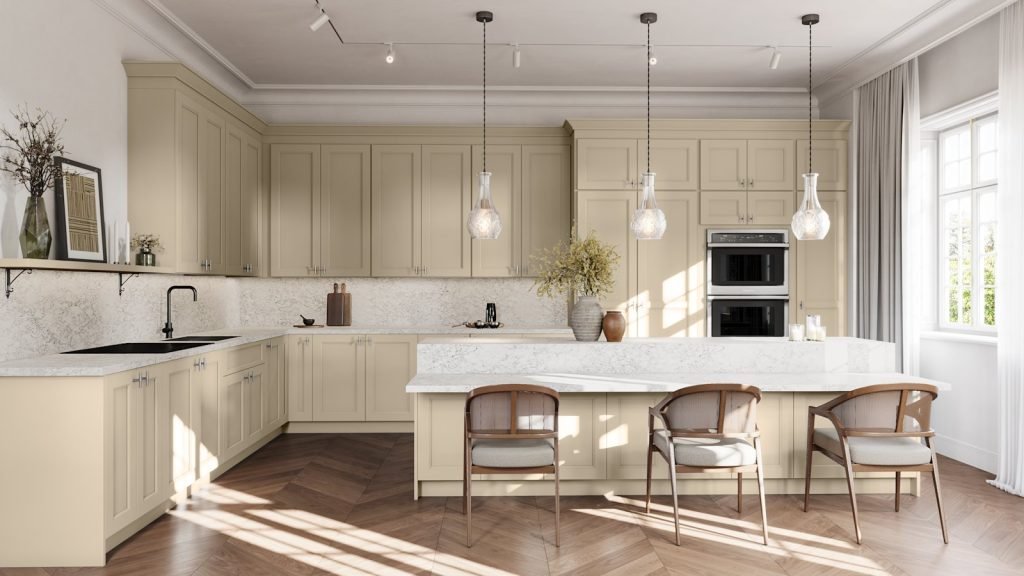 Macadamia Beige wide shaker kitchen cabinets with white marble counters and island, a matte black faucet and a herringbone floor. Fabuwood Nexus.
Stone countertop pricing in Central New Jersey depends on material, thickness, edge profile, cutouts and the overall installation scope. It is also tied to your cabinet line, layout complexity and whether we are providing full installation or just supply.
At Savona, kitchen packages that include countertops begin from the Silver tier at $9,999 and the Gold full kitchen package from $14,999. Both figures are starting points rather than quotes, and actual pricing depends on your layout, chosen cabinet line, specific stone and installation details. Those starting prices do not include demolition, electrical, plumbing rough-ins, flooring, tile or structural work.
Typical maintenance by material
Maintenance is where high gloss marketing often meets daily life. Honest expectations make for happier long term ownership.
- Granite: Periodic sealing, pH neutral cleaners, prompt wipe-up of oils and colored liquids
- Quartz: No sealing, simple non-abrasive cleaners, care with hot pots and harsh chemicals
- Quartzite: Similar to granite, with sealing schedules adjusted based on specific stone behavior
- Marble: Frequent sealing, acceptance of etching and patina, gentle cleaners
For care guidance, I often reference consumer-focused resources from Consumer Reports on countertop materials and the Natural Stone Institute’s homeowner guides. Those give you an independent view of how stones perform before you visit a showroom.
Comparison table: popular kitchen stone options
Below is a quick side by side comparison you can refer to while you think through options.
| Material | Natural or engineered | Sealing needed | Heat tolerance | Stain resistance | Maintenance level | Typical look |
|---|---|---|---|---|---|---|
| Granite | Natural stone | Yes, periodic | High | Good with sealer | Moderate | Varied, visible pattern |
| Quartz | Engineered stone | No | Moderate | Very good | Low | Consistent, from solid to marble-look |
| Quartzite | Natural stone | Yes, periodic | High | Good to very good | Moderate | Subtle, marble-like veining |
| Marble | Natural stone | Yes, frequent | Moderate | Fair, can stain | Higher | Classic, dramatic veining |
| Soapstone | Natural stone | No sealer, often oiled | High | Good vs acids, can show oil | Moderate, patina | Dark, soft matte |
| Porcelain / sintered | Engineered slab | No | High surface heat | Very good | Low to moderate | Thin, modern, printed patterns |
For a more detailed material discussion tied to your specific kitchen, a quick layout sketch or a few photos shared with our design team can get you from “I want stone” to a short, realistic list of options.
Frequently asked questions
What is the most durable kitchen stone countertop?
For most households, a well chosen quartz or a true quartzite offers the best mix of hardness and everyday durability. Granite also performs well, especially if you are diligent about sealing. Marble and soapstone can last a long time too, but they develop patina and visible wear that not everyone enjoys.
Are quartz countertops considered real stone?
Quartz counters are made from ground natural quartz mixed with resins and pigments, so they are not a solid slab cut from a quarry like granite or marble. They are classified as engineered stone. You still get a stone-like feel and appearance, but with more consistent patterning and simplified maintenance.
Do kitchen stone countertops add resale value?
Stone counters often help a kitchen show better to buyers, especially in competitive New Jersey markets. Updated granite or quartz paired with current cabinet styles tells buyers they will not need to overhaul the kitchen immediately. The exact return on investment depends on the rest of the house and local comps, but stone is rarely seen as a negative.
How thick should my kitchen stone countertop be?
Most residential kitchen counters use slabs around 3 cm (about 1 1/4 inches) thick for a sturdy, standard look. Thinner materials can be built up at the edges if you want a chunkier profile, and thicker pieces may be used in certain designs. Your fabricator will recommend thicknesses based on span, overhangs and support.
How do I clean and disinfect stone countertops safely?
Day to day, use a mild, pH neutral cleaner or diluted dish soap and water, and avoid abrasive pads. For disinfecting, many stones tolerate diluted household disinfectants, but it is safest to follow stone-specific care guides. Avoid harsh bleach or strong acids, which can etch marble and damage some quartz finishes over time.
Planning your kitchen stone countertops in Central New Jersey
Choosing a kitchen stone countertop in Central New Jersey is easier when you see real slabs against actual cabinet doors and think through how you cook, clean and entertain. A quick visit to our Green Brook Township showroom or a remote design call with photos of your existing space can narrow choices quickly.
If you are ready to talk specifics about granite, quartz, quartzite or other options, you can request a free kitchen estimate or book a time to meet a designer. We work across Middlesex, Monmouth, Mercer, Somerset, Hunterdon, Union and Ocean counties, designing, supplying and installing complete kitchens with stone tops that fit how you actually live.


