
Shaker, slab, inset and raised panel doors can all work in the same kitchen, but they create very different visual weight, cleaning routines and budget priorities. The best kitchen cabinet door styles are the ones that suit your home’s architecture, the openness of the layout and how formal or minimal you want the room to feel.
A kitchen cabinet door style is a door design that defines the cabinet face through its panel shape, frame detail and how it sits over or within the cabinet box. In Central New Jersey, we often start with the existing home: an older colonial in Bridgewater may suit a different level of detail than a renovated ranch in Somerset or a clean-lined shore kitchen.
At Savona Kitchen & Bath, homeowners can compare working door samples, finishes and countertop materials at the Green Brook Township showroom before committing to a direction. Door style should be selected early because it affects cabinet line, finish, hardware, island design and the overall remodeling budget.
What are the main kitchen cabinet door styles?
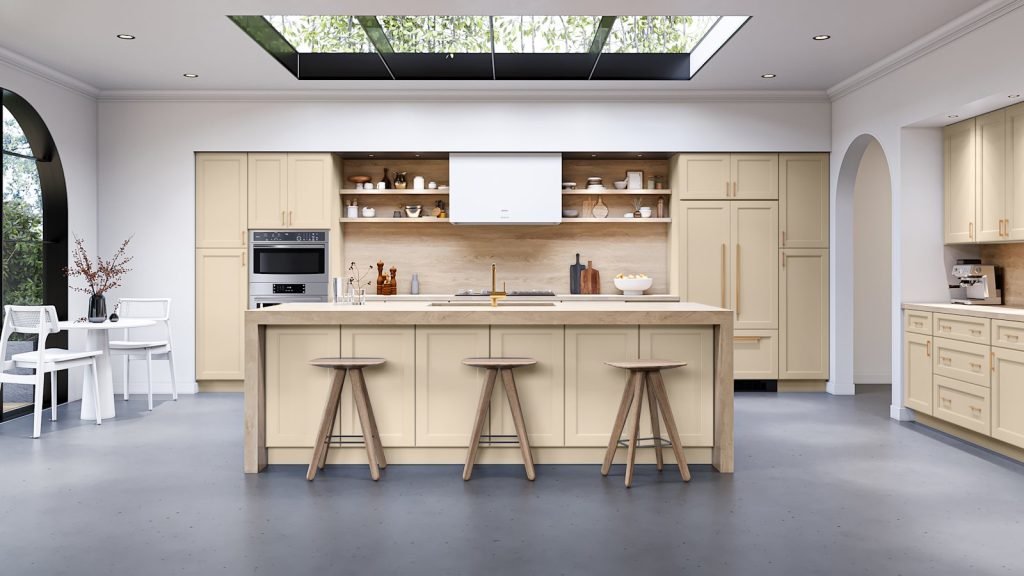 Macadamia Beige transitional shaker kitchen cabinets with a wood-topped island, a skylit room, open shelving and a concrete floor. Fabuwood Fusion.
Kitchen cabinet door styles usually fall into four practical choices: shaker for a framed, versatile look; slab for a smooth modern face; inset for furniture-like precision; and raised panel for more traditional dimension. Each style can be adapted through paint color, stain, hardware and countertop selection, but the door profile remains the room’s strongest visual signal.
Shaker has a recessed center panel surrounded by a simple frame. Slab doors are flat, with no applied frame or panel detail. Inset doors sit inside the cabinet face frame rather than overlaying it, while raised panel doors project outward at the center for a more decorative profile.
The cabinet box and door style are related but separate decisions. For example, Fabuwood’s framed Allure series includes Galaxy classic shaker, Luna slim shaker, Fusion transitional shaker, Nexus wide shaker, Luxe flat panel slab and Echo micro shaker collections. Fabuwood’s frameless Illume and Ovela lines include Tuscany wide shaker and Catalina flat panel slab collections.
Shaker cabinet doors: are they the most flexible choice?
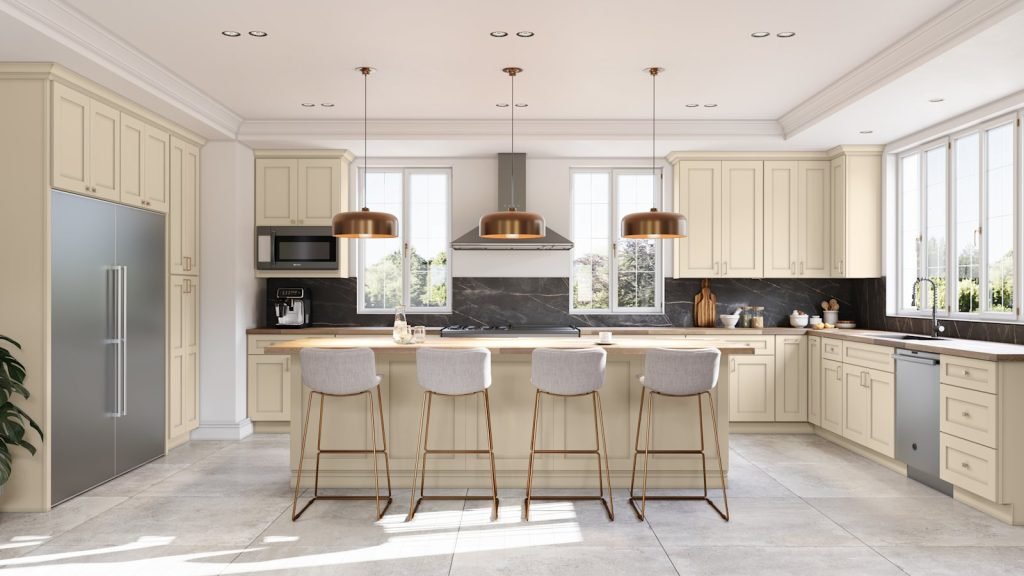 Macadamia Beige classic shaker kitchen cabinets with a dark backsplash, copper dome pendants and stainless appliances. Fabuwood Galaxy.
Shaker cabinet doors are often the most flexible choice because their recessed panel and straightforward rail-and-stile frame work with traditional, transitional and current kitchens. They add definition without the heavier ornament of raised panel doors, making shaker a reliable option for homeowners who want a detailed but not overly formal cabinet front.
A classic shaker door gives a kitchen an orderly, tailored look. Choose a slimmer frame for a lighter, more contemporary read, or a wider frame when you want the cabinetry to feel more substantial. Shaker also works well when upper and lower cabinets are different colors because the door profile ties the composition together.
Picture warm white shaker cabinets with a pale quartz countertop, brushed nickel pulls, medium-tone wood flooring and simple recessed lighting. That combination feels comfortable in many Central New Jersey colonials and split-level homes without forcing the room into a strict period style.
Fabuwood offers several shaker interpretations. In Allure, Galaxy is a classic shaker, Luna is a slim shaker, Fusion is a transitional shaker, Nexus is a wide shaker and Echo is a micro shaker. Quest offers Metro traditional shaker and Discovery classic shaker collections, while Value Premium includes Hallmark, a raised panel shaker.
Slab cabinet doors: are flat panels right for a modern kitchen?
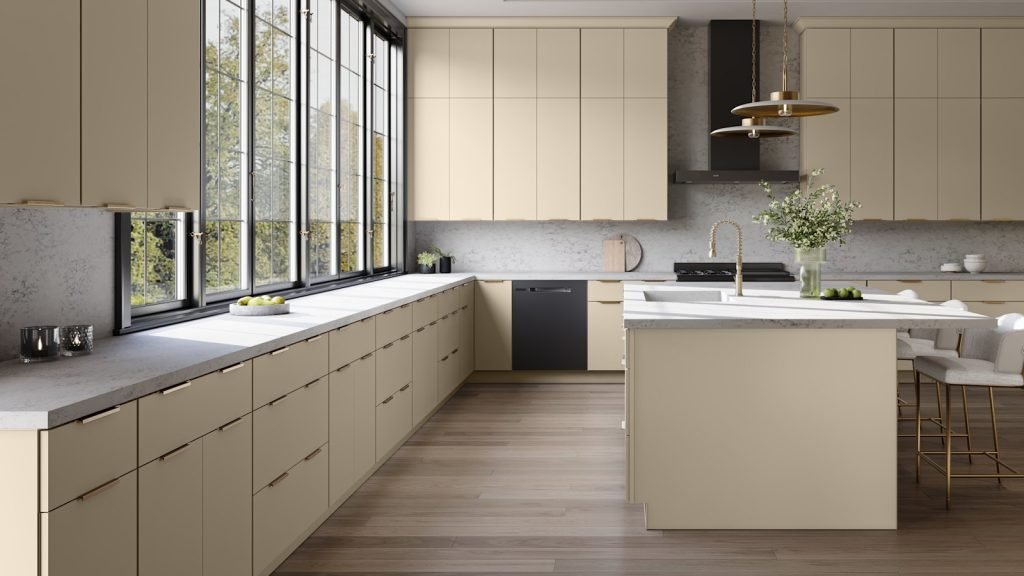 Macadamia Beige flat panel slab kitchen cabinets with white marble counters and island, black framed windows and long brass bar pulls. Fabuwood Luxe.
Slab cabinet doors are right for a modern kitchen when you want uninterrupted planes, easy visual flow and little surface detail. Also called flat panel doors, they are especially effective in compact kitchens because they reduce visual busyness, although their minimal appearance makes alignment, hardware and finish selection more noticeable.
Flat panel cabinets work particularly well with long horizontal pulls, integrated-looking appliances and simple backsplash materials. A matte finish can soften the modern look, while a gloss finish makes the room feel sharper and more reflective. Textured finishes add interest without adding a routed door profile.
For a practical visual example, imagine light taupe slab cabinets, a softly veined quartz countertop, black pulls, large-format porcelain flooring and under-cabinet lighting washing a simple backsplash. The room reads calm and current, even if the kitchen footprint is a narrow galley.
Fabuwood’s Luxe collection in the framed Allure series is a flat panel slab option. Catalina is the flat panel slab collection in the frameless Illume and Ovela series, which are available in matte, gloss and textured finishes. See cabinet samples beside surfaces during a visit to the Green Brook kitchen and bath showroom.
Inset cabinet doors: what makes them different?
Inset cabinet doors are different because the door sits within the cabinet face frame, creating a flush, furniture-like appearance with visible and even gaps around each door and drawer. Inset is a construction and fit choice rather than a decorative profile, so an inset kitchen can use a simple or more detailed door design.
The appeal is precision. Because the doors sit inside the opening, the cabinet face has a crisp grid that suits carefully proportioned kitchens, especially historic-inspired or tailored transitional rooms. Exposed hinges are sometimes chosen to emphasize that furniture character, while concealed hardware makes the overall effect quieter.
Inset cabinetry calls for careful field measurement, planning and installation. Door movement and clearances deserve attention in New Jersey’s humid summers and dry heated winters, especially when the design includes wood finishes. Discuss the full construction approach, not just a photo of an inset door, before making it the centerpiece of the project.
Inset is not automatically better than overlay cabinetry. It is better for homeowners who value its flush appearance and are comfortable making precision a central design priority. For other kitchens, a well-chosen shaker or slab overlay door can deliver a similarly polished result with a different visual language.
Raised panel kitchen cabinets: when do they fit best?
Raised panel kitchen cabinets fit best in traditional homes or kitchens that need more shadow lines, depth and architectural presence. Their center panel projects beyond the surrounding frame, creating a formal look that pairs naturally with detailed molding, decorative hardware and warmer stained or painted finishes.
This style can bring welcome scale to a large room with tall ceilings, but it can feel busy in a small kitchen already crowded with ornate tile, heavily patterned stone and decorative lighting. The practical solution is balance: use a quieter countertop and backsplash when the cabinet doors carry more detail.
A painted cream raised panel kitchen with antique-bronze hardware, a restrained quartz countertop and warm oak-toned flooring can look established rather than overdone. For a less formal version, select simple pulls and avoid stacking too many decorative elements above the upper cabinets.
Fabuwood’s Hallmark collection is described as a raised panel shaker in the framed Value Premium series and is available in paint finishes. Homeowners considering stained cabinetry should also review how color, lighting and adjacent flooring change the perceived depth of any routed door profile.
How do shaker vs slab cabinets, inset doors and raised panels compare?
Shaker vs slab cabinets, inset cabinet doors and raised panels differ most in visual detail, construction emphasis and the mood they create. Shaker is broadly adaptable, slab is the cleanest modern choice, inset is defined by its flush fit, and raised panel is the most traditionally decorative option for a kitchen.
| Door style | Visual character | Best fit | Watch for |
|---|---|---|---|
| Shaker | Recessed panel with simple frame | Transitional, classic and adaptable kitchens | Frame width changes the look substantially |
| Slab | Flat, uninterrupted face | Modern kitchen cabinet doors and compact layouts | Hardware and door alignment are highly visible |
| Inset | Flush door within a face frame | Tailored, furniture-inspired kitchens | Requires careful planning and precise installation |
| Raised panel | Projecting center panel and deeper shadows | Traditional or more formal kitchens | Can feel visually heavy beside ornate finishes |
Shaker verdict: Choose shaker if you want the safest range of finish and hardware options without a plain cabinet face.
Slab verdict: Choose slab if you prefer clean lines and want cabinetry to recede behind the countertop, lighting and layout.
Inset verdict: Choose inset if the flush, furniture-like fit matters more than having the simplest cabinet construction approach.
Raised panel verdict: Choose raised panel if your home and furnishing style support visible depth and more traditional detailing.
Door style should also coordinate with the work surfaces. A quiet slab door may support a more expressive stone, while a raised panel door often benefits from a calmer surface. Review kitchen countertop options alongside cabinet samples rather than choosing each in isolation.
How much do kitchen cabinet door styles cost in New Jersey?
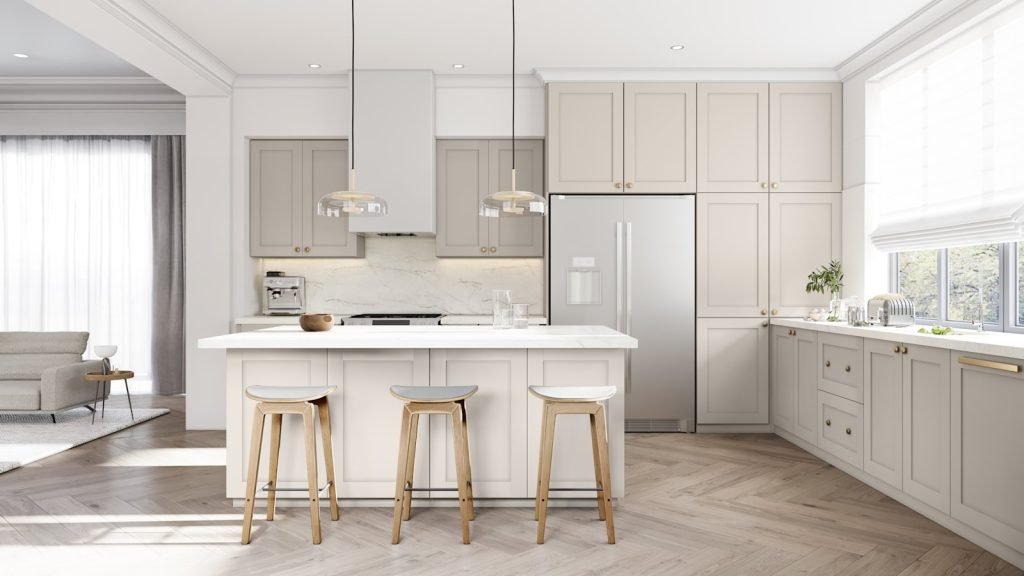 Cashmere frameless wide shaker kitchen cabinets with white marble counters and island, a marble backsplash and a wood floor. Fabuwood Tuscany.
Kitchen cabinet door styles affect cost through cabinet line, construction, finish, layout complexity, countertop choice and installation scope, rather than through one universal price for a door profile. At Savona Kitchen & Bath, kitchen packages start at $4,999, with final pricing based on the complete project selections and site conditions.
The Bronze Cabinets Only package starts at $4,999 and includes a design consultation, semi-custom cabinetry package, material coordination and delivery. Installation is not included, making it an option for homeowners already working with a contractor.
The Silver Cabinets plus Countertops package starts at $9,999 and includes design consultation, semi-custom cabinetry, a countertop package, material coordination and delivery. Installation is quoted separately. The Gold Full Kitchen Package starts at $14,999 and includes design consultation, semi-custom cabinetry, countertop package, kitchen sink and professional installation by Savona’s in-house team.
For larger projects or full layout changes, the Custom Designed Around You package starts at $25,000 and includes everything in Gold plus custom-built cabinetry, premium countertops, fixtures, finishing details and a 3D design rendering. Every starting price depends on layout, material selections, cabinet line, countertop choice and installation scope. These packages exclude demolition, electrical work, plumbing rough-ins, flooring, tile and structural modifications. Review the full New Jersey kitchen remodeling pricing details before comparing proposals.
If moving walls, plumbing or electrical is part of the plan, permits are issued by the local township construction office under the New Jersey Uniform Construction Code. The New Jersey Department of Community Affairs code services information is a useful starting point for understanding the state framework, while project-specific requirements come from the local office.
What should you check before choosing cabinet door styles?
Before choosing cabinet door styles, check the kitchen’s natural light, traffic paths, ceiling height, appliance locations, cleaning habits and the level of detail already present in the home. A door that looks appealing on a small sample can feel too busy or too plain once repeated across an entire kitchen wall.
Start with the layout. Many older Central New Jersey colonials, ranches and split-levels have closed or galley kitchens, where wide door frames, elaborate molding or raised panels can make a compact run feel denser. In a larger open kitchen, those same details may provide needed visual weight.
Next, test the whole palette together. Bring cabinet, countertop, backsplash, flooring and hardware samples into the same light whenever possible. The Kitchen Cabinet Manufacturers Association also provides consumer information about cabinetry, including care and construction topics worth reviewing as you compare options.
Finally, think about use. Flat slab doors are straightforward to wipe down. Shaker and raised panel doors have grooves and corners that collect more dust and cooking residue. Neither concern should decide the kitchen alone, but it is worth matching maintenance expectations to the household’s routine.
Frequently asked questions
Kitchen cabinet door style questions are easiest to answer by separating appearance from construction and daily use. The best choice is not a universal winner: it is the profile and cabinet configuration that fits your layout, finish palette, cleaning expectations and remodeling budget without competing with the rest of the room.
Is shaker better than slab cabinets?
Shaker is better than slab cabinets if you want visible structure and broad style flexibility, while slab is better if you prefer minimal, modern kitchen cabinet doors. Shaker can bridge classic and current finishes, whereas slab doors create a cleaner uninterrupted surface. Neither is inherently higher quality because construction, finish and installation also matter.
Are inset cabinet doors worth it?
Inset cabinet doors are worth it for homeowners who specifically want a flush, furniture-like cabinet face and understand that precision fit is central to the look. They are not automatically necessary for a polished kitchen. A carefully selected overlay shaker or slab door can be equally appropriate when the overall design calls for it.
What cabinet door style makes a small kitchen look larger?
Slab doors usually make a small kitchen look larger because the flat faces create fewer visual breaks. Slim shaker doors can also work well when you want some detail without a heavy frame. Keep the finish palette controlled, use practical lighting and avoid combining highly detailed doors with a busy backsplash and countertop.
Are raised panel kitchen cabinets outdated?
Raised panel kitchen cabinets are not automatically outdated, but they work best when the rest of the room supports their traditional depth. They can feel dated when paired with too many competing decorative features. Use simpler hardware, a quieter countertop and a restrained backsplash to keep the result intentional rather than overworked.
Which kitchen cabinet door style is best for a New Jersey colonial?
A shaker or transitional shaker door is often the best cabinet door style for a New Jersey colonial because it respects the home’s traditional character without requiring a formal raised panel look. The final choice should account for room size, existing trim, natural light and whether the kitchen is opening to a more contemporary living area.
Choose cabinet doors with the full room in view
The right kitchen cabinet door style is the one that looks convincing across the entire room, not only on a showroom sample. Compare shaker, slab, inset and raised panel doors with your countertop, hardware, flooring and layout before finalizing a cabinet line or construction approach.
Savona Kitchen & Bath designs, supplies and installs kitchens across Central New Jersey, including Middlesex, Monmouth, Mercer, Somerset, Hunterdon, Union and Ocean counties. To compare door styles in person at the Green Brook Township showroom or discuss a layout remotely, request a free kitchen estimate.


