
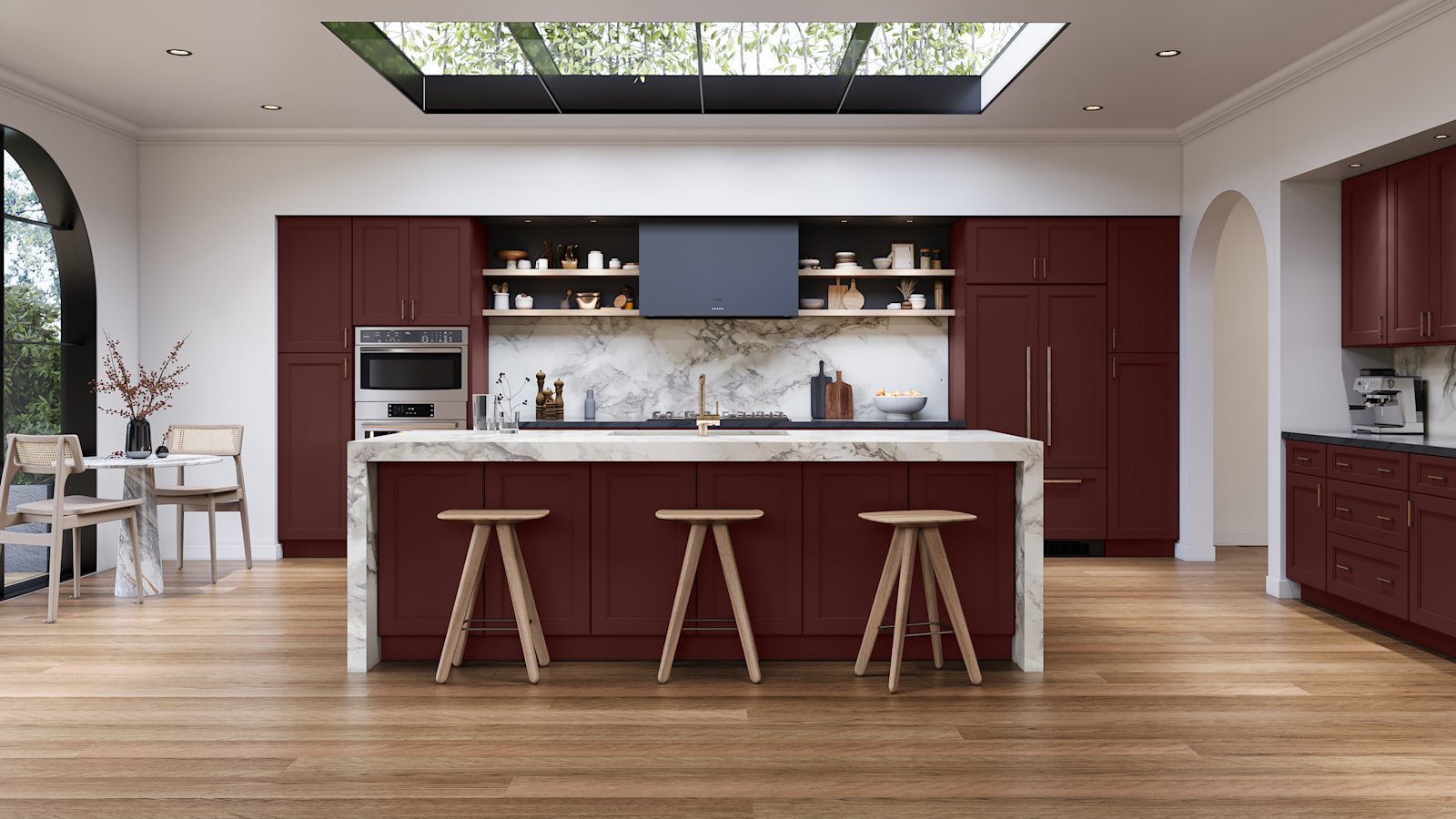
Cherry kitchen cabinets give you a warm, upscale look, and they can be surprisingly modern if you choose the right color, finish and door style. The key decision is how red you want the cherry to read, and how that plays against your floors, counters and light.
Cherry kitchen cabinets are wood cabinets that lean naturally warm, with fine grain and a tendency to darken and redden over time. As a designer working in a New Jersey showroom, I usually walk homeowners through three things first: how much red they actually like, how much natural light the room has, and whether they want the kitchen to feel traditional, transitional or clean-lined contemporary.
Below are concrete options, examples and modern design ideas so you can decide whether cherry is right for your kitchen, and how to pair it with the rest of your finishes.
1. Choosing the right cherry cabinet color for your kitchen
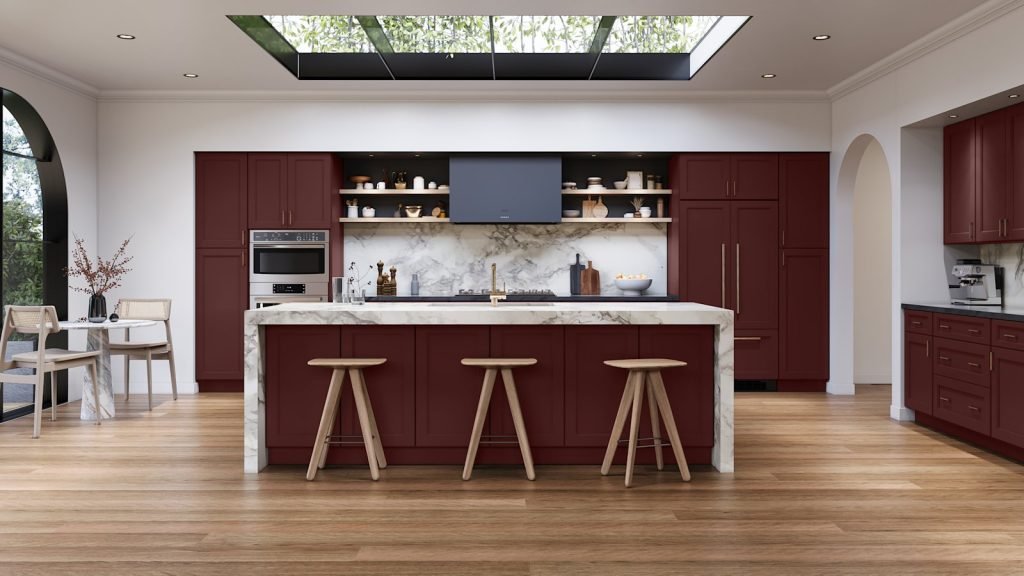 Cabernet Red transitional shaker kitchen cabinets with white marble counters and island, a skylit room, open shelving and a concrete floor. Fabuwood Fusion.
The right cherry color is the one that balances warmth with your floors, countertops and light, without turning the room into a dark red box. Most New Jersey homes I see have medium wood floors and average natural light, so the sweet spot is usually a medium brown cherry with a soft red undertone, not a bright ruby tone.
Because cherry wood naturally warms and darkens, even a lighter stain will deepen over the first year. That is why I ask homeowners to react to where the color will land, not just how it looks on a brand-new sample. A mid-tone brown cherry reads more forgiving over time and works with a wide range of quartz countertops, from soft whites to warmer veined patterns.
In smaller Central New Jersey kitchens with limited window light, I usually avoid very dark cherry stains on all the cabinets. Instead, I might keep cherry on the lower run or island and use a lighter painted finish on the uppers so the room does not feel heavy.
2. Stained cherry vs painted finishes on cherry
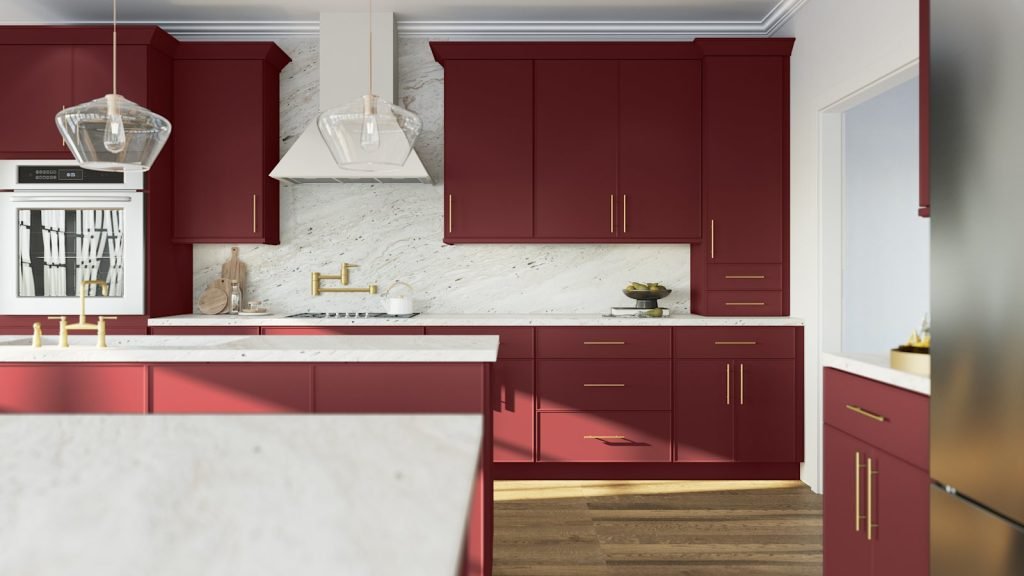 Cabernet Red micro shaker kitchen cabinets with white marble counters and island, slim brass hardware and a light wood floor. Fabuwood Echo.
Stained cherry keeps the natural grain visible and lets the wood deepen in color over time, while paint creates an opaque, more color-stable finish that hides most of the grain. If you love cherry specifically for that natural wood character, stain is the honest choice.
With a stained finish, you see the grain pattern and the subtle color movement that cherry is known for. The tradeoff is that sun exposure will shift the tone, especially near big windows or under skylights. The Kitchen Cabinet Manufacturers Association notes that real wood species respond to light and environment over their life, which is part of what makes each kitchen unique but also why samples never look identical to installed cabinets.
Painted cherry, or more commonly today a painted maple or similar smooth hardwood, gives you a more predictable color over time. If a homeowner tells me they want the warmth of cherry floors but clean white or soft gray cabinets, we talk about pairing a warm wood floor with a painted door instead of forcing cherry into a color it does not naturally want to be.
3. Modern door styles that work with cherry kitchen cabinets
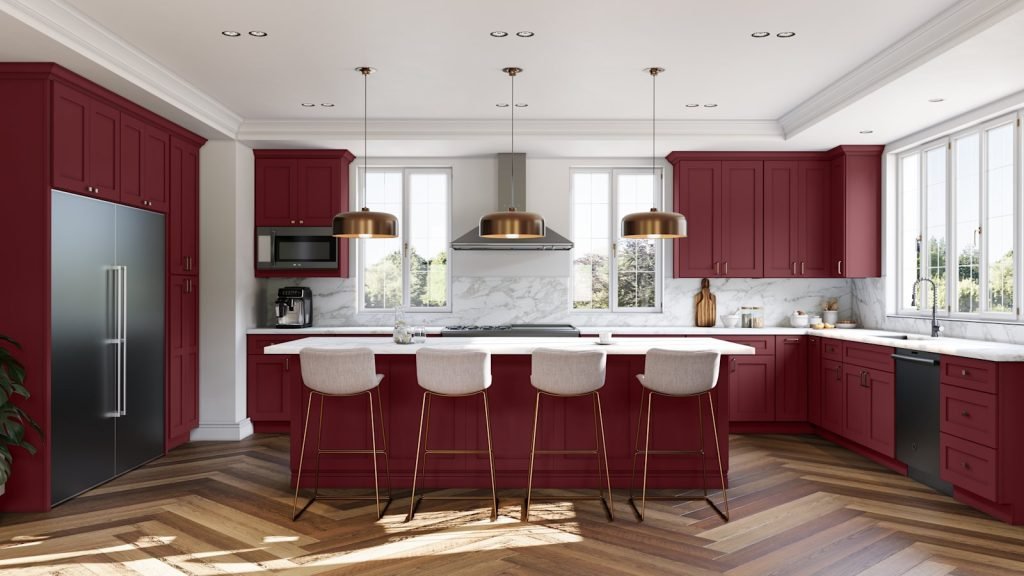 Cabernet Red classic shaker kitchen cabinets with white marble counters and island, copper dome pendants and stainless appliances. Fabuwood Galaxy.
Modern cherry kitchens depend more on door style than on the wood species. A clean shaker or flat-panel slab door instantly updates cherry in a way that heavy raised panels never will.
In our showroom, I often steer homeowners who like a modern look toward simple framed or frameless doors in a warm wood tone, then build the rest of the palette around that. Fabuwood, for example, builds framed Allure series cabinets with a plywood box and soft-close hardware in several clean-lined collections, from classic shaker to flat slab, and builds frameless Illume and Ovela series in a sleek European style. While Fabuwood does not currently offer a classic red cherry finish, the design lessons carry directly over: choose the simplest profile you are comfortable with.
A slim shaker or flat-panel slab, combined with minimal crown moulding and a simple rectangular hood, is usually enough to push cherry into the modern or transitional category. I tend to avoid ornate trims, arches and furniture feet around islands when the goal is a fresher, quieter kitchen.
4. Popular cherry cabinet stain colors and how they age
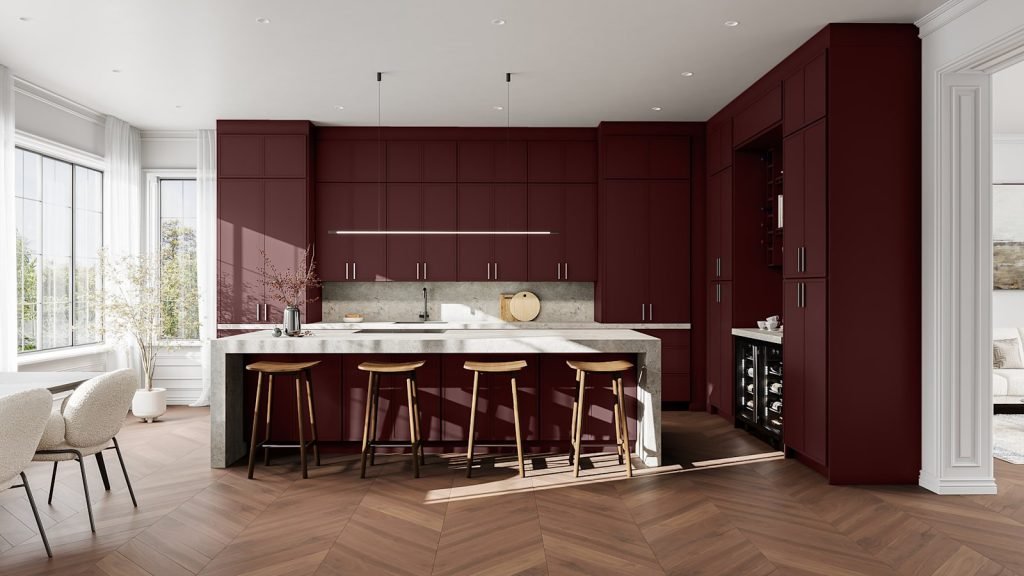 Cabernet Red slim shaker kitchen cabinets with white marble counters and island, a herringbone wood floor. Fabuwood Luna.
The most livable cherry stain colors sit in a medium brown range with just enough red to feel warm, not loud. Very orange or very bright red stains are where people often fall out of love a few years later.
Here is how common cherry color directions tend to behave and where they work best.
| Cherry stain direction | How it looks new | How it ages in a NJ kitchen | Works best with |
|---|---|---|---|
| Light honey / golden brown | Soft, warm, visible grain, little red | Gradually deepens to medium brown with subtle red cast | Smaller kitchens, lighter floors, white quartz |
| Classic medium cherry brown | Clear grain, brown base with red undertone | Warms noticeably, especially near windows, richer red-brown | Most average-light kitchens, mixed metals |
| Dark espresso cherry | Deep brown, red is mostly in the undertone | Can look almost black in low light, red peeks on edges | Large open plans, strong natural light |
| Red-forward traditional | Noticeably red, almost mahogany in some light | Becomes deeper and more obviously red over time | Period homes, traditional trim profiles |
New Jersey’s mix of older colonials, split levels and 1980s builders’ kitchens usually means limited window size and some shade from mature trees. In those rooms, a very dark or very red cherry can make the space feel smaller. That is why I usually test samples against your actual floor, under your actual lighting, before finalizing the stain direction.
If you expect a lot of direct sun, especially in a south-facing kitchen, we talk about UV exposure and whether a slightly cooler countertop or lighter backsplash will keep the overall effect balanced.
5. Countertop and backsplash ideas that flatter cherry cabinets
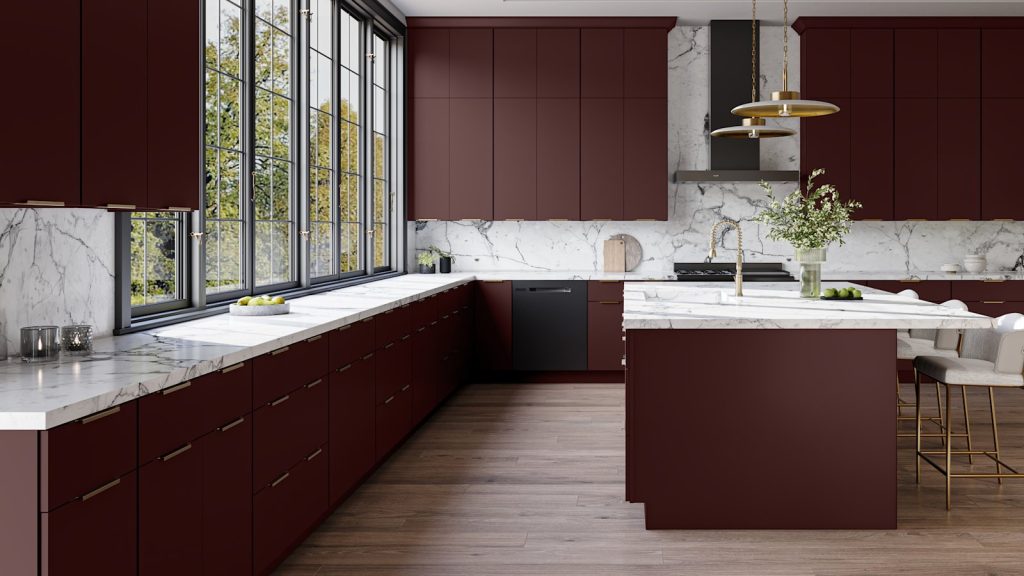 Cabernet Red flat panel slab kitchen cabinets with white marble counters and island, black framed windows and long brass bar pulls. Fabuwood Luxe.
The most reliable way to modernize cherry kitchen cabinets is to simplify the surrounding finishes: lighter countertops, quiet veining, and a restrained backsplash pattern. The contrast keeps the wood from overwhelming the room.
For countertops, many homeowners I work with choose quartz because it is consistent, low maintenance and available in warm whites and light beiges that sit comfortably next to cherry. Brands like Cambria, LX Hausys, Vadara Quartz and MSI Surfaces all offer options that pair well with warm woods. A soft white with just a bit of taupe or caramel veining tends to look grounded without competing with the cabinet color.
On backsplashes, I am careful in older New Jersey kitchens not to layer in too many busy patterns. A simple subway or elongated subway tile, stacked or in a clean brick pattern, usually does more for the room than an intricate mosaic. The Tile Council of North America publishes standards for tile installation; working with an installer who follows those guidelines helps your backsplash perform as good as it looks.
If you want the kitchen to feel more contemporary, running the same quartz up the wall as a short or full-height backsplash is another strong move. The fewer different colors and materials you introduce, the more the cherry reads as intentional instead of dated.
When we plan a full kitchen remodel, I also look carefully at flooring. Pairing cherry with a strong red or orange floor is almost always too much. If your existing floor leans warm, a slightly cooler or creamier countertop can restore balance, and if you are changing the floor you might coordinate that through our tile and flooring options at the same time as your cabinets and counters.
6. Layout, lighting and hardware choices that keep cherry looking fresh
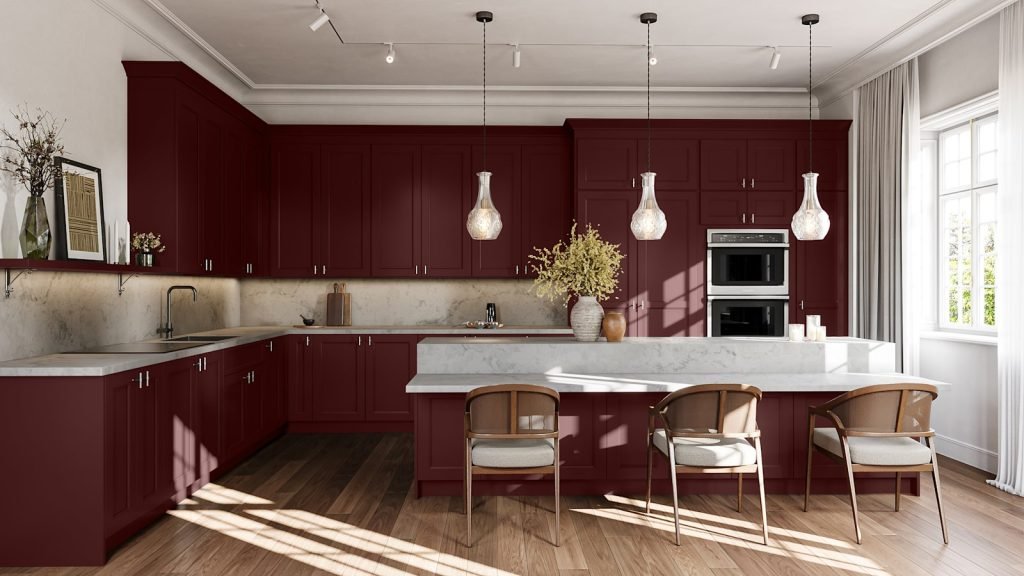 Cabernet Red wide shaker kitchen cabinets with white marble counters and island, a matte black faucet and a herringbone floor. Fabuwood Nexus.
Cherry cabinets feel modern when the layout is clean, the lighting is layered and the hardware is simple. Even with a warmer wood tone, those three details can completely change the read of the room.
On layout, many Central New Jersey kitchens are classic L-shaped or U-shaped rooms with a separate dining area. In those spaces, removing a few upper cabinets for open shelving or a clear wall for artwork can prevent the cherry from feeling heavy. In a larger remodel, we might rework the footprint as part of a full kitchen remodeling project so that an island or peninsula breaks up the runs of cabinets and creates better sightlines.
Lighting is the other quiet workhorse. Under-cabinet lighting, combined with well-placed recessed fixtures and one or two statement pendants, brings out the warmth of the cherry while keeping work surfaces bright. The National Kitchen & Bath Association recommends layering ambient, task and accent lighting so work areas are adequately lit and shadows are minimized.
For hardware, I usually test a few options before deciding. Brushed nickel, stainless, or a soft black pull reads more current than ornate brass knobs. Long, simple bar pulls on slab or shaker doors are especially good at pushing a cherry kitchen into a more contemporary bracket.
7. Practical care, cost expectations and how Savona approaches cherry kitchens
Cabernet Red classic shaker kitchen cabinets with white marble counters and island, copper dome pendants and stainless appliances. Fabuwood Galaxy.Cherry cabinets need the same basic care as any quality wood cabinet: gentle cleaners, prompt wipe-up of spills, and respect for the finish. Abrasive pads and harsh chemicals break down protective topcoats faster than anything else.
From a budget standpoint, real wood cabinetry sits above the very cheapest options but is not automatically out of reach. At Savona Kitchen & Bath, our kitchen cabinet and countertop packages start at different levels depending on scope. A cabinets-only package starts from $4,999, a cabinets plus countertop package starts from $9,999, a full kitchen package with our in-house installation starts from $14,999, and fully custom projects begin from $25,000. Final pricing always depends on your layout, cabinet line, material selections, countertop choice and installation scope. These starting points exclude demolition, electrical work, plumbing rough-ins, flooring, tile and any structural changes.
For homeowners who already have a contractor, we also work on design and supply only. Others prefer a full kitchen remodeling approach where our own installation team handles the cabinet fit-out and finishes. Either way, we start with a measured plan, real samples and a clear conversation about which decisions move the cost the most.
Because Savona is an authorized Fabuwood dealer alongside other cabinet brands, we can show you a range of warm wood and painted options that behave similarly to cherry, even if they are not labeled as traditional cherry. Many homeowners who walk in saying “I want cherry” actually want a warm, rich wood that will age gracefully, and there are several good ways to achieve that look.
Our Green Brook Township showroom serves Central New Jersey, including Middlesex, Monmouth, Mercer, Somerset, Hunterdon, Union and Ocean counties, and we regularly work in nearby towns like Bridgewater, Hillsborough and Basking Ridge. You can compare door styles and finishes in person, or share a layout remotely for a free estimate and design review.
Frequently asked questions
Are cherry kitchen cabinets outdated?
Cherry cabinets are not automatically outdated; the style and surrounding finishes decide that. Simple shaker or slab doors, lighter countertops, and quieter backsplashes keep cherry looking current. Very ornate doors, busy granite and heavy trims tend to read more 1990s. Updating hardware and lighting can also hugely change how existing cherry feels without replacing everything.
Do cherry cabinets make a kitchen look smaller?
Cherry can make a kitchen feel smaller if the stain is very dark, the room has limited light, and everything else is also warm and busy. Using lighter countertops, a soft backsplash and possibly white or light uppers helps keep the room open. In small Central New Jersey kitchens, I often recommend cherry on the base cabinets or island only and a lighter finish above to balance the space.
What countertops go best with cherry cabinets?
The safest choices with cherry are warm white or light beige quartz countertops with subtle veining, which calm the red tones and brighten the room. Strongly colored or heavily speckled tops can fight the cabinet color. Many homeowners choose quartz from lines like Cambria, LX Hausys, Vadara or MSI because they offer consistent, low-maintenance surfaces that pair well with warm woods.
How much does a new cherry kitchen usually cost?
A new kitchen with warm wood or cherry-look cabinets varies a lot based on size, cabinet line, counters and how much construction is involved. At Savona, kitchen cabinet-only packages start from $4,999 and full kitchen packages with our in-house installation start from $14,999, but those are starting points only. Demolition, electrical, plumbing rough-ins, flooring, tile and structural changes are always additional and quoted per project.
Can you refinish my existing cherry cabinets to look more modern?
Refinishing can help, especially if your doors have a clean profile and the existing finish is in decent shape. Lightening cherry significantly is difficult, but toning down orange or overly red stains and updating hardware, counters and backsplash can improve the look. If your layout or cabinet boxes are failing, replacement with new semi-custom cabinetry is usually the better long-term value.
Do cherry cabinets change color over time?
Yes. Natural cherry darkens and warms with exposure to light and air, especially in its first year. Areas near windows or under skylights will show this more. That aging is normal for real wood and part of its character. During design, I help homeowners choose stains that will still feel comfortable once they deepen, not just the day they are installed.
Next steps for your cherry kitchen in New Jersey
If you are weighing cherry kitchen cabinets against other warm wood options, the most useful step is to see real doors and finishes under real light. Our Green Brook Township showroom lets you compare cabinet styles, test samples next to quartz and talk through layout and budget for your specific Central New Jersey kitchen.
You can start by requesting a free estimate with your existing layout, or set up a showroom appointment so we can look at your space together and sketch some options.
Request a free kitchen estimate from Savona and we will help you decide whether cherry, a cherry-look finish, or a different cabinet direction best fits your home, budget and style.


