
Cambria quartz Queen Anne is a warm, marble‑inspired quartz with soft taupe veining on an off‑white base that works especially well in traditional and transitional New Jersey kitchens. If you like movement and warmth but do not want the upkeep of real marble, Queen Anne is usually a smart, low‑maintenance choice.
Cambria quartz Queen Anne is a quartz countertop material that mimics classic English marble with a cream background and flowing, light brown veining. It reads warmer than many gray marbles, which helps it play nicely with wood floors, stained islands and the older trim profiles we see all over Central New Jersey housing.
From a designer’s seat in the Green Brook showroom, I use Queen Anne when a homeowner wants character without going busy. The pattern has motion, but it is not a speckled or high‑contrast look, so it stays calm under daily clutter, under‑cabinet lighting and open floor plans.
1. Understanding the look of Cambria quartz Queen Anne
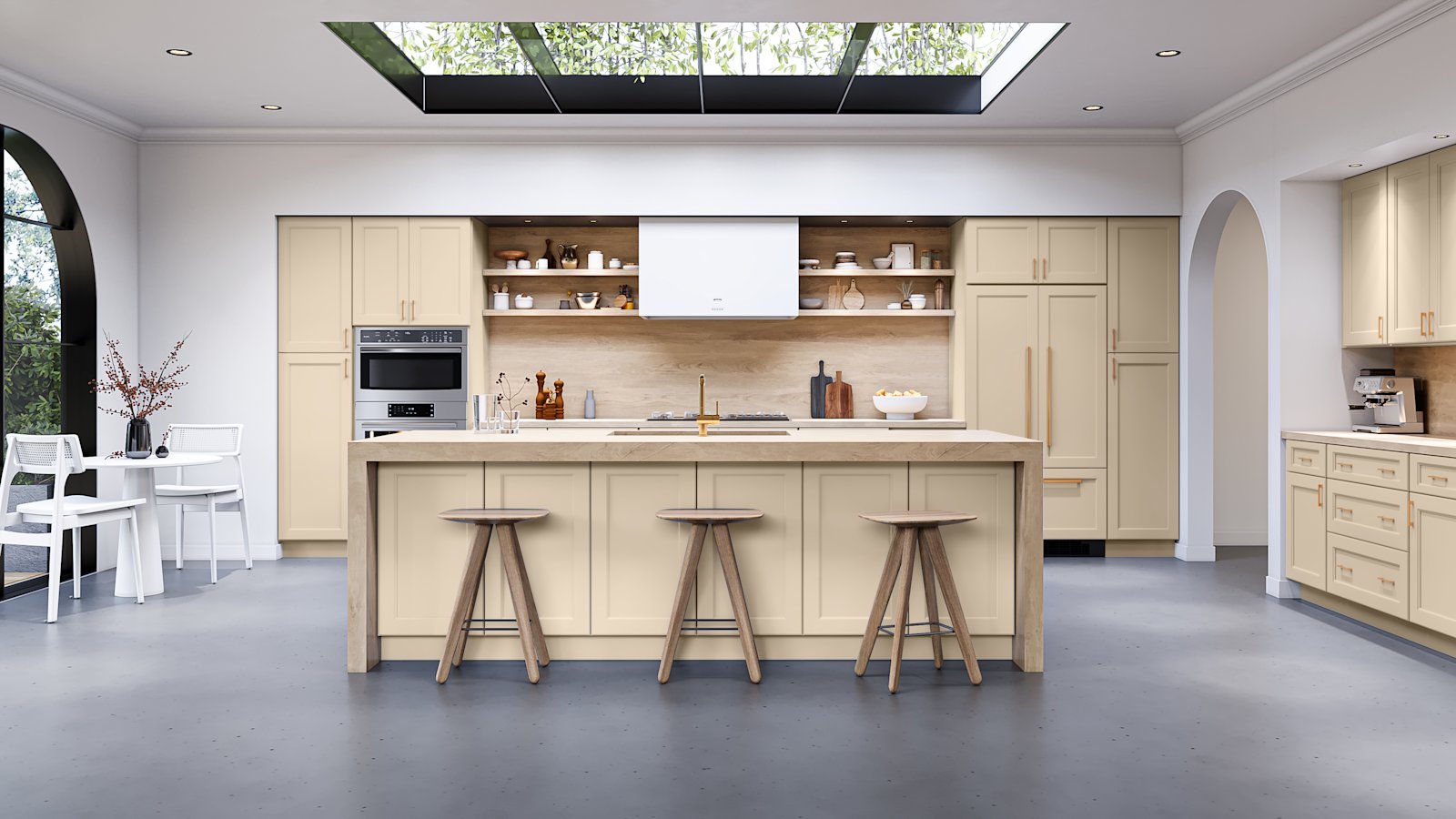
 Macadamia Beige transitional shaker kitchen cabinets with a wood-topped island, a skylit room, open shelving and a concrete floor. Fabuwood Fusion.
Queen Anne has a creamy, off‑white base with soft, feathery veining in taupe and light brown, so it feels warm rather than stark. In most Central New Jersey light, it reads as a warm neutral instead of gray or bright white.
The veining is more like watercolor brush strokes than sharp lines. That matters for your kitchen because it will not fight with wood grain, subway tile or shaker door profiles. In a typical Green Brook or Bridgewater colonial with medium‑tone wood floors, Queen Anne usually ties the floor color into painted cabinets in a very natural way.
Because Queen Anne is a quartz, the pattern is consistent from slab to slab compared with natural marble. That predictability makes layout planning easier in tight New Jersey galley kitchens or L‑shapes where you need seams to disappear.
2. How Cambria Queen Anne behaves in real kitchens
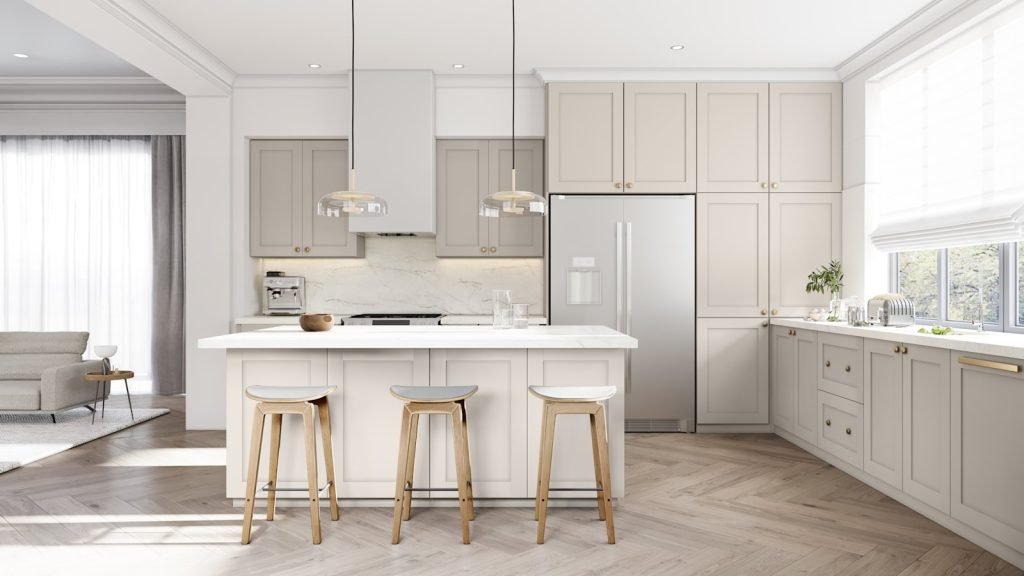 Cashmere frameless wide shaker kitchen cabinets with white marble counters and island, a marble backsplash and a wood floor. Fabuwood Tuscany.
Queen Anne behaves like any other good‑quality quartz: it is hard, non‑porous and strongly stain resistant for everyday kitchen use. Quartz is an engineered stone made from natural quartz minerals and resins, which makes it more consistent than materials like marble or some quartzites.
Since quartz is non‑porous, it does not need sealing the way natural stone does. The Natural Stone Institute explains that natural stones like marble and some granites require periodic sealing to resist staining; that is not part of your routine with Cambria quartz. Day to day, warm water, mild dish soap and a soft cloth are usually enough.
Heat is the one behavior point I emphasize. No quartz manufacturer wants pots straight from the burner parked on the counter. Use trivets or pads under hot pans and air fryers to protect the resin binders from thermal shock or discoloration.
3. Best cabinet colors to pair with Cambria Queen Anne
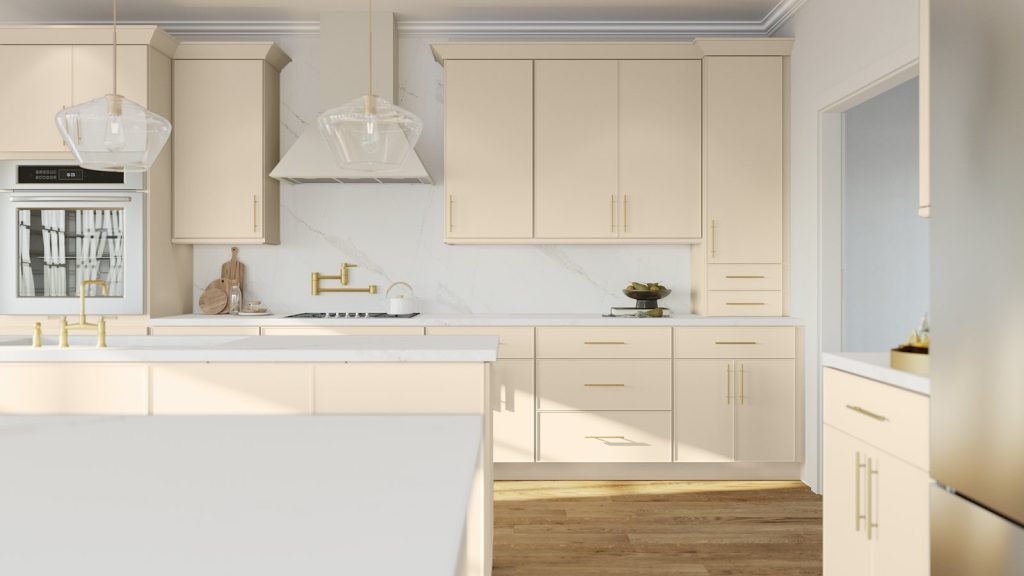 Macadamia Beige micro shaker kitchen cabinets with white marble counters and island, slim brass hardware and a light wood floor. Fabuwood Echo.
Queen Anne pairs best with warm whites, soft greiges and mid‑tone stains that share its taupe undertone. Cool, bluish whites often fight the warmth of the veining, especially in homes with warm LED lighting.
For painted cabinets, I like a soft warm white or a light greige. In Fabuwood’s framed Allure series, the Galaxy and Fusion collections in painted finishes work especially well when you want a classic shaker profile. For a slimmer, more tailored profile, the Luna slim shaker in the same series offers a slightly more modern read without clashing with Queen Anne’s movement.
Stained cabinets also work nicely with Queen Anne, especially medium walnut or light chestnut tones. Because Savona is an authorized Fabuwood dealer, I often combine Queen Anne with their stained Allure or Quest series in traditional Central New Jersey colonials where clients want to keep some wood but still lighten the kitchen.
If you are not sure what direction to take, bringing a sample of your existing floor to our Green Brook kitchen showroom and holding it against cabinet doors and a Cambria sample usually clarifies things quickly.
4. Lighting and layout considerations with Queen Anne
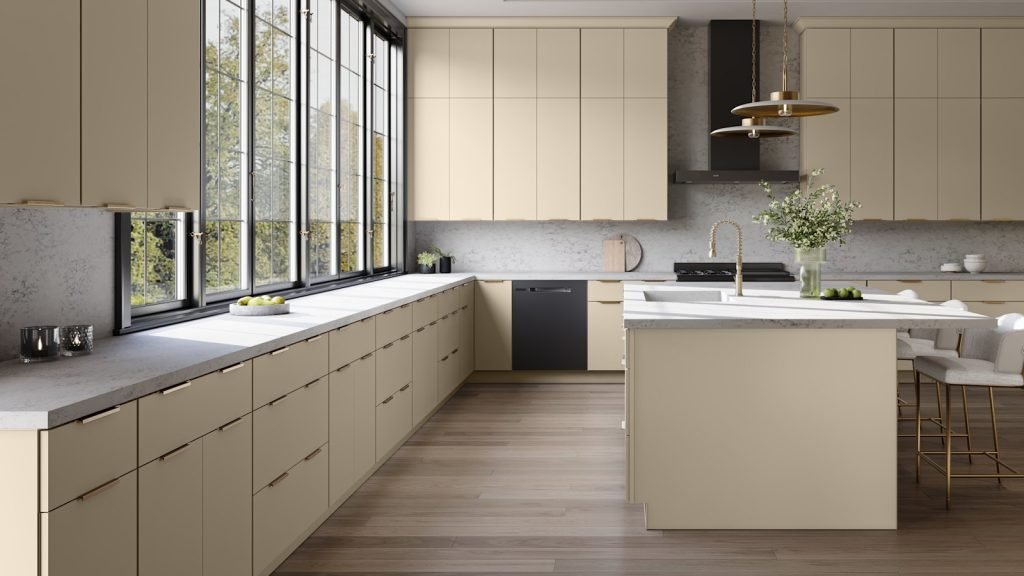 Macadamia Beige flat panel slab kitchen cabinets with white marble counters and island, black framed windows and long brass bar pulls. Fabuwood Luxe.
Queen Anne needs the right lighting to show its veining without turning yellow or drab. In our area’s often over‑cast light, it is worth thinking through both natural and artificial lighting as part of the design.
Warm LED under‑cabinet lighting around 2700K to 3000K keeps Queen Anne’s base looking creamy instead of cold. Very cool 4000K or 5000K strips can exaggerate any minor gray in the base and flatten the warmth that makes Queen Anne special. The NKBA lighting guidelines support layering task and ambient lighting so counters read correctly at all times of day.
Layout matters too. In an L‑shaped or U‑shaped kitchen, I try to reserve the longest, most visible run for a seam‑free stretch of Queen Anne. In Central New Jersey capes and split levels with shorter runs, we focus on centering the vein flow in the prep zone or island, so what you see from the main doorway feels intentional.
5. Edge profiles and backsplash ideas that suit Queen Anne
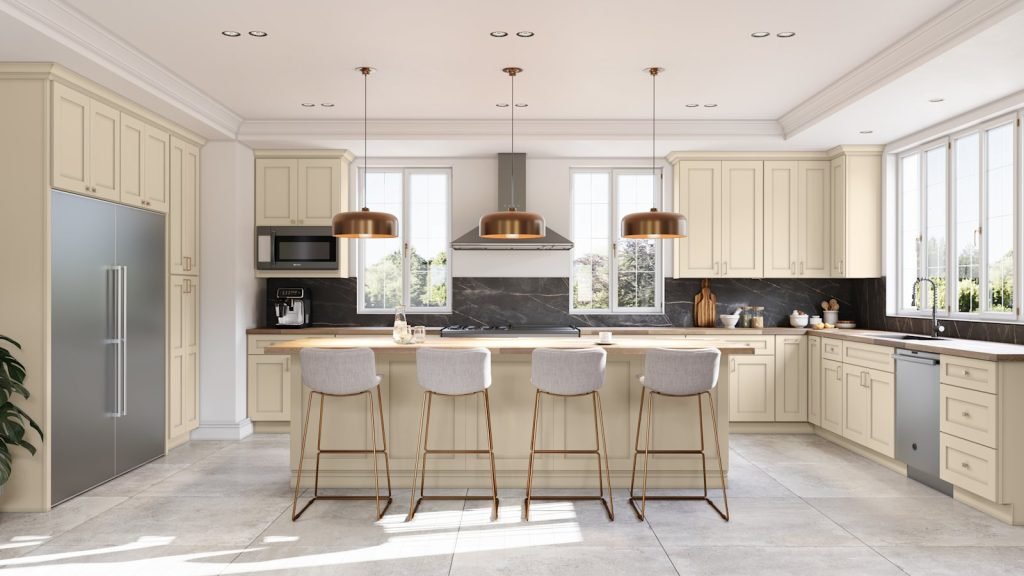 Macadamia Beige classic shaker kitchen cabinets with a dark backsplash, copper dome pendants and stainless appliances. Fabuwood Galaxy.
For most homeowners, a simple edge keeps Queen Anne looking clean and current. A standard eased edge or small radius is usually my first recommendation, especially if your cabinets already have some detailing.
If your home skews more traditional or you are restoring an older New Jersey colonial, a subtle ogee or bevel at the top can tie into existing trim and door casings without making the counter look dated. I avoid heavy, built‑up edges with Queen Anne because the pattern already has movement and does not need extra visual weight.
For backsplashes, the safest pairing is a quiet tile that supports, rather than competes with, the quartz. A classic subway tile in a warm white or very light greige works almost everywhere. If you like more interest, a soft, handmade‑look subway with slight color variation plays well with Queen Anne’s organic veining.
Example pairings that work in New Jersey kitchens
- Warm white shaker cabinets, Queen Anne counters, off‑white subway backsplash, medium oak floor
- Light greige frameless cabinets from a modern line, Queen Anne on a waterfall island, simple white slab backsplash
- Stained wood island with painted perimeter, Queen Anne on both, warm brass hardware
If you want help balancing all three surfaces, you can start with a free estimate and design review through our kitchen remodeling services.
6. Comparing Queen Anne to other quartz and natural stone
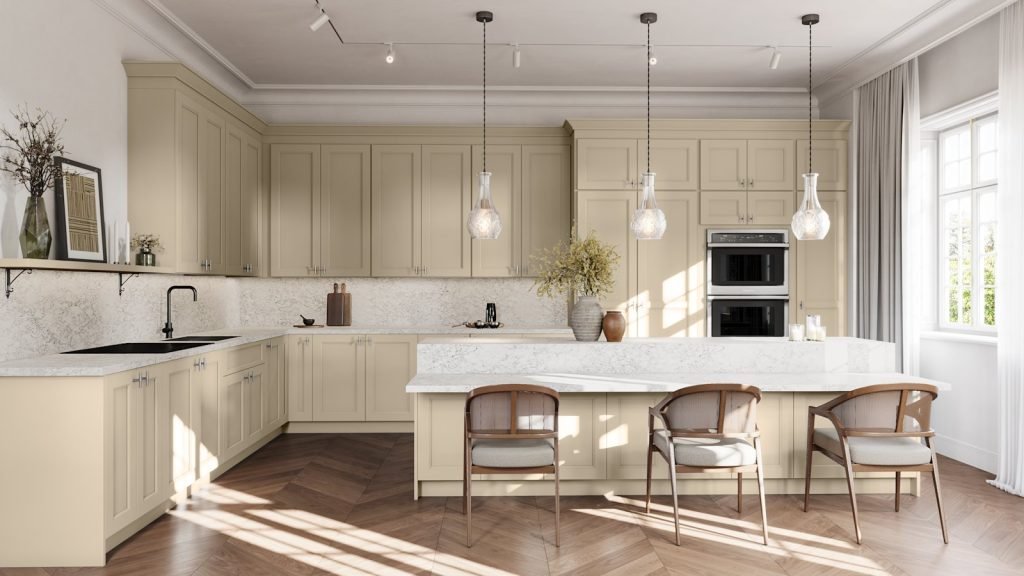 Macadamia Beige wide shaker kitchen cabinets with white marble counters and island, a matte black faucet and a herringbone floor. Fabuwood Nexus.
Homeowners usually ask whether Queen Anne is the right choice compared with other quartz colors, natural marble or quartzite. The answer comes down to pattern, warmth and maintenance expectations.
Here is a simple comparison you can skim.
| Surface type | Look & undertone | Maintenance needs | Typical use in Central NJ homes |
|---|---|---|---|
| Cambria Queen Anne (quartz) | Cream base, soft taupe veining, warm | No sealing, wipe spills, use trivets | Traditional & transitional kitchens |
| Cool white quartz | Bright white, subtle gray specks/veins | Similar to Queen Anne | Modern, very bright kitchens |
| Natural marble | Varied, often gray veining on white | Sealing needed, can etch & stain | Feature islands, lighter‑use surfaces |
| Quartzite | Natural stone, varied, often cooler tones | Sealing usually recommended, harder than marble | Higher‑end kitchens, often mixed surfaces |
| Busy patterned quartz | High contrast, speckles or bold veining | Similar care to other quartz | Large open plans needing a focal point |
Organizations like Consumer Reports consistently rate quartz highly for stain and scratch resistance compared with many natural stones. That makes Queen Anne a practical choice in active households, especially in homes with kids where counters see plenty of spills and school projects.
If you are weighing quartz against quartzite or other options, it can help to visit our countertop displays and the broader selection on our Countertops page so you can see pattern scale and undertones side by side.
7. Budgeting Queen Anne into a Central New Jersey kitchen remodel
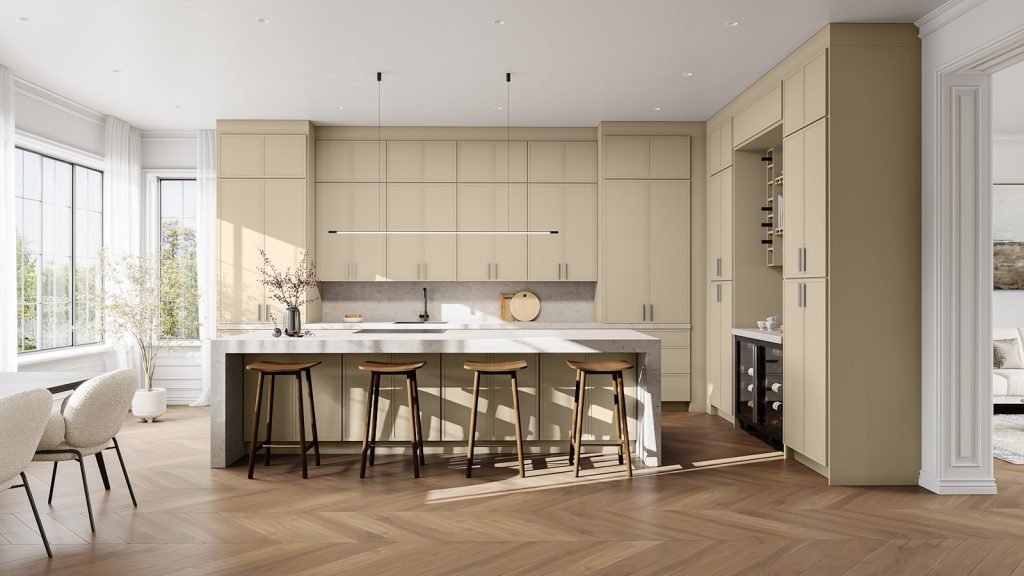 Macadamia Beige slim shaker kitchen cabinets with a contrasting charcoal island, a herringbone wood floor. Fabuwood Luna.
Queen Anne sits in the premium quartz category, so you will want to understand how it fits into an overall kitchen budget. The countertop is one line item alongside cabinets, installation, and all the trades that make a remodel work.
At Savona, full kitchen projects that include semi‑custom cabinets and a quartz countertop package start from $9,999 for a cabinets plus countertops package and from $14,999 for a full kitchen package. These are starting points for typical layouts, not quotes, and final pricing always depends on your specific layout, material selections, cabinet line, countertop choice and the scope of installation.
Those starting figures exclude demolition, electrical work, plumbing rough‑ins, flooring, tile and structural changes, which is especially important to remember in older New Jersey homes where opening a wall or correcting past work can add scope. For homeowners who already have a contractor and only need cabinets designed and supplied, our cabinets‑only kitchen package starts from $4,999.
If you prefer a single team to handle design, supply and installation, our in‑house installers (not subcontractors) can coordinate your Queen Anne countertops with new cabinets, flooring and tile. You can review how these tiers work on our kitchen remodeling pricing page before you sit down with a designer.
Frequently asked questions
Is Cambria Queen Anne too busy for a small kitchen?
Usually no. Queen Anne has movement, but the veining is soft and not overly high contrast, so it tends to calm a small space rather than overwhelm it. In a compact New Jersey galley kitchen, I often pair Queen Anne with simple shaker cabinets and a quiet backsplash to keep the room feeling open.
Does Cambria Queen Anne stain easily?
Queen Anne is a non‑porous quartz surface, so it is strongly resistant to everyday staining when you wipe spills in a reasonable time. Things like red wine or tomato sauce should not soak in if cleaned up promptly. You do not need to seal it, which is a big advantage over natural marble in active kitchens.
What cabinet style works best with Queen Anne countertops?
Classic shaker and slim shaker doors usually suit Queen Anne best. The warm veining reads well against simple profiles like the Fabuwood Allure Galaxy or Luna collections, which we design with often. In more traditional homes, a slightly more detailed door still works, as long as the finish stays in the warm white to light greige family.
Can I use Cambria Queen Anne on both the perimeter and the island?
Yes, Queen Anne works on both perimeter runs and the island, provided the room has enough natural or planned lighting to show the pattern. In many Central New Jersey homes, I will keep the same material throughout for a calm, unified look, then bring contrast with the island cabinet color or hardware instead of mixing countertop materials.
How do I see Cambria Queen Anne in person near Green Brook, NJ?
The most straightforward way is to visit our Green Brook Township showroom, where you can compare Cambria samples against cabinet doors and flooring options. If visiting in person is difficult, you can share your layout and photos remotely and we can start with a free estimate and design call using the form on our estimate request page.
Next steps for planning a Queen Anne kitchen in Central New Jersey
If you are in Middlesex, Somerset, Union or the surrounding Central New Jersey counties and think Cambria quartz Queen Anne might be right for your kitchen, the next step is to see it alongside real cabinet and flooring options. You can visit our Green Brook showroom, bring a few photos and rough measurements, and we will walk through how Queen Anne fits into your layout, lighting and budget.
If you prefer to start from home, share your layout and a few notes about how you cook and entertain through our simple form, and a designer will follow up with practical options and a ballpark package. Start that conversation on our Get a Free Estimate page, and we will help you see whether Queen Anne is the right fit for your kitchen.


