
Backsplashes and countertops should relate by contrast or by harmony, not by accident. The safest approach is choosing the countertop first, then using the backsplash to either calm it down or give it just enough personality.
Backsplashes and countertops are the hard surfaces that visually anchor your kitchen and take most of the daily use. In our Green Brook showroom, nearly every design decision eventually comes back to how those two surfaces talk to each other, under your specific lighting and with your specific cabinets.
Below are the practical rules I walk New Jersey homeowners through at the table, sample boards spread out, figuring out what will still feel right five or ten years from now.
1. Start with the countertop, then support it with the backsplash
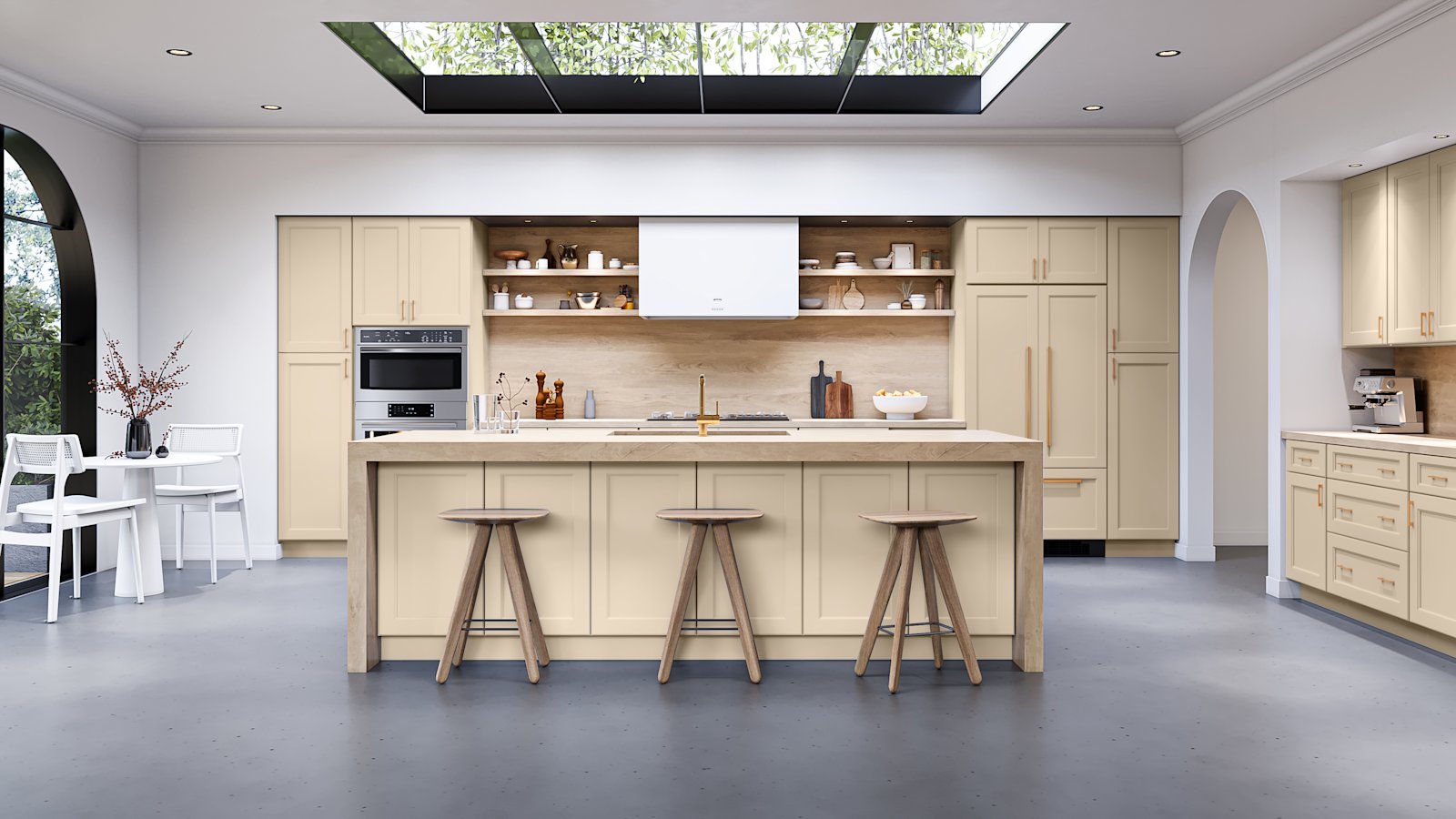
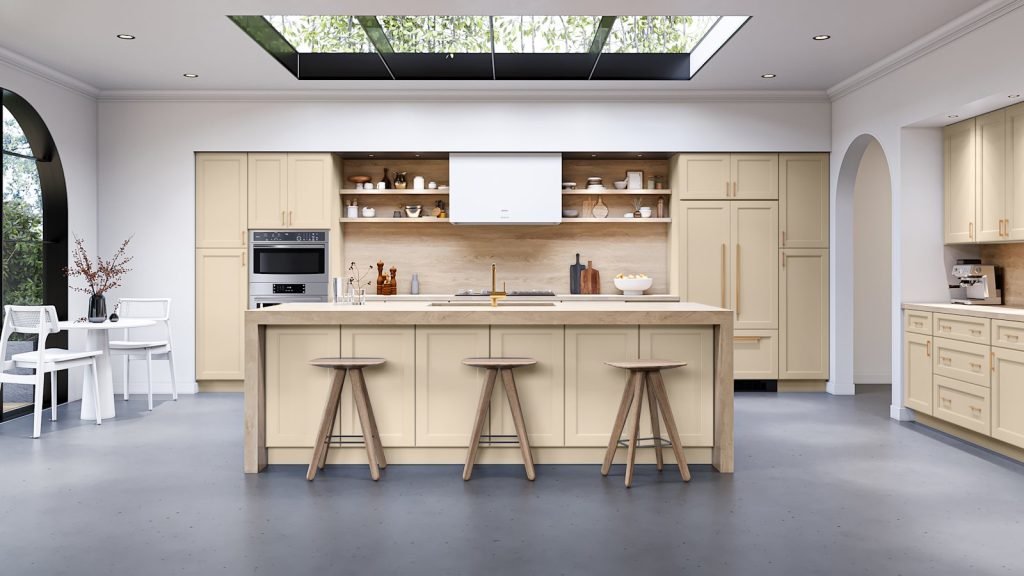 Macadamia Beige transitional shaker kitchen cabinets with a wood-topped island, a skylit room, open shelving and a concrete floor. Fabuwood Fusion.
Choosing the countertop first makes the backsplash decision easier and safer. Countertops are the more expensive, more permanent surface, and they dominate the sightlines in a typical Central New Jersey kitchen.
Most of the kitchens we design use quartz or quartzite slabs from brands like Cambria, LX Hausys, Vadara Quartz or MSI Surfaces. Those tops are a big chunk of the budget and difficult to change later. Your backsplash tile, on the other hand, is flatter, smaller scale and relatively simpler to swap.
So the workflow I recommend is:
- Lock in cabinets and layout.
- Choose the countertop material, color, and edge.
- Use the backsplash to balance what the countertop is doing.
For example, if you select a strongly veined quartzite, we will usually calm the wall with a quiet, soft-toned tile. If you go with a clean white or light gray quartz, that opens the door for a patterned or textured tile that adds interest without overwhelming the space.
If you are still early in planning, it often helps to look through recent Savona kitchen remodeling projects in our gallery, so you can see how other New Jersey layouts handle that countertop-first approach.
2. Decide if you want contrast or a quiet, blended look
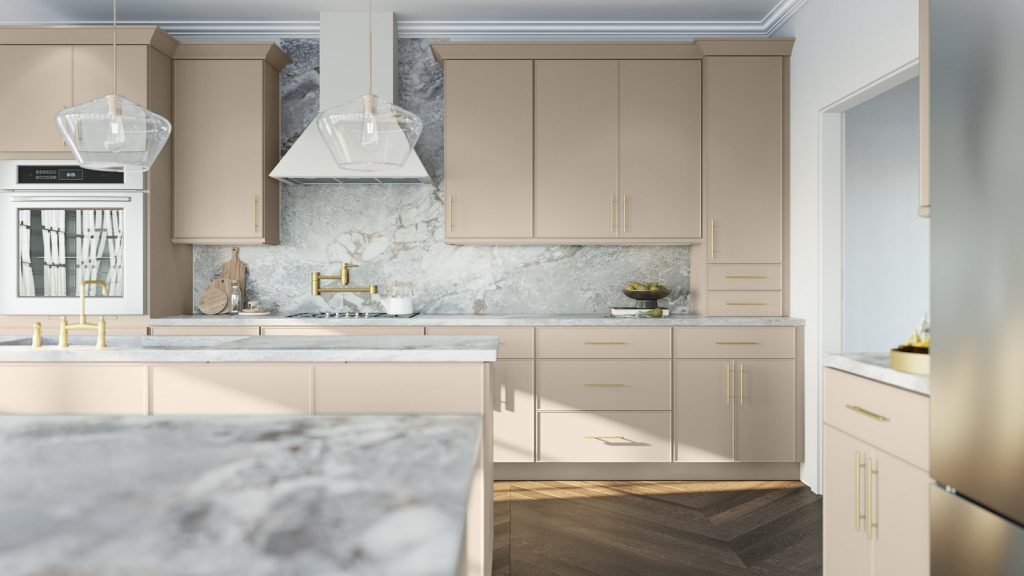 Oyster micro shaker kitchen cabinets with white marble counters and island, slim brass hardware and a light wood floor. Fabuwood Echo.
The most reliable way to get backsplashes and countertops to work together is to decide up front whether you want visible contrast or a soft, blended palette. Both can work beautifully when they are intentional.
A high-contrast pairing might be a deep charcoal or black countertop with a warm white subway tile, or a creamy quartz top with a deep green or navy backsplash. A blended pairing might keep everything within a light neutral range, with subtle shifts in texture rather than color.
In many older New Jersey homes, kitchens are not huge, and there is often one main sightline from a dining room or family room. In those spaces, a quieter blend can help the kitchen recede a bit, especially with open concept layouts. In larger kitchens or ones with great natural light, a bit of contrast can help break up the cabinetry and give the room structure.
Here is a simple comparison of contrast versus blended schemes.
| Approach | How it looks | Works best with | Pros | Watch out for |
|---|---|---|---|---|
| High contrast | Clear difference between top and backsplash | Simple cabinet door styles, especially shakers | Visually dynamic, defines zones, photographs well | Easy to go too bold, can date faster |
| Blended / tonal | Countertop and backsplash share a similar color family | Smaller or darker kitchens, open floor plans | Calming, forgiving to live with, easier resale | Can feel flat unless you add texture or variation |
Once you know which column you are in, it is much easier to rule tiles in or out at the showroom table.
3. Balance pattern, movement, and texture between the two
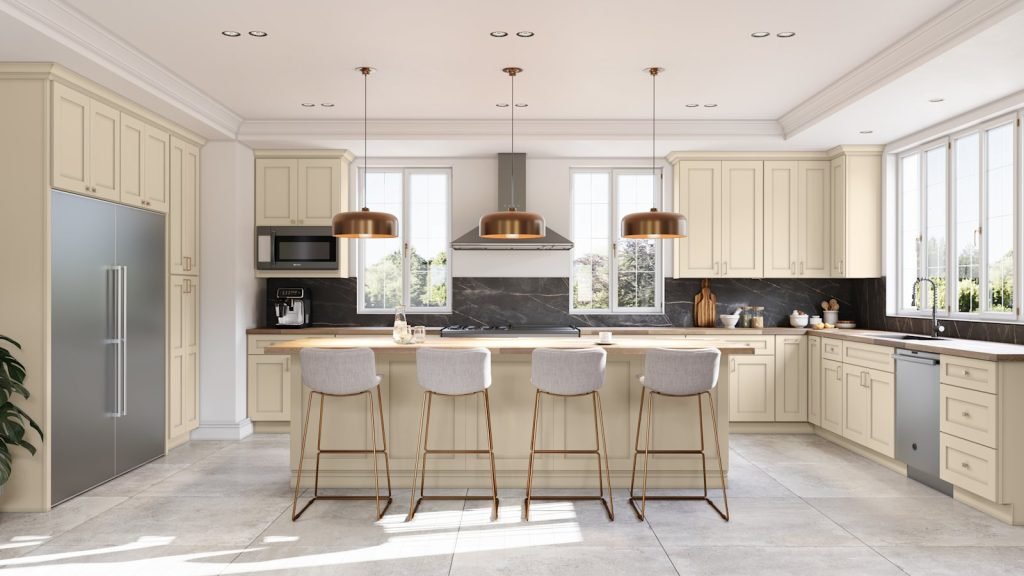 Macadamia Beige classic shaker kitchen cabinets with a dark backsplash, copper dome pendants and stainless appliances. Fabuwood Galaxy.
Balancing pattern and movement is what keeps a kitchen from feeling busy or flat. Most of the time, you only want one strong visual storyteller between the countertop and the backsplash.
Movement refers to the way veining or pattern flows across a slab or tile surface. Quartzites and some quartz patterns from brands like Cambria can have very pronounced movement. If we use one of those on your countertop, we generally pair it with a backsplash that is solid or lightly textured, such as a handmade-look subway or a simple square.
On the other hand, if your countertop is a quiet, finely speckled quartz, we can afford a bolder backsplash. That might be a patterned porcelain, a herringbone layout, or a textured tile that plays with light. The key is alternating where the eye goes: strong on one surface, calm on the other.
The Tile Council of North America notes that grout color and joint size also affect the perceived pattern of a backsplash, which is why a basic stacked subway with heavy dark grout can feel much busier than homeowners expect.
4. Match undertones instead of chasing exact color matches
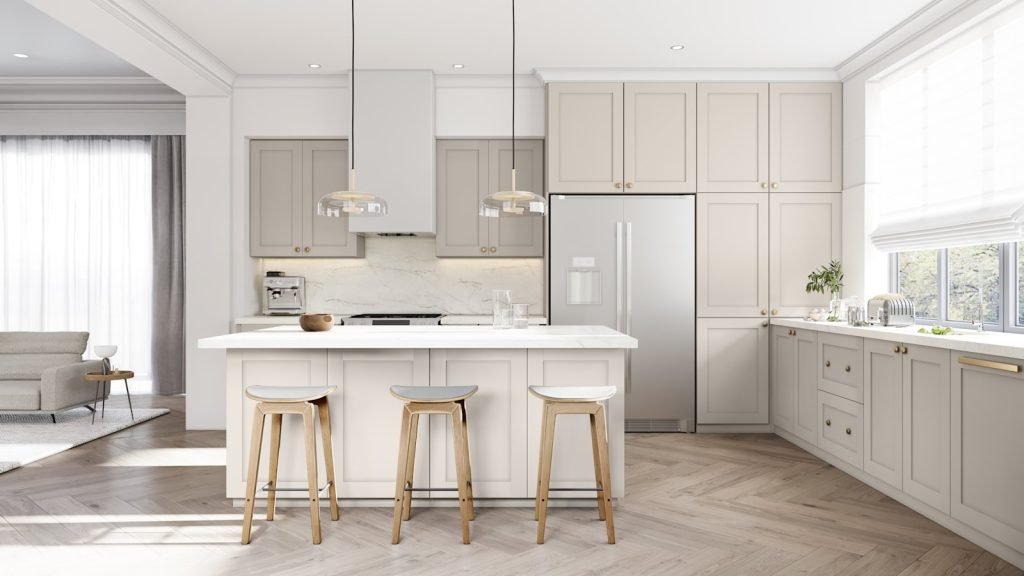 Cashmere frameless wide shaker kitchen cabinets with white marble counters and island, a marble backsplash and a wood floor. Fabuwood Tuscany.
A countertop and backsplash do not need to be the exact same white, beige, or gray, but they do need to share compatible undertones. Matching undertones is what keeps the finished kitchen from looking slightly “off” under your real lighting.
Undertones can be warm (yellow, red, brown), cool (blue, green), or neutral. A warm white quartz with creamy veining will not sit comfortably next to a very cool, blue-leaning white tile, especially under LED lighting. Side by side on a sample board in our Green Brook showroom, that clash is easy to see.
The simplest way to check undertones at home is to bring samples into your kitchen and look at them against plain printer paper during the day and at night. The National Kitchen & Bath Association suggests evaluating finishes under the same lighting in which they will be used, since color shifts under warm or cool bulbs.
If you are pairing backsplashes and countertops with painted cabinets, make sure to bring the cabinet door sample into the same comparison. Fabuwood cabinet collections such as Galaxy, Luna or Fusion in light paints can read differently depending on the neighboring surfaces, and you want all three to agree.
5. Choose practical finishes for how you cook and clean
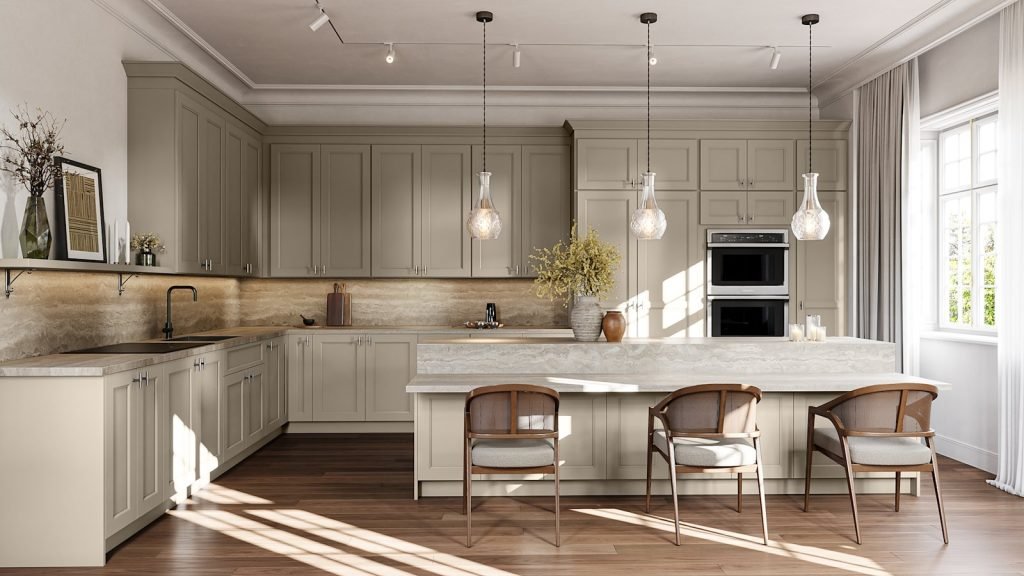 Oyster wide shaker kitchen cabinets with white marble counters and island, a matte black faucet and a herringbone floor. Fabuwood Nexus.
The right pairing is not just about color and pattern. Practical finish choices for both backsplash and countertop make daily cleanup easier, especially in busy Central New Jersey households where cooking is frequent.
Quartz and quartzite are popular in our kitchen remodeling work because they offer a good balance of durability and appearance. For detailed performance testing of countertop materials, independent reviews from Consumer Reports are useful, especially on stain and heat resistance.
On the backsplash, glossy or satin tiles are usually easier to wipe down behind a range than heavy textures or deeply sculpted patterns. If you like texture, we often keep the area behind the stove simpler and use the more textured tile on the adjacent walls.
Grout is another practical detail. Smaller tiles mean more grout lines, so either choose a grout color that hides everyday splashes or use larger-format tiles to reduce cleaning. For families that cook a lot of tomato sauces and oils, a darker or midtone grout often makes sense.
If you want your countertop and backsplash to read as one continuous plane, slab backsplashes in the same quartz or quartzite can work well, though that is a higher-budget decision. For many homeowners, a well-chosen tile paired with a durable quartz top provides the best value.
6. Plan the layout details where surfaces meet
 Carbone Matte handleless flat slab kitchen cabinets with white marble counters and island, copper dome pendants and built-in black ovens. Fabuwood Catalina.
Good design of backsplashes and countertops is partly about the lines where materials meet: edges, terminations, outlets, windows, and corners. Those details decide whether the finished kitchen looks intentional or thrown together.
Here are a few layout points we work through at the design table:
- Where the backsplash stops at the side of a cabinet run or window trim
- Whether you want the backsplash to go to the ceiling behind a hood
- How high a short “lip” of countertop material will run up the wall, if at all
- Outlet and switch placement to avoid cutting tiles into slivers
For some homeowners in older New Jersey houses, walls and corners are not perfectly straight. That affects how large tiles or exact geometric patterns will look once installed. In those situations, forgiving shapes and slightly wider grout joints can visually absorb irregularities.
If you are thinking about a full kitchen package that tackles all these junctions at once, our Gold kitchen option starts at $14,999 and includes design, semi-custom cabinetry, a countertop package, a kitchen sink, and professional installation by Savona’s in-house team. Final pricing still depends on layout, materials, cabinet line, countertop selection and installation scope, and it does not include demolition, electrical work, plumbing rough-ins, flooring, tile or structural changes.
For homeowners who already have a contractor and only need cabinets designed and supplied, there is also a cabinets-only starting package from $4,999 under similar pricing rules.
7. Coordinate with your cabinets and flooring, not just each other
 Oyster transitional shaker kitchen cabinets with a wood-topped island, a skylit room, open shelving and a concrete floor. Fabuwood Fusion.
Backsplashes and countertops cannot be chosen in isolation. They have to work with your cabinet style, cabinet finish, and flooring, because those elements together define the tone of the room.
In many Central New Jersey kitchens, we are pairing shaker or slim-shaker doors from Fabuwood’s Allure series with quartz countertops and a simple backsplash. Shaker doors already add a bit of linework, so we often keep either the countertop or the backsplash simple and use the other for subtle expression.
Flooring is the other big surface. If you already have strong pattern or movement on the floor, you will usually want quieter backsplashes and countertops above. If your floor is simple, you have more freedom to introduce pattern on the wall or the counter.
If you are planning a full remodel with new floors as well, it can help to look at tile and flooring options at the same time you view countertops, so you can see all three materials together. Our countertop selection page is a good starting point for understanding the quartz and quartzite choices we work with most often.
For quick-turn projects, especially in rentals or smaller homes, we can pair next day or RTA cabinets with stock quartz and simple tile to get a clean, coordinated look without a long design cycle, as long as the undertones and texture levels are thought through.
Frequently asked questions
How do I pick a countertop and backsplash that won’t go out of style?
Choosing simple cabinet styles, moderate contrast, and quieter patterns helps backsplashes and countertops age well. I usually start clients with light or midtone quartz, then a classic tile like subway or a soft square. Once those are set, we add personality through hardware, lighting, and paint, which are much easier to change later.
Should my backsplash match my countertop or my cabinets?
Match undertones with all three, but lean visually toward either the countertop or the cabinets. Most homeowners in our area treat the countertop and cabinets as the main pair and let the backsplash support them. For example, if you have white shaker cabinets and warm-veined quartz, choose a warm, soft backsplash that relates to both instead of introducing a new color.
Is it better to use the same quartz on the backsplash?
Using the same quartz on the backsplash creates a clean, continuous look and eliminates grout lines. It works best in modern or transitional kitchens with simple cabinets. It is also more expensive than tile. Many families prefer a quartz countertop with a coordinated tile backsplash, keeping the slab behind the range only, if anywhere.
What color backsplash goes with a busy countertop?
A busy countertop pairs best with a calm, solid or lightly textured backsplash in a color already present in the slab. I usually pull the lightest or softest tone out of the countertop veining and repeat it in the tile. Simple shapes and grout close to the tile color keep the focus on the countertop instead of competing with it.
How far up should the backsplash go?
For most kitchens, taking the backsplash from the countertop to the bottom of the wall cabinets looks finished and practical. Behind a range or cooktop, continuing to the bottom of a hood or all the way to the ceiling can create a strong focal point. The decision depends on ceiling height, cabinet layout, and budget, since more height means more material and labor.
Do I need to choose my countertop before my cabinets are installed?
It is best to choose your countertop before cabinets are ordered, at least in terms of color family and thickness. Exact field measurements for fabrication are usually taken after cabinets are installed, but having the countertop decision made earlier ensures that door styles, cabinet finishes, and backsplashes are all coordinated on purpose, not guessed at later.
Bringing it together in a New Jersey kitchen
The most successful backsplashes and countertops in Central New Jersey homes start with a clear decision about contrast, a smart countertop choice, and honest testing of samples under your own lighting. From there, the backsplash becomes a controlled design tool, not a wildcard.
If you would like to walk through options in person, you can visit our Green Brook Township showroom to compare door styles, quartz samples, and tiles side by side, or share your layout remotely for a free estimate. When you are ready to see how your own kitchen could come together, you can schedule a design meeting or request an estimate so we can lay your actual materials out on the table and make those decisions with confidence.


